
Free visual inspection and a written scope of work before any mitigation begins - photos, moisture readings, and drying logs go in your claim file
The scope we write is the scope we bill. Anything new gets shown to you, in writing, before we touch it.
 Before
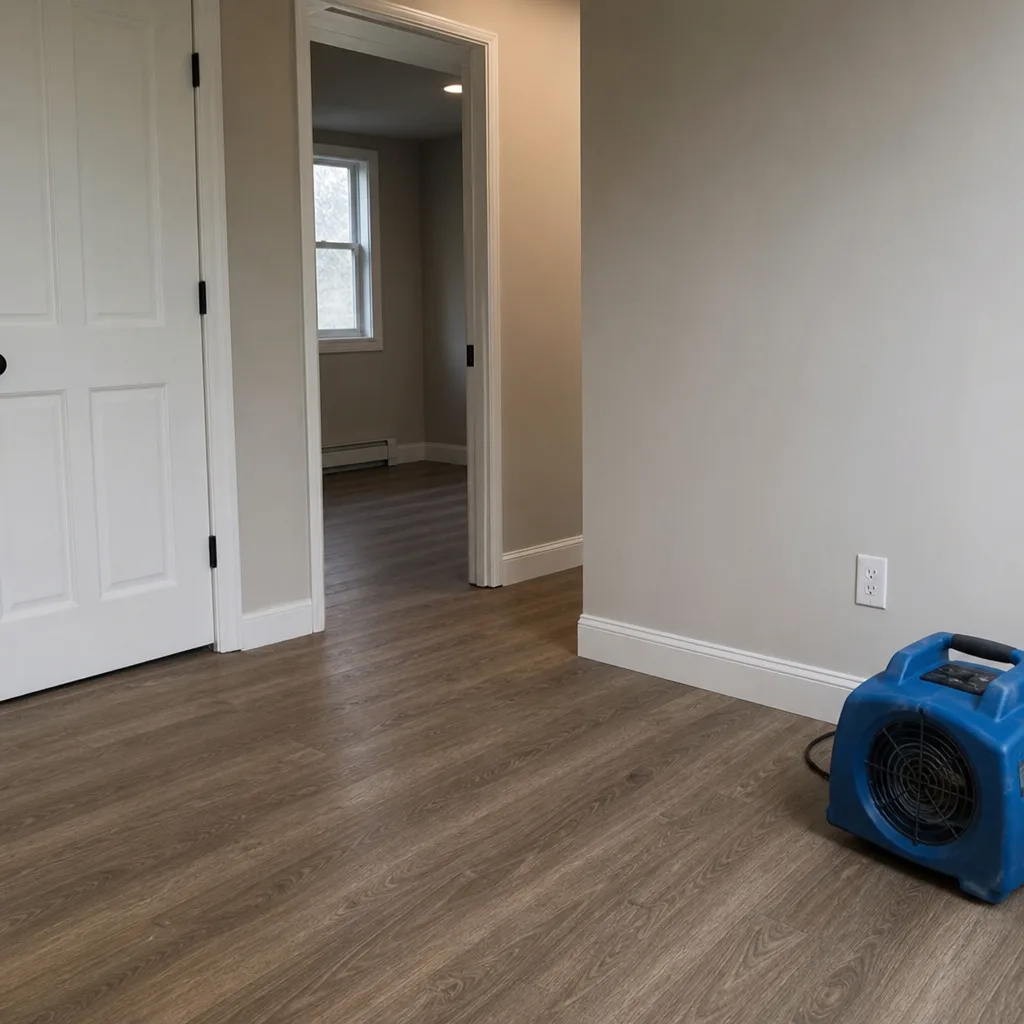 After
After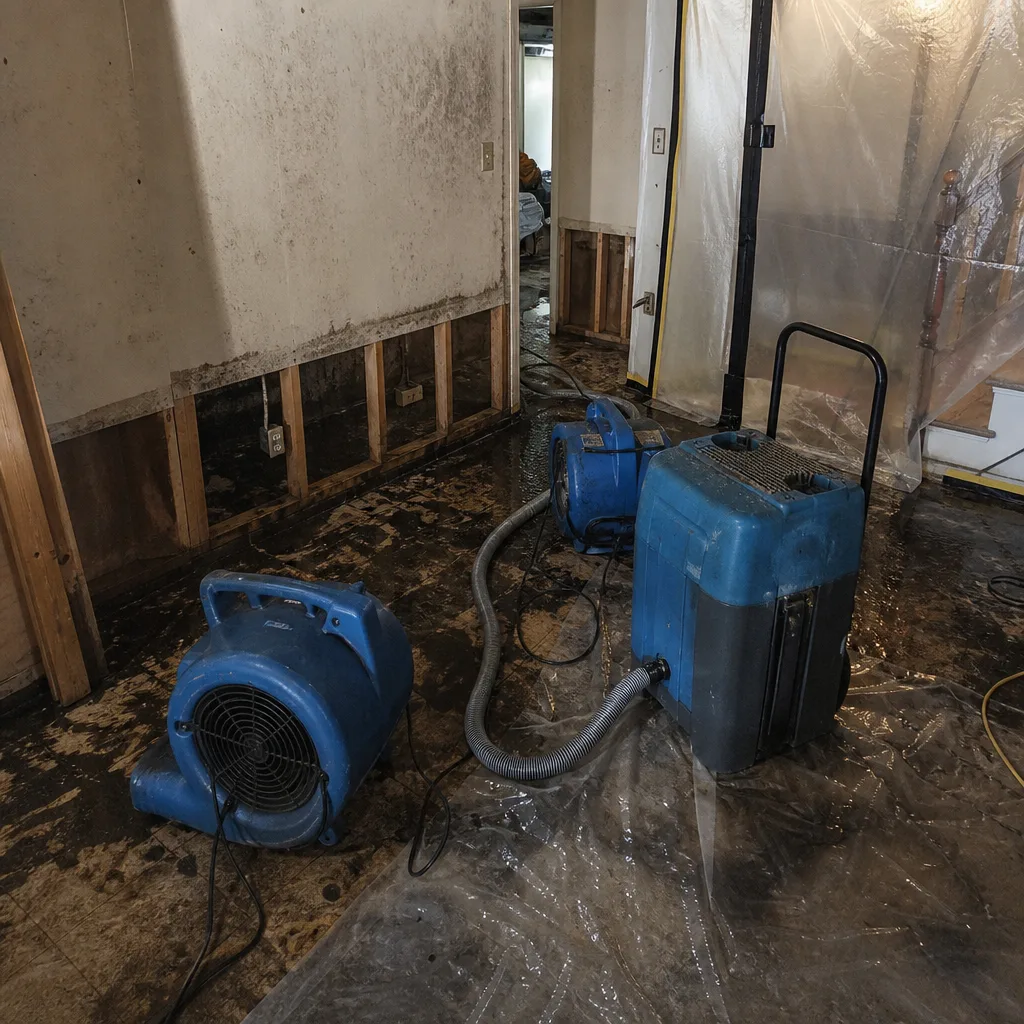 Before
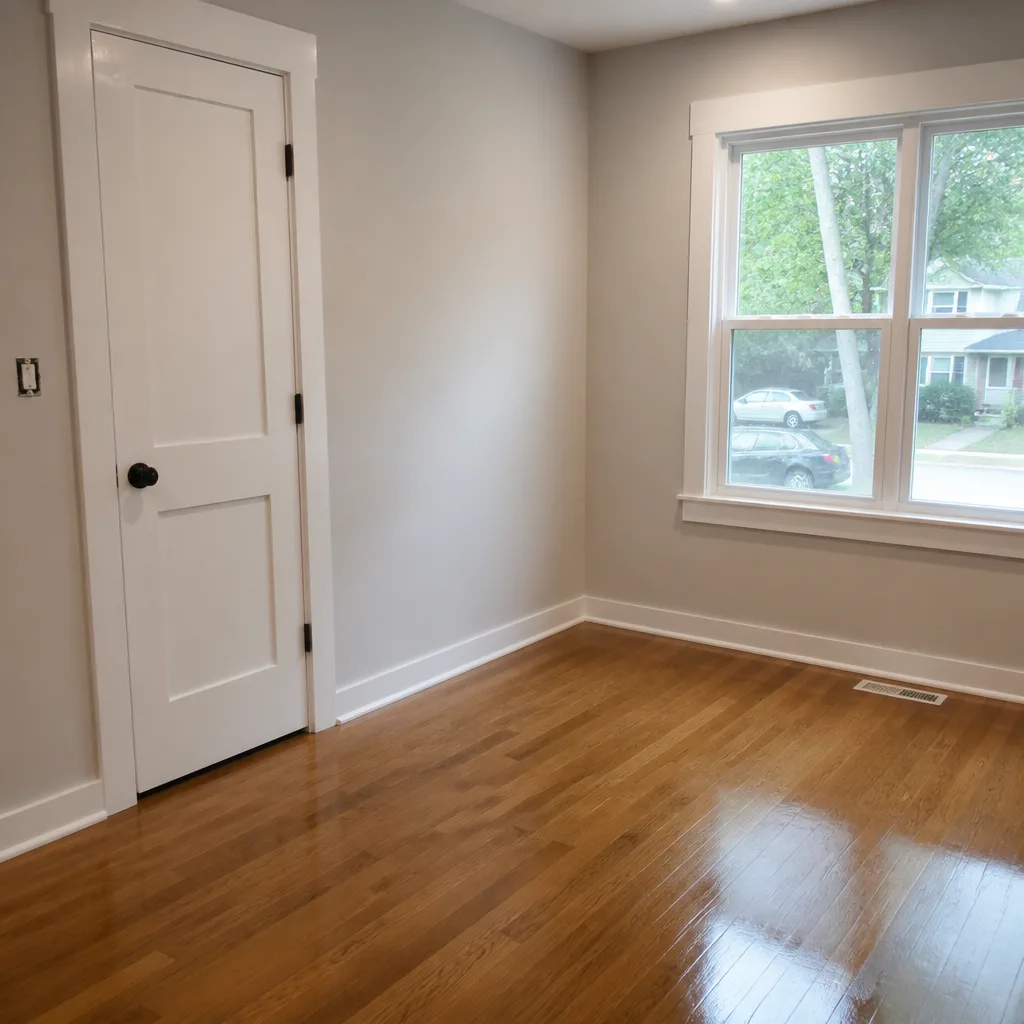 After
After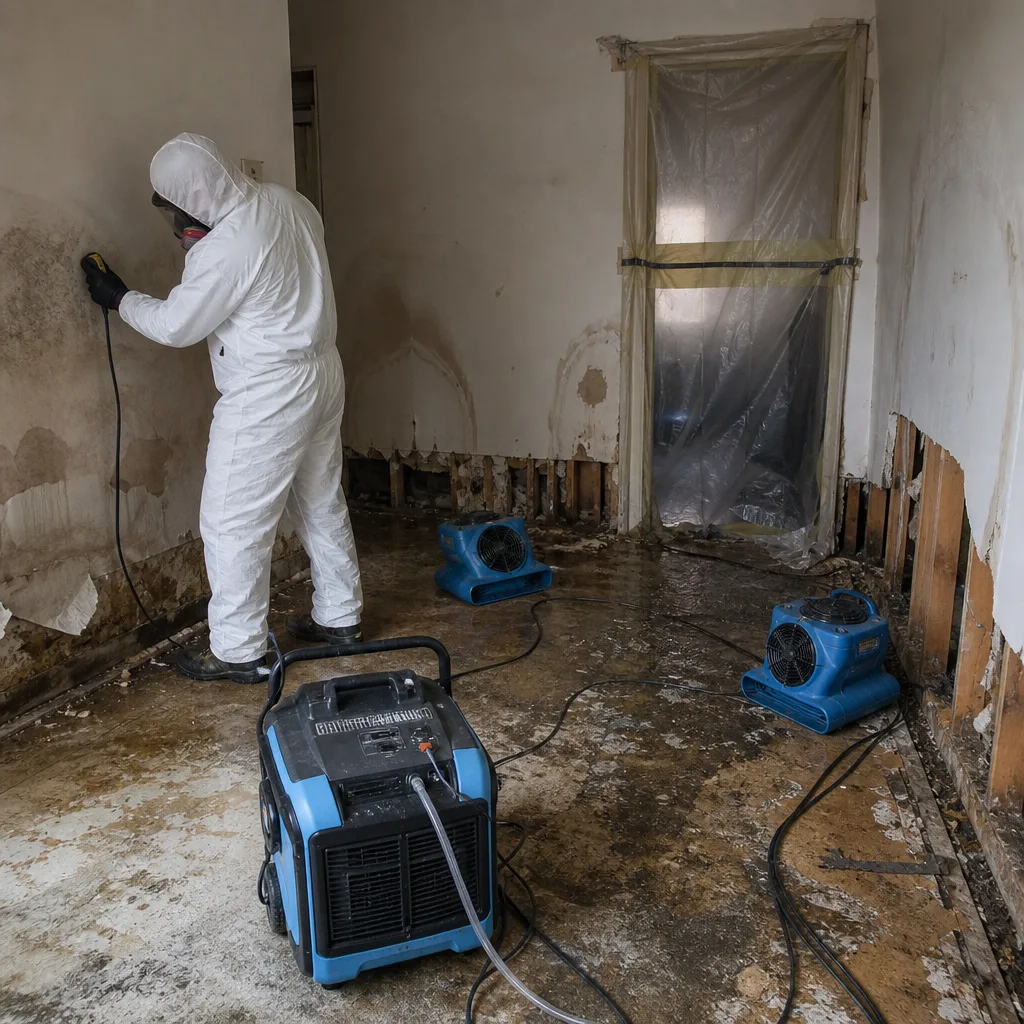 Before
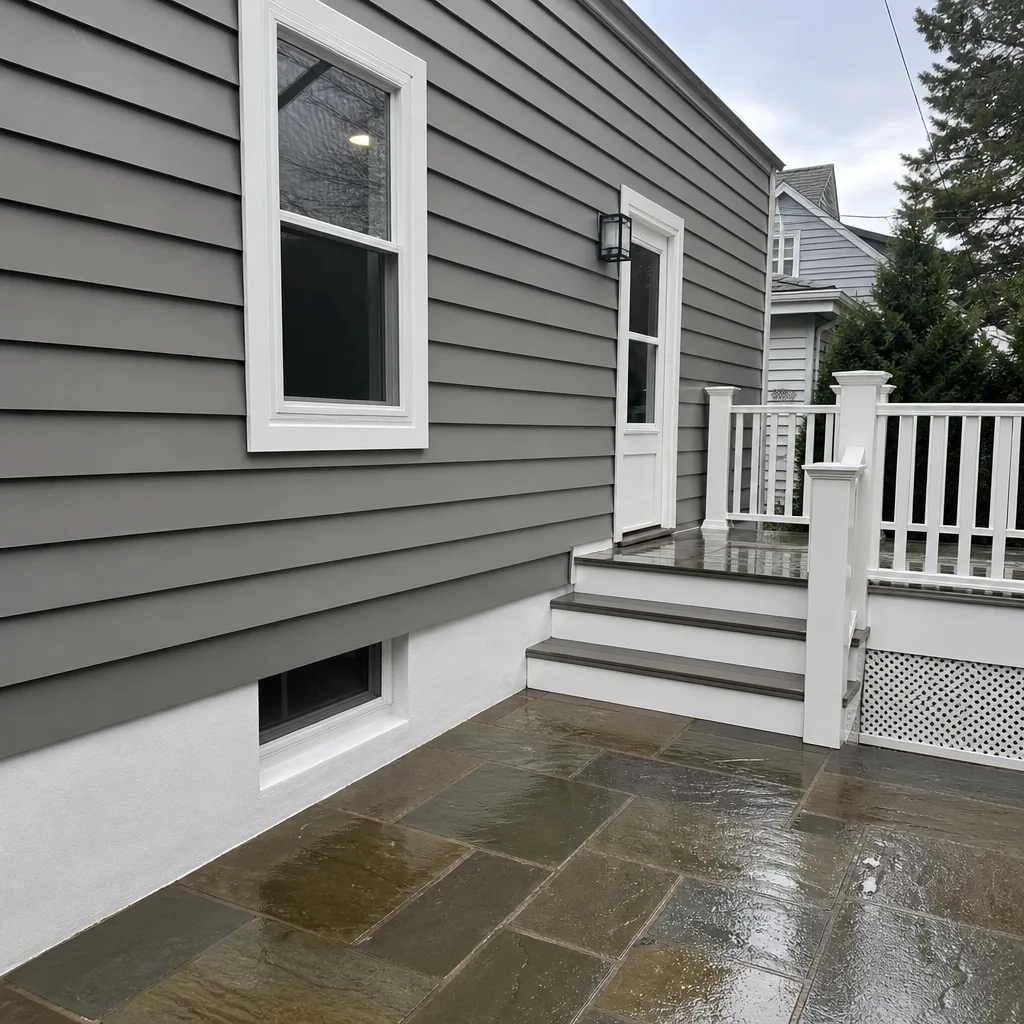 After
After24/7 Emergency Mold Remediation in River Edge
Mold remediation in River Edge typically costs $1,800-$6,500 depending on how far the growth has spread behind finished walls, and the first crew can usually be at your door within 45 minutes of your call. We answer the phone live at (640) 333-9625, 24 hours a day. If you’ve had water in a finished basement on Kinderkamack Road or anywhere near the Hackensack, don’t wait for visible mold to appear. By the time you see it on drywall, the colony behind that wall is usually three to five times larger. The first hour matters because mold that gets moisture again, after a previous remediation or a slow leak, regrows faster the second time. We do a free visual inspection, we carry professional-grade drying equipment on the truck, and we can have containment up the same visit if the situation calls for it.
Understanding Mold Remediation Severity in River Edge Properties
Mold in River Edge homes rarely announces itself the way a sump pump failure does. Most of the borough’s housing stock was built between the 1940s and 1960s, Cape Cods and colonials with finished basements that sit close to the water table. When the Hackensack backs up into those basements, water lingers for 48 to 72 hours because this part of Bergen County drains slowly. That standing time is what turns a wet drywall job into a mold remediation job. We classify mold work by how far moisture has migrated and whether the affected materials are porous. Drywall, carpet pad, and insulation are porous, they absorb water and hold it. Studs and concrete are less porous but still wick moisture upward. In River Edge basements that flooded during Irene in 2011 and then again during Sandy 14 months later, we regularly find layered damage histories. Walls that were replaced but never fully dried before re-closure, with mold growth behind baseboards that looked clean from the outside. Our Mold Remediation team probes behind finished surfaces before writing any scope, because visual inspection alone misses too much in a floodplain borough like this one.
Why River Edge Property Owners Choose Floodline Restoration Co.
- 45-minute response commitment to River Edge: crews are staged locally and we dispatch the moment you call, not after a callback from a sales rep.
- Live answer, 24 hours a day: a real dispatcher picks up at 2 a.m. Not a recording. You’ll speak to someone who can send a crew.
- IICRC-certified technicians: our crews hold WRT, FSRT, and AMRT certifications, and they arrive background-checked and uniformed.
- Free visual inspection: we assess the scope before any work is authorized, and you get a written scope before we start.
- Direct insurance billing: we document everything and coordinate with your carrier, so you’re never playing messenger.
- One team from extraction to rebuild: the same crew that sets containment handles the drying, the clearance testing, and puts the walls back.
Our Mold Remediation Process
Inspection & Assessment
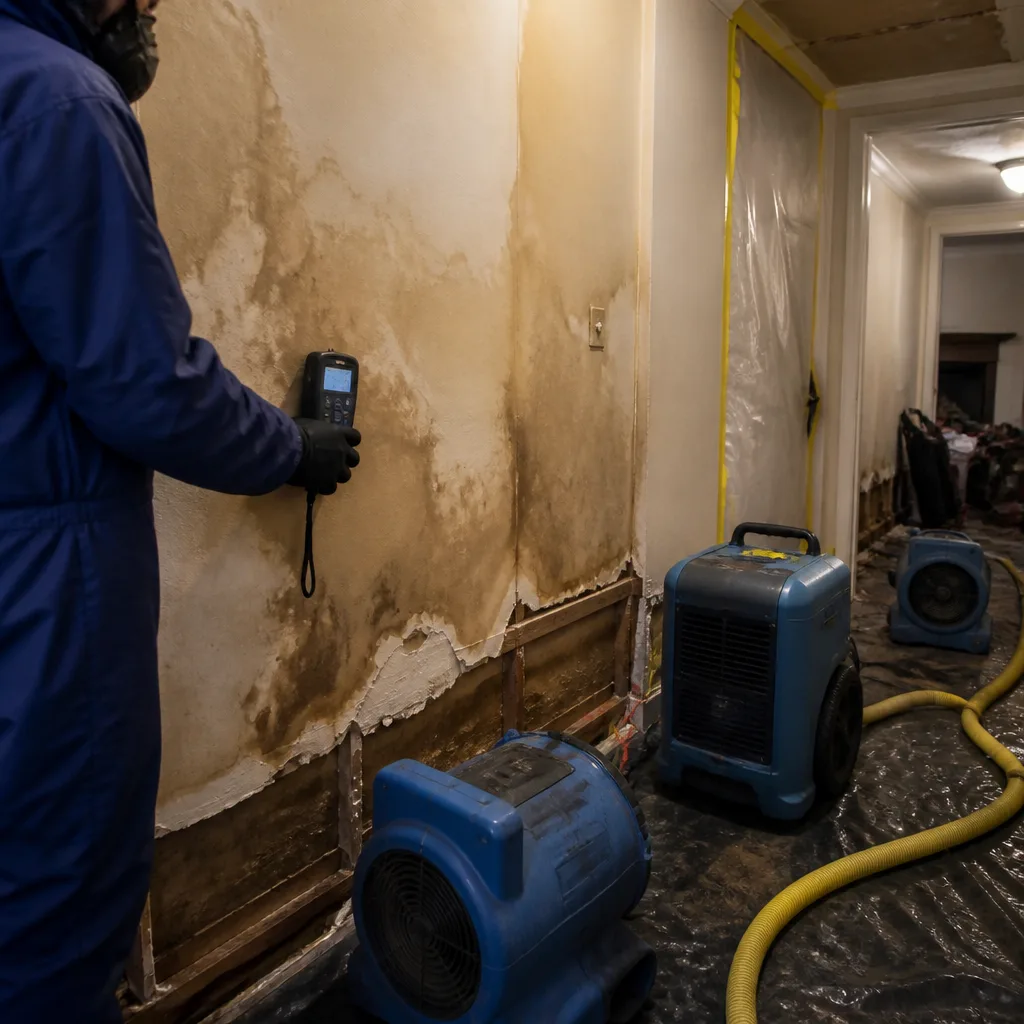
We start with thermal imaging and moisture meters, not just a flashlight. In River Edge basements that have flooded more than once, we probe behind baseboards and in stud cavities. A clean visual on a finished wall rarely tells the whole story in this floodplain.
Containment & Stabilization
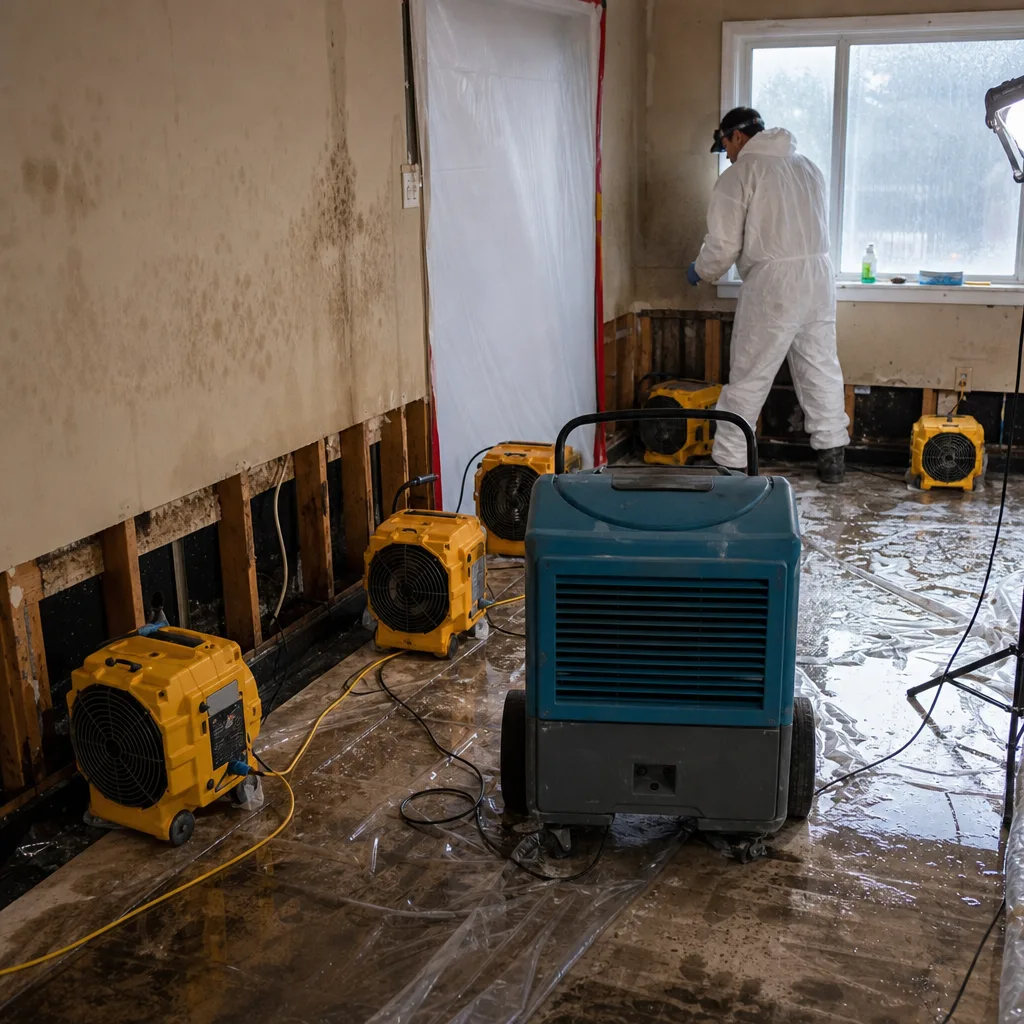
We seal the affected area with 6-mil polyethylene and run HEPA air scrubbers under negative pressure. This keeps mold spores from moving into the rest of the home during removal.
Drying & Dehumidification
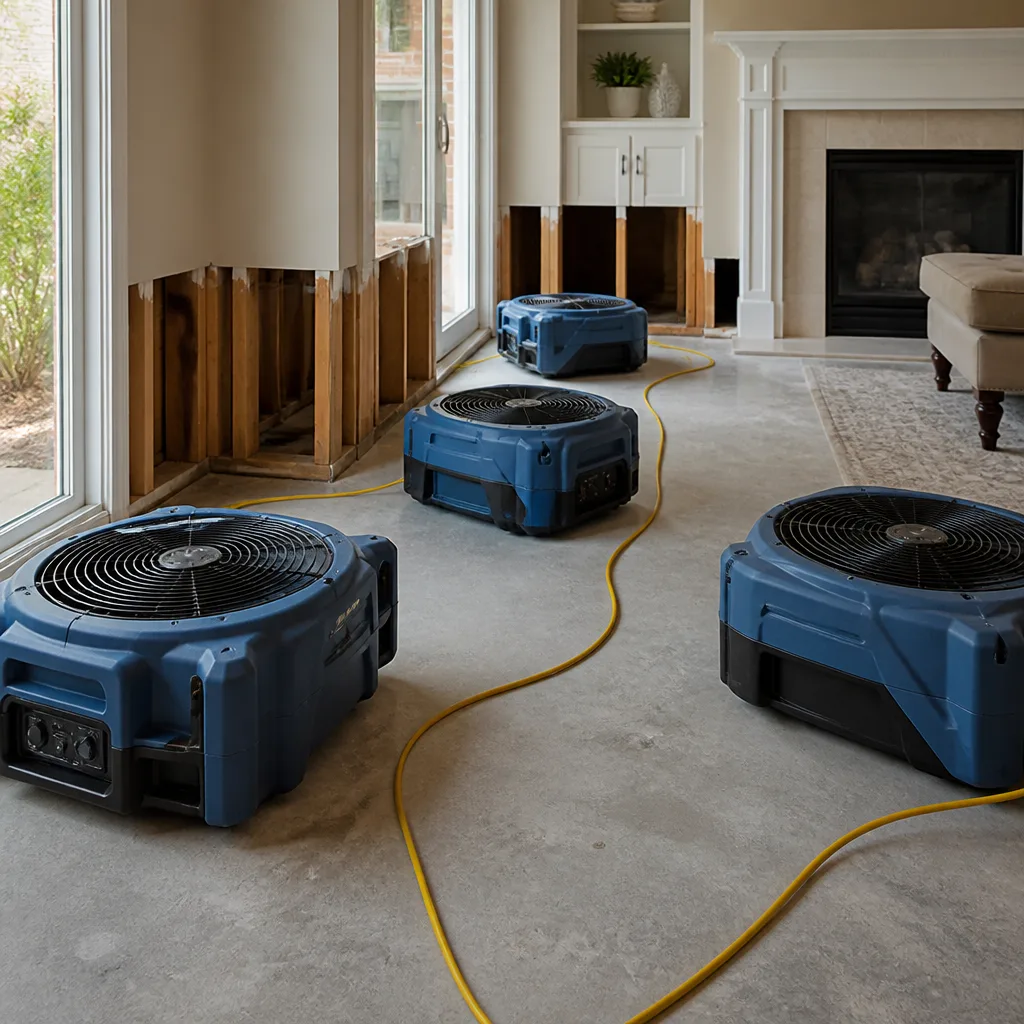
Dri-Eaz dehumidifiers and B-Air air movers run until moisture mapping shows framing below 12%. In River Edge basements with slow-draining floodwater, this phase takes days, not hours. Skipping it is how mold regrows behind new drywall.
Material Removal & Cleaning
Porous materials that got wet, drywall, insulation, carpet pad, are removed and bagged on site. Non-porous surfaces are HEPA-vacuumed and wiped with an antimicrobial, but we do not treat finished surfaces as a substitute for opening what’s wet.
Air Quality Restoration
HEPA air scrubbers run throughout remediation, and we take air samples before and after the job. You get clearance testing results in writing, not a verbal “it’s fine.”
Repairs & Restoration
Once the structure is dry and clean, we replace what we removed. Drywall, insulation, trim, paint. The same crew does it, so nobody has to reconcile two different contractors’ versions of what happened.
Need Emergency Mold Remediation in River Edge Now?
Crews minutes away, answering live 24 hours a day. The sooner we start, the less it costs.
Working With Your Insurance Company
Mold claims in River Edge are often tied to flood events, and flood coverage under FEMA’s NFIP differs from a standard homeowner’s mold rider. We don’t guess at what your policy says. We document the loss from the first hour with photos, moisture readings, and a line-item scope written the way carriers expect. Our team communicates directly with your adjuster, so you don’t have to translate drying logs or explain why a wall needed to be opened. If the carrier asks for a second opinion or specific documentation, we provide it in the format they need. The goal is that you get what your policy covers without becoming a full-time claims coordinator.
What We Provide Your Insurer
- Thorough documentation of the loss
- Photos of all damage, room by room
- Moisture readings and drying logs
- A detailed, line-item scope of work
- Direct coordination with your carrier
Built for River Edge’s Loss Calendar
River Edge floods on a schedule. Nor’easters push the Hackensack over its banks from October through March, and tropical remnants do the same between August and October. January and February bring frozen pipes in older Cape Cods and ranches where supply lines run through unheated crawl spaces. Spring thaw saturates the soil, and basements that stayed dry through February start seeping in March. The pattern matters because mold doesn’t care what month the water showed up. It cares how long the materials stayed wet. After a January pipe burst, the dry winter air can fool you. The visible drywall dries, but the insulation behind it doesn’t. Three months later, in April, that’s when the musty smell arrives and the mold has a head start. We plan our drying schedules around River Edge’s weather patterns, because a basement that dried in 48 hours after a July thunderstorm will take four days after a January flood, and both need to be verified with meters before anyone closes a wall.
Mold Remediation Across River Edge’s Neighborhoods
The homes along Kinderkamack Road and the side streets running toward the river see the most basement flooding, because that’s where the grade drops toward the floodplain. On the east side near New Bridge Landing and the Steuben House, we work in older homes with stone foundations and crawl spaces that hold moisture after every high-water event. Over by Cherry Hill School and the residential blocks around Midland Avenue, ranches with original 1950s framing sit low to the ground, and their crawl spaces stay damp for weeks after the river recedes. The Roosevelt School area, closer to the New Milford line, has a mix of split-levels and colonials where finished basements sit only a few feet above the water table. Each neighborhood has its own typical loss pattern, but they all share one thing: the Hackensack decides when the drying has to happen, and it doesn’t ask for a schedule. Our crews know the response routes through River Edge, from Route 4 to the side streets off Van Saun Park, and we stage equipment so we’re not fighting traffic when the call comes in.
Specialized Mold Remediation Services We Offer in River Edge
Mold Inspection & Testing
We test before we treat. Air sampling, surface sampling, and moisture mapping tell us whether the problem is active growth, dormant spores, or a humidity issue. In River Edge basements with repeated flood history, we test behind finished walls, not just in the open air. A lab report gives you and your insurer something objective to hold onto.
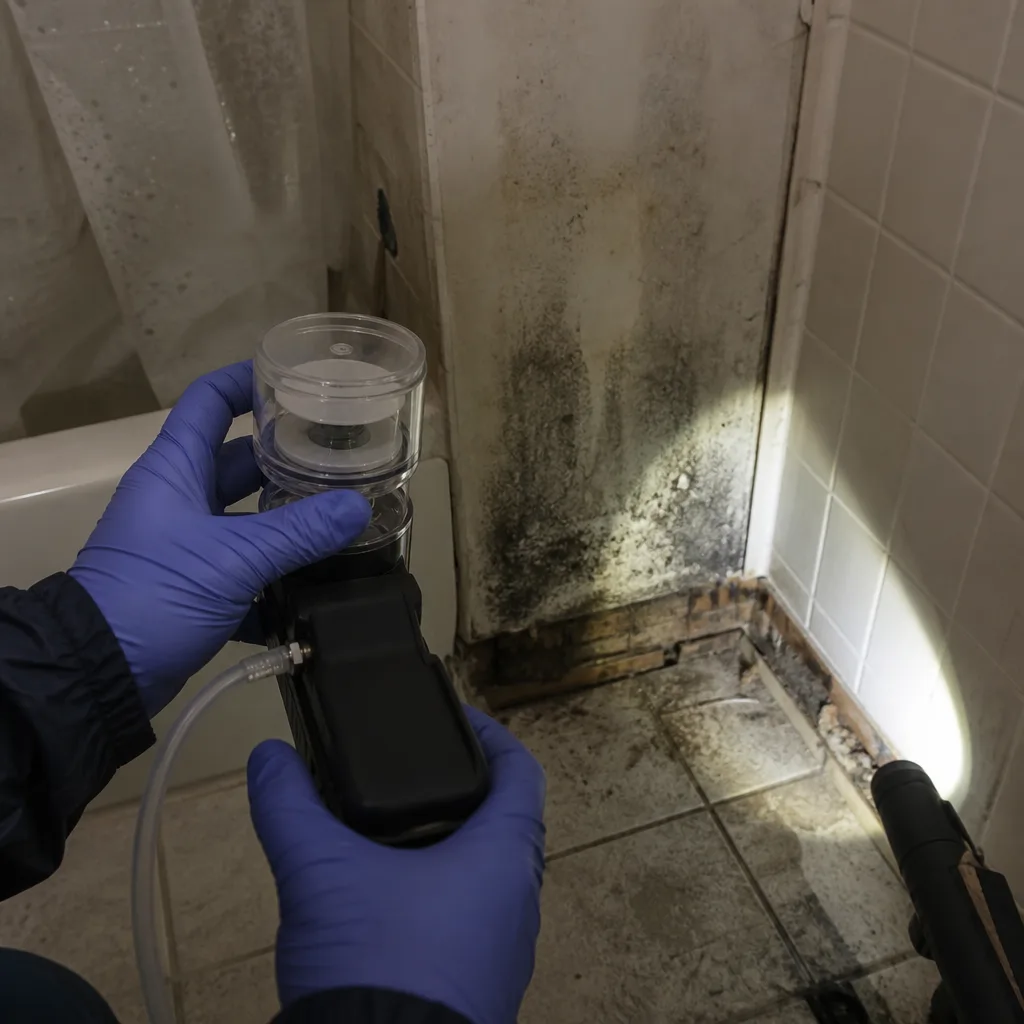
Mold Removal
Removal means getting the mold out of the structure, not painting over it. We remove affected drywall, insulation, and other porous material under containment. Then we clean the framing and HEPA-vacuum the space. What’s left is a clean, dry structure ready for whatever rebuild you choose.
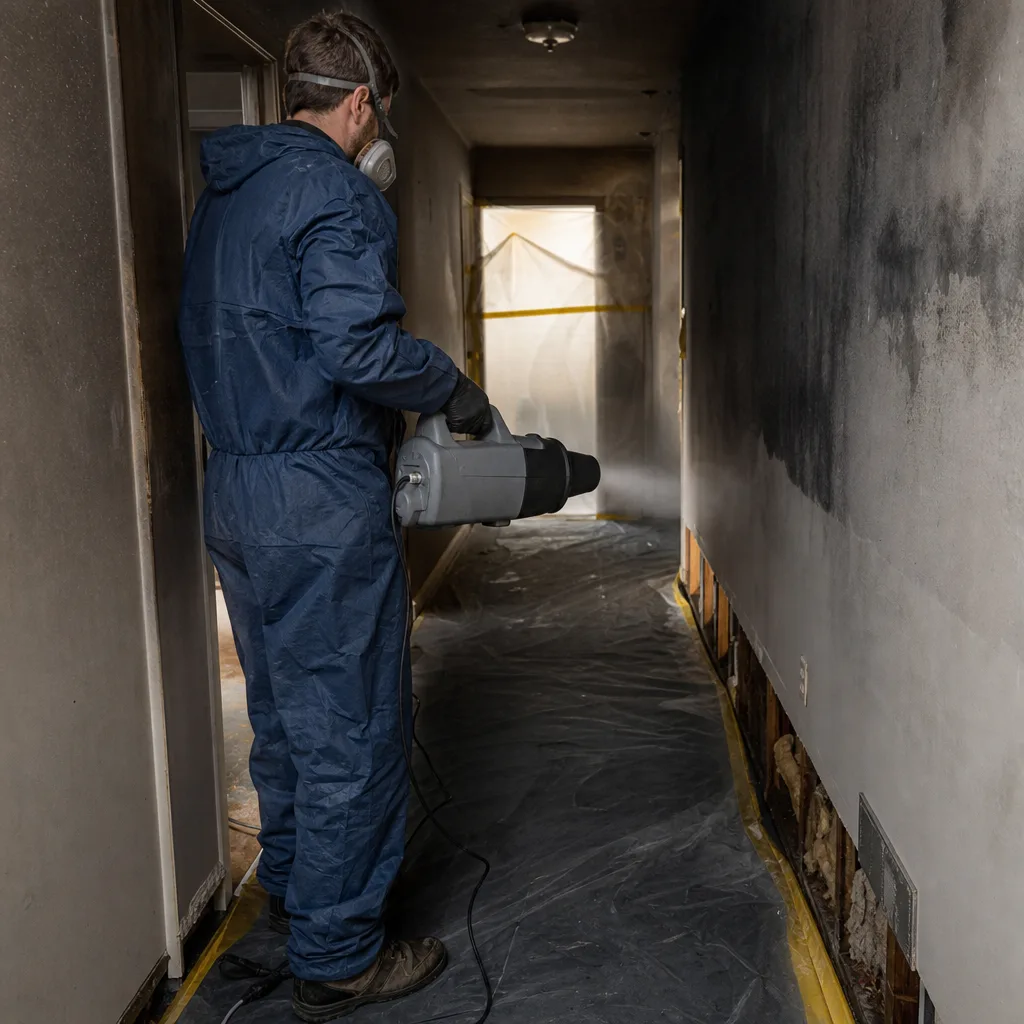
Black Mold Remediation
Stachybotrys chartarum, what most people call black mold, needs constant moisture to grow. In River Edge, that often means a slow leak inside a wall cavity or a crawl space with standing water. We treat it the same way we treat any mold: containment, removal of the food source, drying, and clearance testing. The color doesn’t change the procedure, but it does change how carefully we contain.
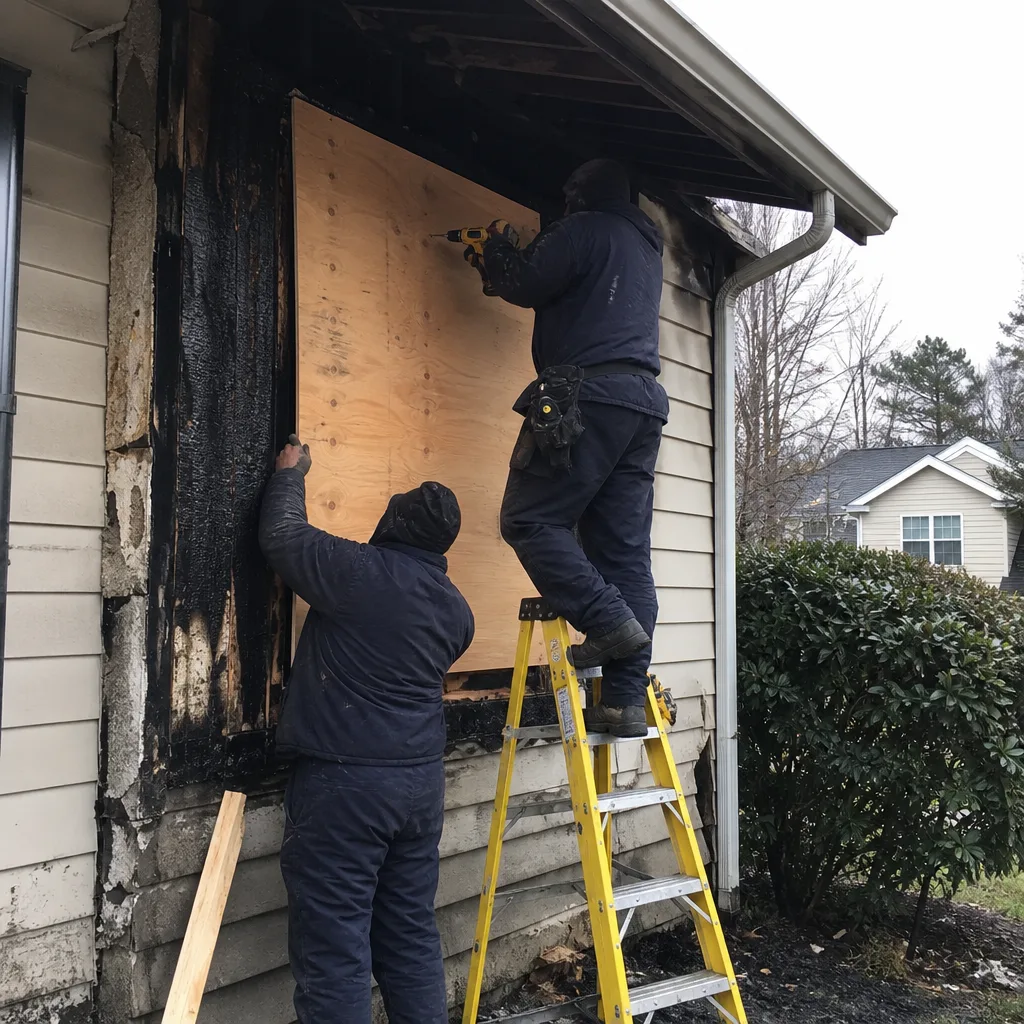
Air Quality Restoration
After a flood or a long-standing moisture problem, the air in a River Edge basement can carry spore counts ten times higher than the rest of the house. We run HEPA air scrubbers during remediation and take before-and-after air samples. You get the numbers in writing.
Crawl Space Treatment
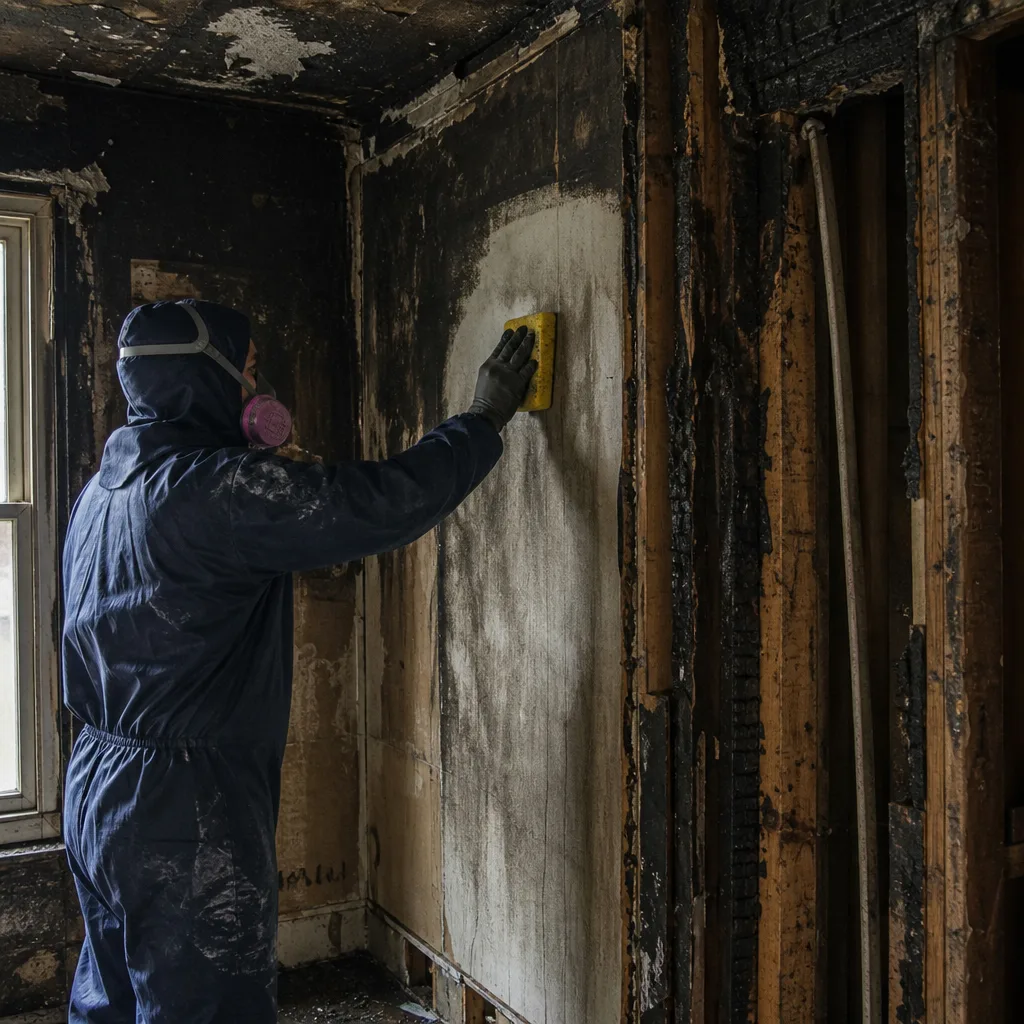
Ranch homes in River Edge often have vented crawl spaces that were code-compliant in 1955 but are mold factories in 2026. Warm, humid air hits cool foundation walls, condensation forms, and mold follows. We treat the crawl space with containment barriers, dehumidification, and surface cleaning, then address the moisture source so the mold doesn’t come back in a season.
What happens when you call
- 1
A real person answersNo phone trees - you reach a local pro.
- 2
You get an upfront price rangeHonest numbers before anyone is dispatched.
- 3
A background-checked tech heads outLicensed & insured, dispatched right away.
- 4
You approve before work beginsNothing starts until you say go.
Mold Remediation Costs in River Edge, NJ
Here’s what we see in River Edge. A small, contained mold job in a single wall cavity runs $1,800-$3,200. A finished basement with mold behind drywall on two or three walls runs $3,500-$6,500. If the crawl space needs full treatment and encapsulation, expect $4,000-$8,000 depending on square footage. A full mold inspection with air sampling and lab analysis runs $350-$600, and if you hire us for remediation after the inspection, we credit that fee toward the job. What moves the price? How much drywall has to come out, how wet the framing still is, and whether the water source is still active. Insurance covers mold remediation only when it’s tied to a covered water loss, and flood-related mold needs NFIP flood coverage, not a standard homeowners policy. That’s exactly why we document everything and handle the adjuster communication. Call (640) 333-9625 for a free visual inspection and a firm scope. We put the numbers in writing before we open the first wall.
We Also Serve Cities Near River Edge
We run the same crews and same equipment into New Milford, Oradell, Paramus, and Maywood. If you’re on the border of River Edge, don’t overthink the municipal lines. Call and we’ll be there.
Serving River Edge, NJ - Our Local Coverage Area
We’re based in the River Edge area and know this community well. Use the map below to see our service coverage - if you’re nearby, we can almost certainly help.
River Edge Mold Remediation Questions, Answered
How do you find hidden mold behind finished basement walls in River Edge after repeated floods?
We probe behind finished surfaces with moisture meters and thermal imaging before we write a scope. A visual inspection of a riverside River Edge basement misses mold that grew after the last flood and never got fully dried. On a 1950s Cape Cod off Kinderkamack Road, we opened a finished basement after the latest Hackensack backwater event and found drywall that had been replaced after Sandy but never fully dried before re-closure. Moisture readings still showed 28% in the stud cavities, with hidden mold behind the baseboards. We set containment, removed the re-wetted drywall, and ran structural drying with Dri-Eaz dehumidifiers and air movers until moisture mapping confirmed the framing was below 12% before any rebuild. If your basement has flooded more than once, assume the mold is behind the wall, not in front of it. Call (640) 333-9625 and we’ll find it.
Does living in a FEMA AE flood zone change how you remediate mold in River Edge?
Yes. In an AE zone, the water isn’t a one-time event. It returns. That means our scope has to account for what happens the next time the Hackensack rises. We dry to a lower moisture standard, we’re more aggressive about removing porous materials, and we talk to you about flood-resistant rebuild options like closed-cell insulation, removable baseboards, and elevated mechanicals. A remediate-and-replace job that would work in Paramus on higher ground won’t hold up on the River Edge floodplain. The next flood will find any corner we didn’t dry, and the mold will be worse.
What category of water has likely affected my finished basement in River Edge?
If the water came from the Hackensack backing up or from surface floodwater running into your basement, it’s Category 3 water, meaning it’s contaminated with sewage, river sediment, or both. That changes the remediation scope significantly. Any porous material that got wet, drywall, carpet, insulation, has to go, regardless of how it looks. It also means antimicrobial treatment alone won’t do it. The materials have to be removed and the structure cleaned before drying starts. If the water came from a clean supply line, it’s Category 1, but if it sat for 48 hours before we got there, it degrades to Category 2 or 3. In River Edge, where floodwater lingers for two to three days, we almost never see clean Category 1 situations after a storm.
Why do you need to run air movers and dehumidifiers for days after mold removal in River Edge basements?
Because wood and concrete hold moisture long after the surface feels dry. If the framing in a River Edge basement is at 20% moisture content, and we close the wall anyway, the mold regrows behind the new drywall within weeks. We run Dri-Eaz dehumidifiers and B-Air air movers until moisture mapping shows everything below 12%. In a Hackensack floodplain basement with slow drainage and high water table, that routinely takes three to five days. You can’t shortcut it with heat guns or bleach. The drying log we hand you at the end shows exactly what the readings were each day, and the same log goes to your insurer.
Can you remediate mold in a crawl space of a River Edge ranch without tearing out the whole foundation?
We can. Most River Edge ranches have vented crawl spaces with original 1950s foundations that are structurally fine. The problem is moisture, not the foundation itself. We contain the crawl space, remove wet insulation and debris, clean the framing and subfloor, and then address the moisture source. In many cases that means sealing vents, installing a vapor barrier, and adding a dehumidifier sized for the space. We don’t tear out a foundation unless the foundation itself is compromised, and in our experience working River Edge ranches, that’s the exception, not the rule.
How fast can someone actually get here?
We commit to 45 minutes to River Edge. We stage crews in the area because we know where the flood calls come from and we know the response routes, down Kinderkamack Road, across from Paramus, through the side streets off Route 4. When you call (640) 333-9625, you get a live dispatcher, not a recorded message, and a crew is on the way the same call.
Will my homeowner’s insurance cover mold remediation in River Edge?
It depends on the cause of the water and your specific policy. Mold remediation tied to a sudden and accidental water loss, like a burst pipe, is often covered up to a stated sublimit, which in many policies sits between $1,000 and $10,000. Mold caused by floodwater requires flood insurance through the NFIP or a private carrier, and the coverage terms differ. We don’t guess at your policy. We document the loss from the first hour, coordinate directly with your adjuster, and submit a line-item scope in the format carriers expect. The best way to find out is to call us and let us look at what actually happened.
What should I do in the first 30 minutes after finding mold in my River Edge home?
Don’t paint over it. Don’t bleach it. Don’t open the wall yourself, because that can spread spores through the house. Close the door to the affected room if you can. Turn off fans and the HVAC system if it’s circulating air through the space, since forced air can pull spores into every room. Take photos for your records. Then call (640) 333-9625. A free visual inspection costs you nothing, and the earlier we find the moisture source, the less material has to be removed.
We hold the line the water left on the wall as the starting point. Not the finish line. Floodline Restoration Co. is owned and operated by Curt Bowman, and everyone who shows up at your door in River Edge works under the same written guarantee: the 90-Day Done Right Promise. Done right, and backed in writing. Call (640) 333-9625 for a free estimate. Current offers for River Edge homeowners: $50 off any repair over $250, the $89 seasonal tune-up, and a standing 5% discount for seniors and veterans.
Written by Curt Bowman, Owner at Floodline Restoration Co., serving River Edge and the surrounding communities for over 42 years.