
Free visual inspection and a written scope of work before any mitigation begins - photos, moisture readings, and drying logs go in your claim file
The scope we write is the scope we bill. Anything new gets shown to you, in writing, before we touch it.
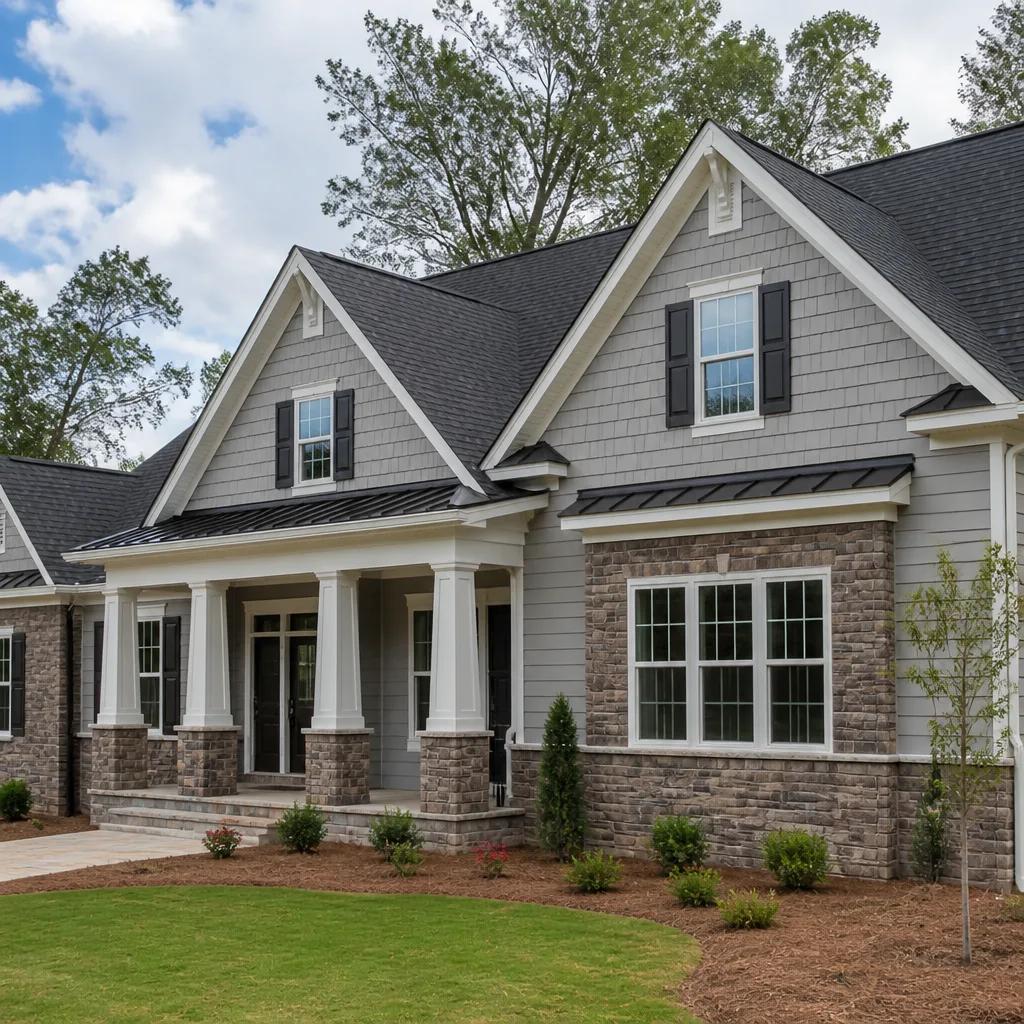
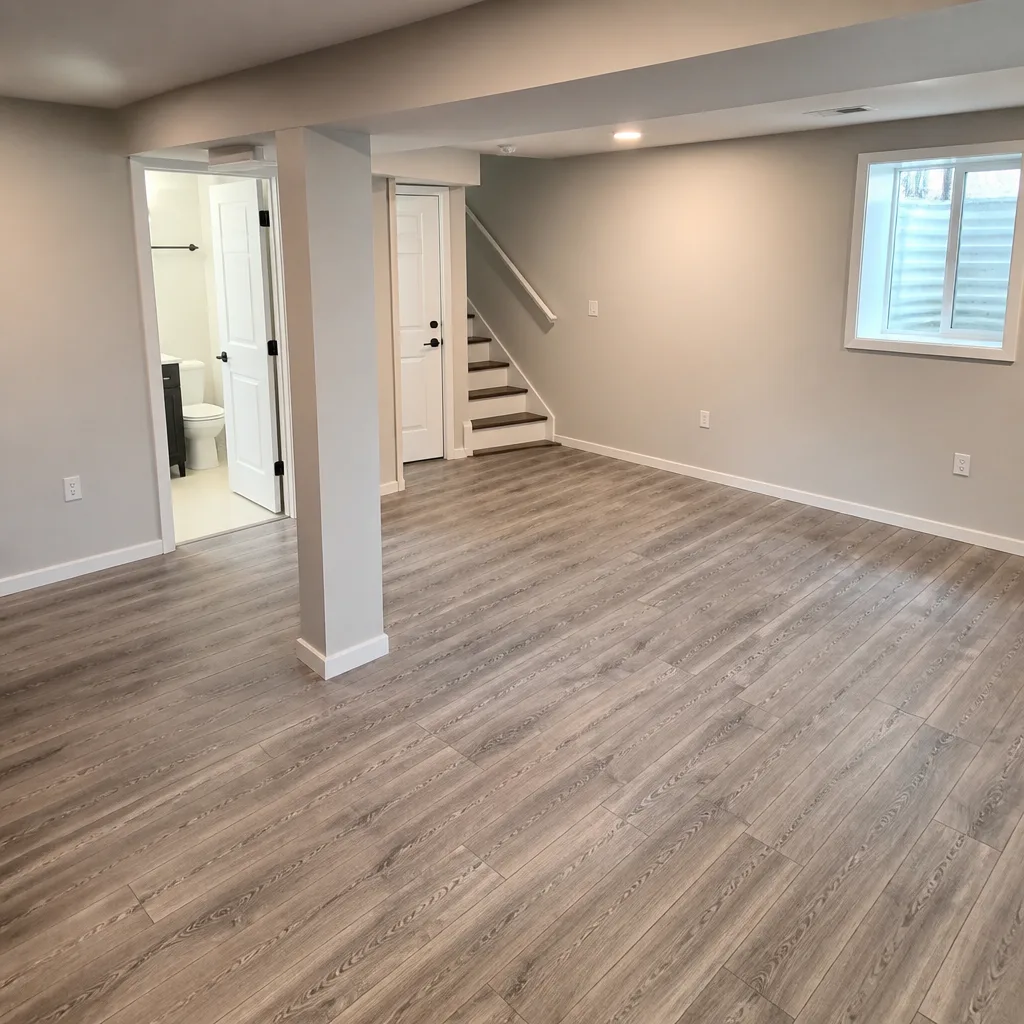
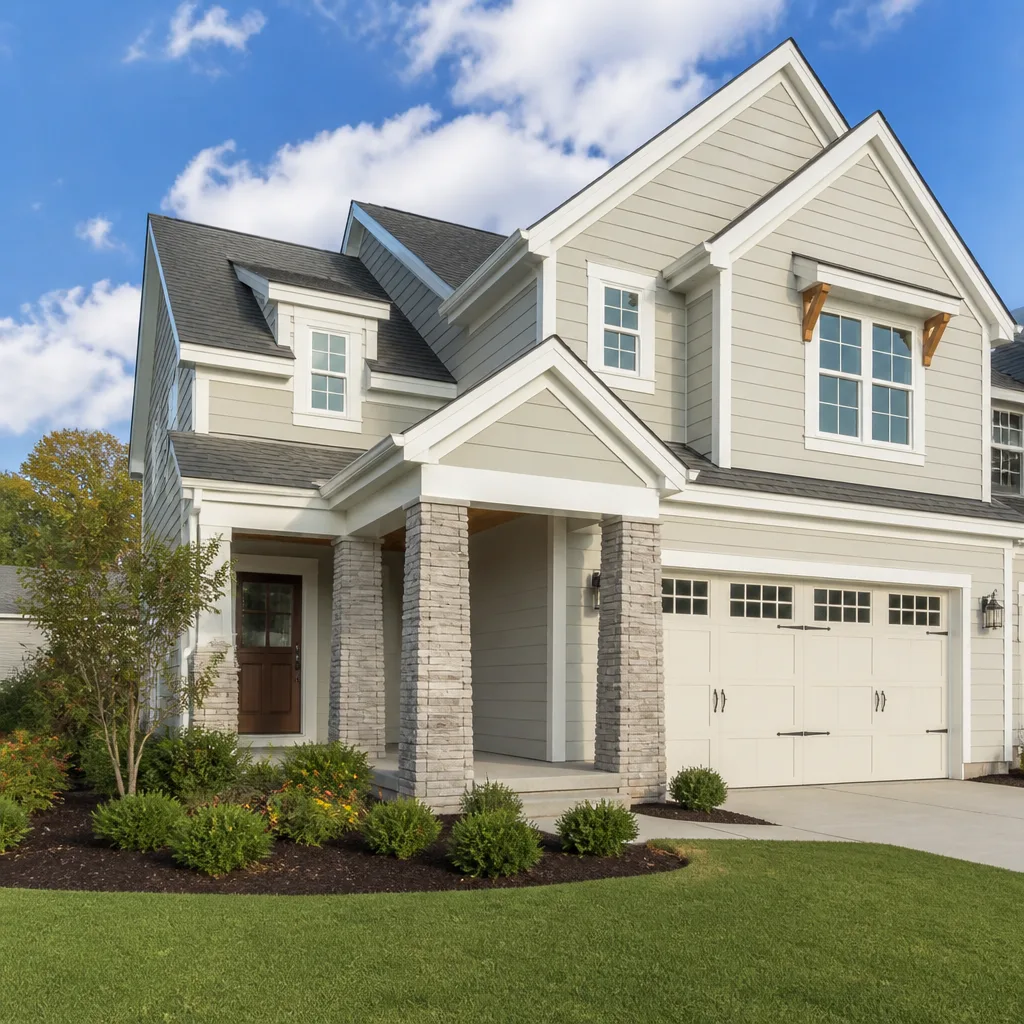
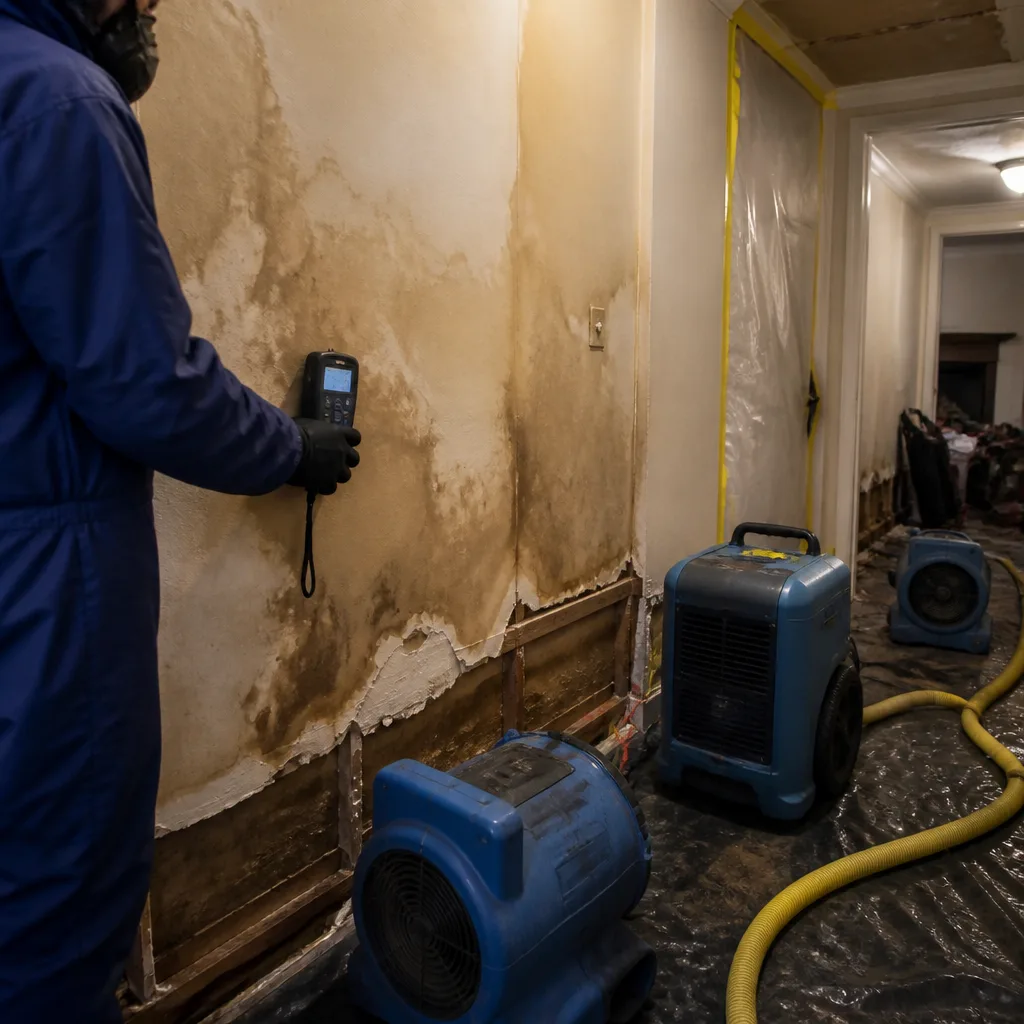 Before
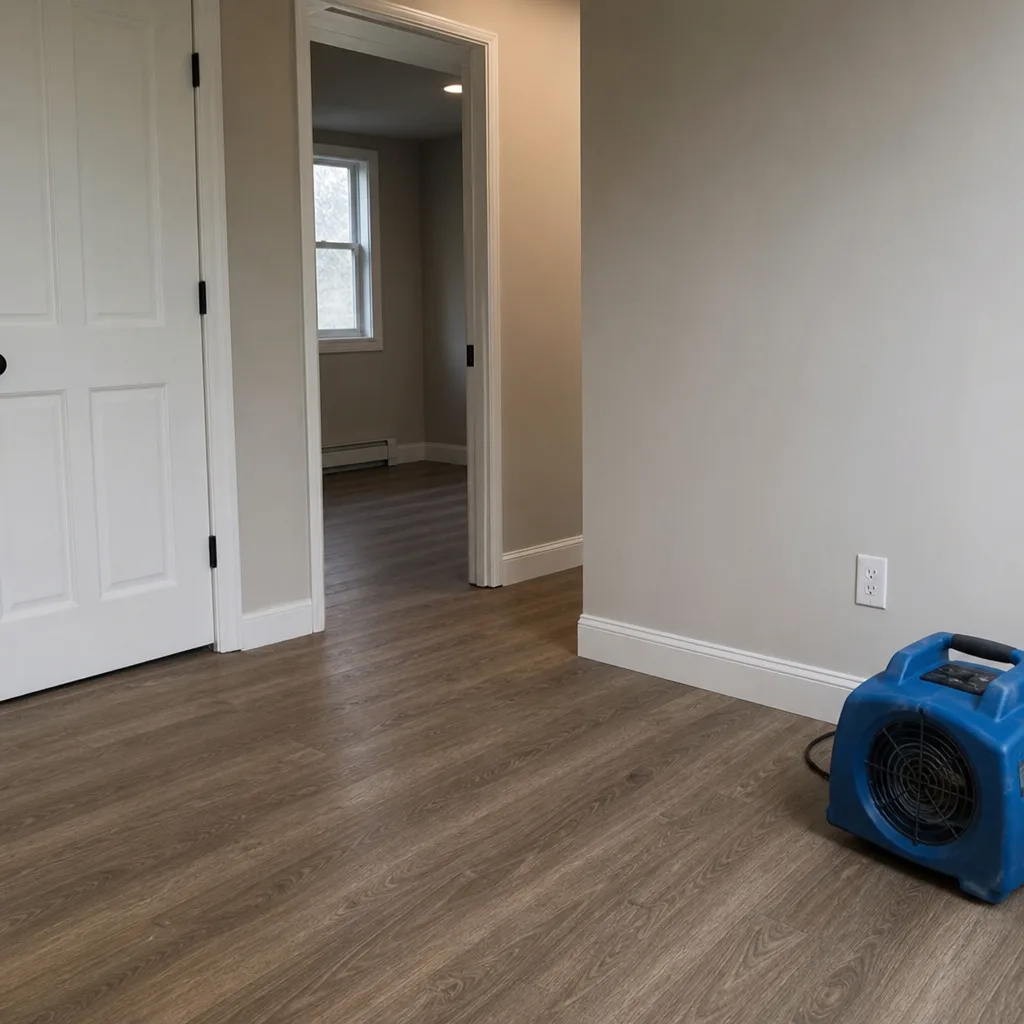 After
After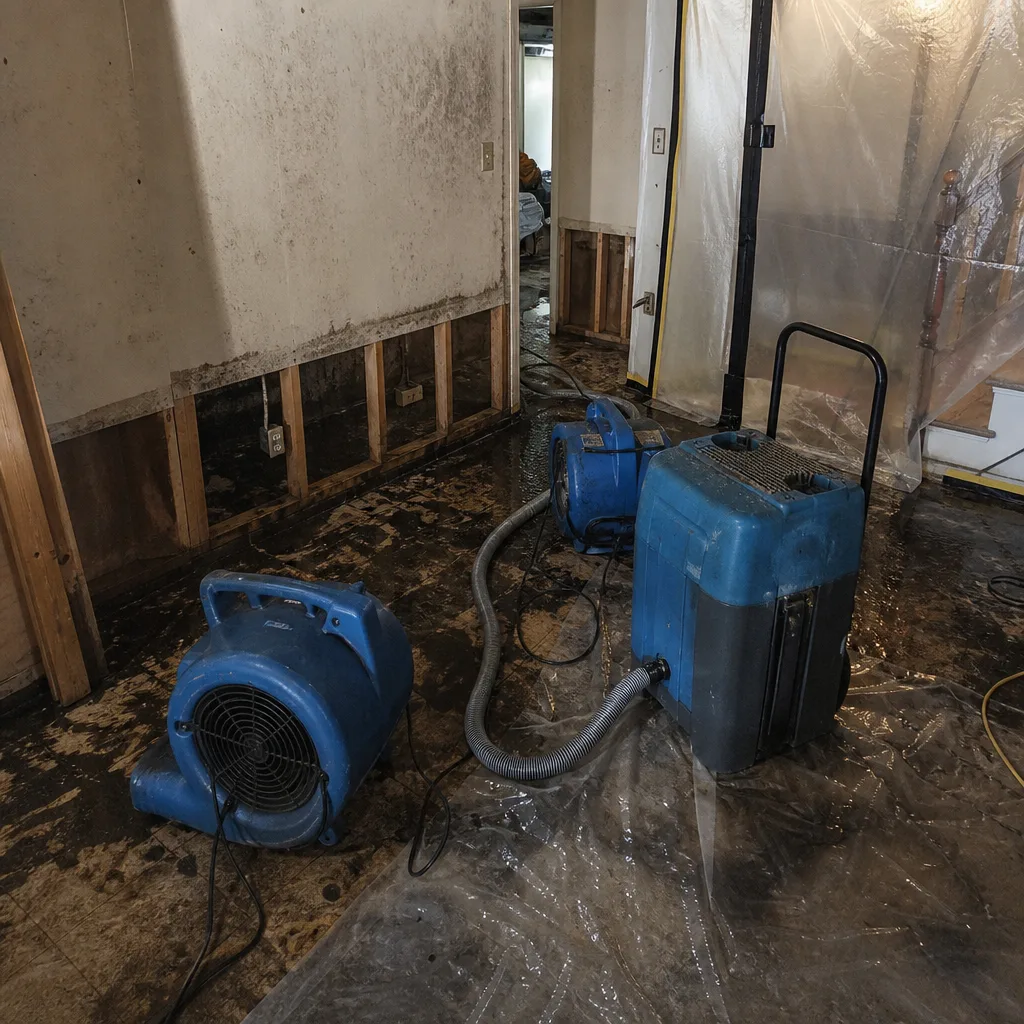 Before
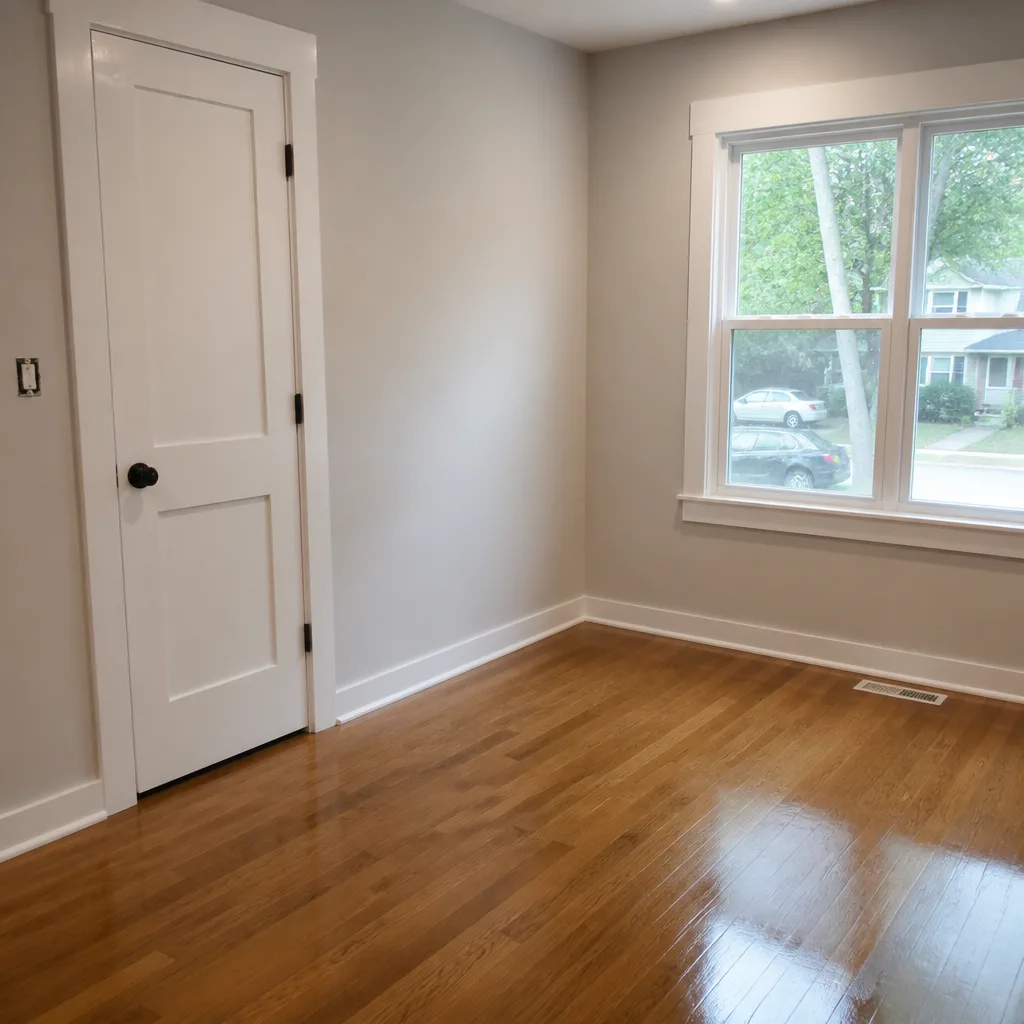 After
After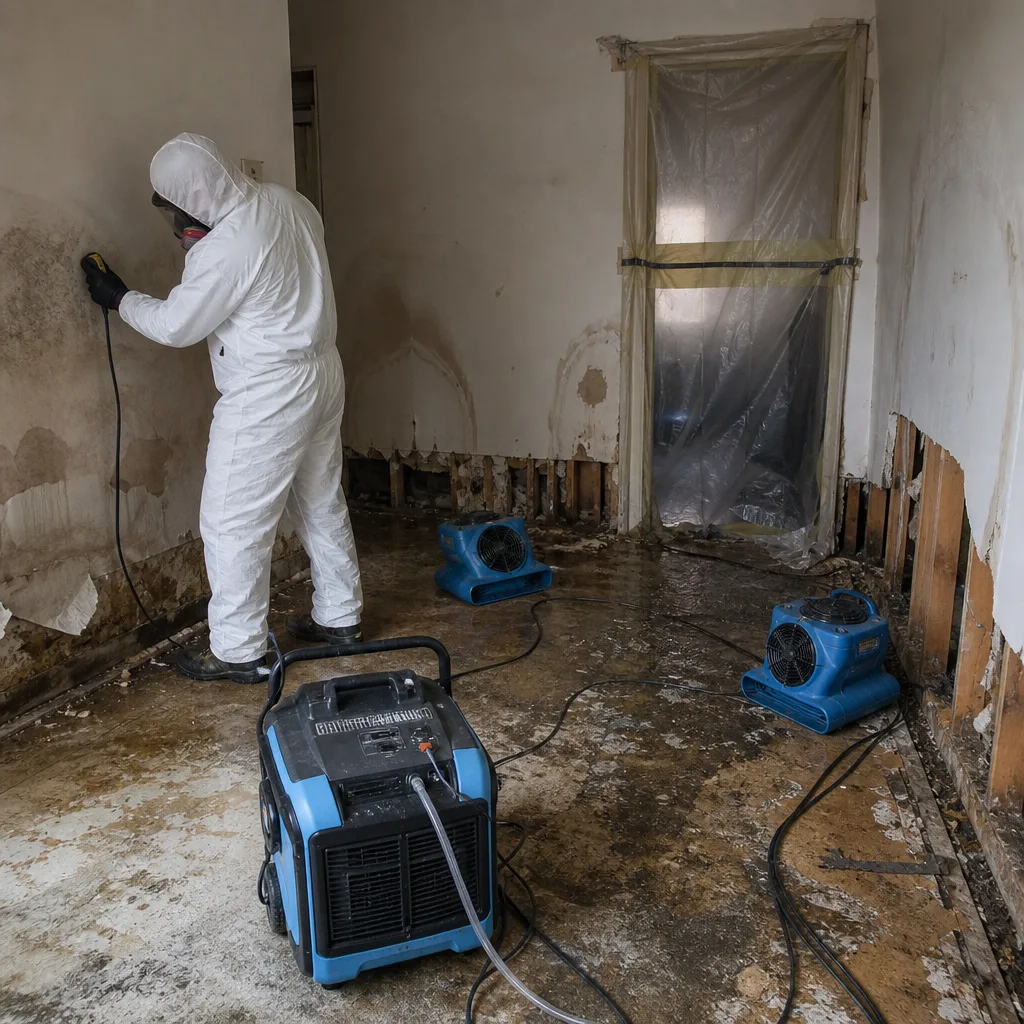 Before
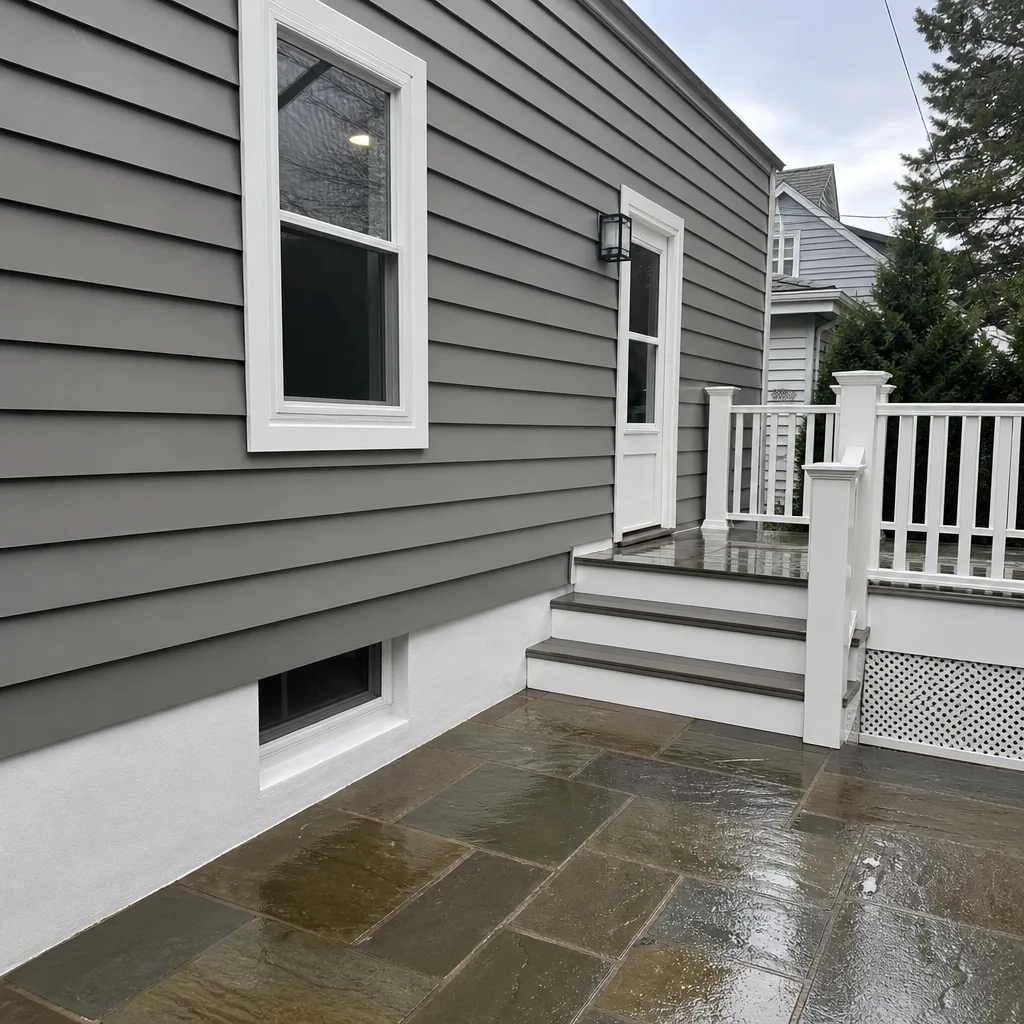 After
After24/7 Emergency Water Damage Restoration in Fair Lawn
Water damage restoration in Fair Lawn typically runs $1,800-$6,500 for a basement flood, with emergency extraction alone between $500 and $1,400. The bigger cost driver is waiting: water sitting in a 1950s Cape Cod off Morlot Avenue or a Radburn colonial moves through plaster, wicks up drywall, and feeds mold in under 48 hours. Our crews answer live around the clock and dispatch to Fair Lawn immediately, with extraction equipment running the same visit. Call (640) 333-9625 the moment you see standing water. The first hour decides whether you’re drying floors or replacing them.
We’re Floodline Restoration Co., and we work the Passaic River flood corridor every season. Water Damage Restoration isn’t a sideline for us. It’s the core of what we do, and in Fair Lawn it comes with a specific set of complications we’ll explain plainly below.
Understanding Water Damage Restoration Severity in Fair Lawn Properties
Fair Lawn’s housing stock runs older than most Bergen County towns. The post-WWII Cape Cods, colonials, and ranch homes built between the late 1940s and 1960s dominate most blocks, and the 1929 Radburn planned community adds its own National Historic Landmark layer of plaster-and-lath construction. That matters for restoration because older walls hide water differently than modern drywall. In a 1950s ranch on Morlot Avenue, water from a burst supply line can sit behind baseboard trim and travel along the wall cavity for days before staining appears. By the time you see it, the real damage is already structural.
Severity also depends on the water itself. Category 1 water is clean, from a supply line or water heater. Category 2 carries some contamination, like washing machine overflow. Category 3 is what the Passaic delivers during flood events: black water carrying sewage, fuel, soil, and whatever else the river picked up upstream. Fair Lawn sits so close to the river that a Category 3 event is never theoretical. Treating river water as anything less than Category 3 is a mistake we see repeated by crews from drier towns.
We walk every Fair Lawn job with a moisture map: thermal imaging, hygrometers, and probing in thirty-plus locations. The map tells us where the water actually went, not just where you can see it. That’s the difference between drying a room and missing the pocket of moisture behind a finished basement wall that turns into a mold colony by spring.
Why Fair Lawn Property Owners Choose Floodline Restoration Co.
- 45-minute response commitment. We dispatch from right outside Fair Lawn, with crews staged to reach River Road, Morlot Avenue, or the Radburn district fast. A live dispatcher takes your call and a truck rolls immediately.
- Real people at 2 a.m. You call, a person answers. No phone tree, no “press 2 for emergencies.” The dispatcher who answers is the one who sends the crew.
- IICRC-certified crews. Our technicians hold IICRC Water Damage Restoration Technician (WRT) and Applied Microbial Remediation Technician (AMRT) certifications. That’s not a sales claim; it’s the training that tells them to probe behind finished walls in repetitive-loss homes.
- Free visual inspection. Before any work begins, we walk the damage with you and explain exactly what we’re seeing. You get a scope in writing before we cut anything open.
- Direct insurance billing. We bill your carrier directly and coordinate with the adjuster ourselves. You don’t play messenger between us and your insurer.
- One team from extraction to rebuild. The same certified crew that extracts Category 3 water on day one handles daily moisture readings, logs the dry standard, and rebuilds what needs rebuilding. No mid-job handoff to a stranger.
Our Water Damage Restoration Process
Inspection & Assessment
We arrive, walk the property, and build a moisture map using thermal imaging and hygrometers. We identify the water category, trace the migration path, and document everything for your insurer. In Fair Lawn homes with flood history, we also probe for pre-existing mold behind finished walls. The scope is written before work starts.
Extraction & Stabilization
Standing water comes out fast using truck-mounted extraction units. We remove saturated contents, set up containment where needed, and stabilize any structural hazards. For Category 3 water from Passaic overflows, we treat the contaminated area accordingly from the first minute.
Drying & Dehumidification
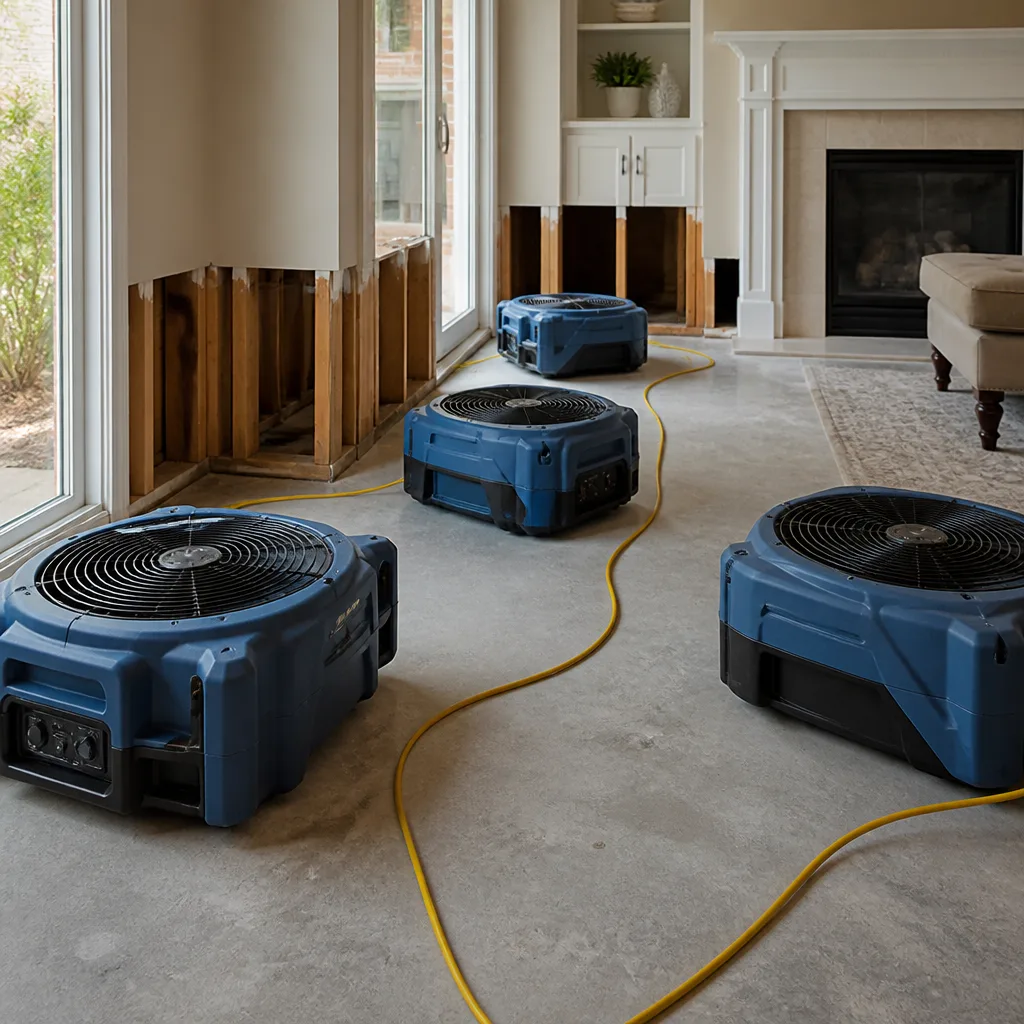
Professional-grade Dri-Eaz dehumidifiers and B-Air air movers go in, positioned based on the moisture map rather than guesswork. We return daily to take readings. In plaster-and-lath homes, drying time runs longer because trapped moisture behind older wall systems releases slowly. We adjust the plan as the readings dictate.
Cleaning & Sanitization
We apply antimicrobial treatments where mold or bacteria are present, remove contaminated materials, and sanitize salvageable surfaces. HEPA air scrubbers run during and after the process. For riverine floodwater, this step is not optional; it’s the difference between a dry room and a safe one.
Specialty Treatment for Repetitive-Loss Homes
Fair Lawn properties along the Passaic River carry a layered flood history. We probe behind finished basement walls for hidden mold colonies from prior storms, then treat what we find. Ignoring old damage beneath new water is the most common restoration failure we correct.
Repairs & Restoration
Once the moisture log shows the dry standard is met, we rebuild. Drywall, trim, flooring, insulation: the same crew that did the extraction does the reconstruction. You get the 90-Day Done Right Promise in writing before we leave.
Need Emergency Water Damage Restoration in Fair Lawn Now?
Crews minutes away, answering live 24 hours a day. The sooner we start, the less it costs.
Working With Your Insurance Company
Flood damage from Passaic River overflow is a different claim than a burst supply line, and your policy treats them separately. Standard homeowners insurance covers sudden internal events like a pipe failure. River flooding requires a separate flood policy, usually through NFIP. We document everything from the first hour: photos before we move anything, moisture readings, material samples, and a line-item scope. Our adjusters speak the language your carrier uses. We coordinate directly with them, including the daily drying logs they require for reimbursement. In Fair Lawn’s repetitive-loss corridor, carriers expect this documentation; we’ve done it hundreds of times. You get the full record regardless, so you’re never reconstructing a claim from memory.
What We Provide Your Insurer
- Thorough documentation of the loss from the first hour
- Photos of all damage, room by room
- Moisture readings and daily drying logs
- A detailed, line-item scope of work
- Direct coordination with your carrier and adjuster
Built for Fair Lawn’s Loss Calendar
Fair Lawn’s water damage season isn’t one season. It’s a calendar with four distinct danger periods. Winter brings deep freezes that crack copper supply lines in uninsulated basements and crawlspaces, and January 2024 saw a wave of burst pipes across Bergen County. Spring thaw and steady rain saturate the ground, and that water finds its way through foundation cracks in post-war ranches faster than most homeowners expect. Summer thunderstorms drop two inches of rain in an hour, overwhelming storm drains and sending runoff toward the river corridor. And then there’s the one that defines Fair Lawn: nor’easters and tropical storm remnants pushing the Passaic over its banks, which is why our Storm & Disaster Restoration in Fair Lawn crews stay on alert. Homes along River Road, near Morlot Avenue, and throughout the low-lying zones know this cycle well. Our crews do too. We schedule additional on-call capacity ahead of the heavy-rain windows we see in the forecast. It’s not luck that we get there fast. It’s planning.
Water Damage Restoration Across Fair Lawn’s Neighborhoods
Fair Lawn stretches across several distinct corridors, and each one presents water damage differently. The neighborhoods along River Road and near Memorial Park face the most direct Passaic River exposure. Homes here, many of them FEMA-designated Repetitive Loss properties, see flooding that starts outside and works inward. Our crews know these blocks: the basement stairs on 12th Street, the crawlspace access on Berdan Avenue, the finished basements that have flooded twice since 2011.
The Radburn planned community, across Fair Lawn Avenue near the train station, was built in 1929 with a radically different construction approach: shared green spaces, pedestrian paths, and older plaster-and-lath interiors that trap moisture differently than postwar drywall. Water restoration in Radburn requires slower drying cycles and more careful demolition. You can’t just rip and replace. The materials tell you what they’ll tolerate.
Up toward Morlot Avenue and Plaza Road, you find the classic 1950s ranchers and split-levels on larger lots. Here the water typically starts inside: burst supply lines, water heater failures, washing machine overflows. But those same basements sit low enough that a heavy storm sends groundwater up through the floor slab. And near Berdan Avenue and the commercial strip along Route 208, older cape cods with original framing hide water migration in wall cavities that never saw a moisture map until we put one on them.
Every neighborhood in Fair Lawn shares one trait: the water moves faster than the homeowner thinks, and the drying takes longer than the homeowner wants. We work that reality, not around it.
Specialized Water Damage Restoration Services We Offer in Fair Lawn
Emergency Water Extraction
Standing water in a Fair Lawn basement needs to go now, not in a few hours. We run truck-mounted extraction units that pull hundreds of gallons per hour. For River Road homes taking Passaic floodwater, extraction is the first step in a Category 3 protocol that includes full containment, contaminated material removal, and antimicrobial treatment before any drying begins. Our crews arrive with the extraction equipment ready to run.
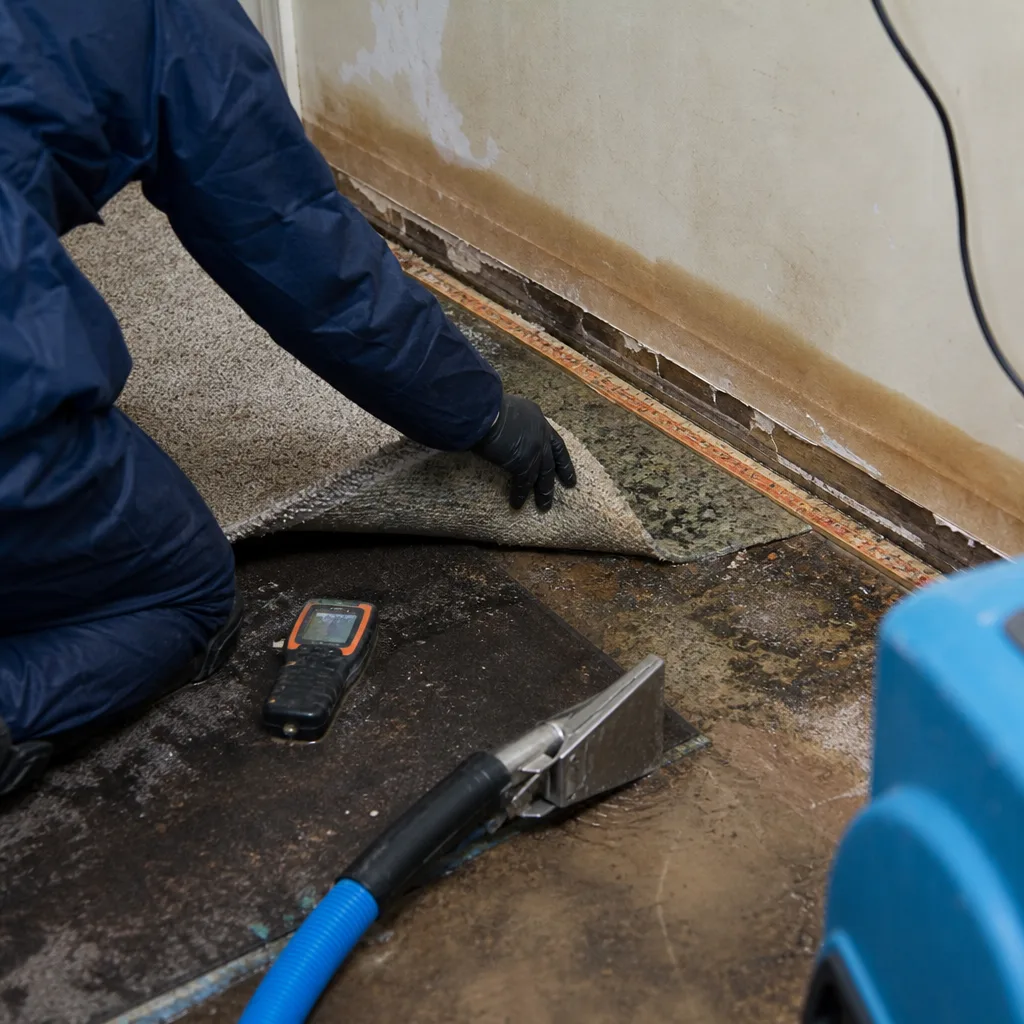
Structural Drying & Dehumidification
Drying a 1950s Fair Lawn ranch isn’t the same as drying a newer townhouse in Paramus. Plaster-and-lath walls hold water longer, baseboards trap moisture behind trim, and original hardwood floors cup if the drying is pushed too fast. We use Dri-Eaz dehumidifiers and Injectidry systems for hard-to-reach cavities, with daily hygrometer readings logged until the dry standard is met. The moisture log goes to you and your insurer.
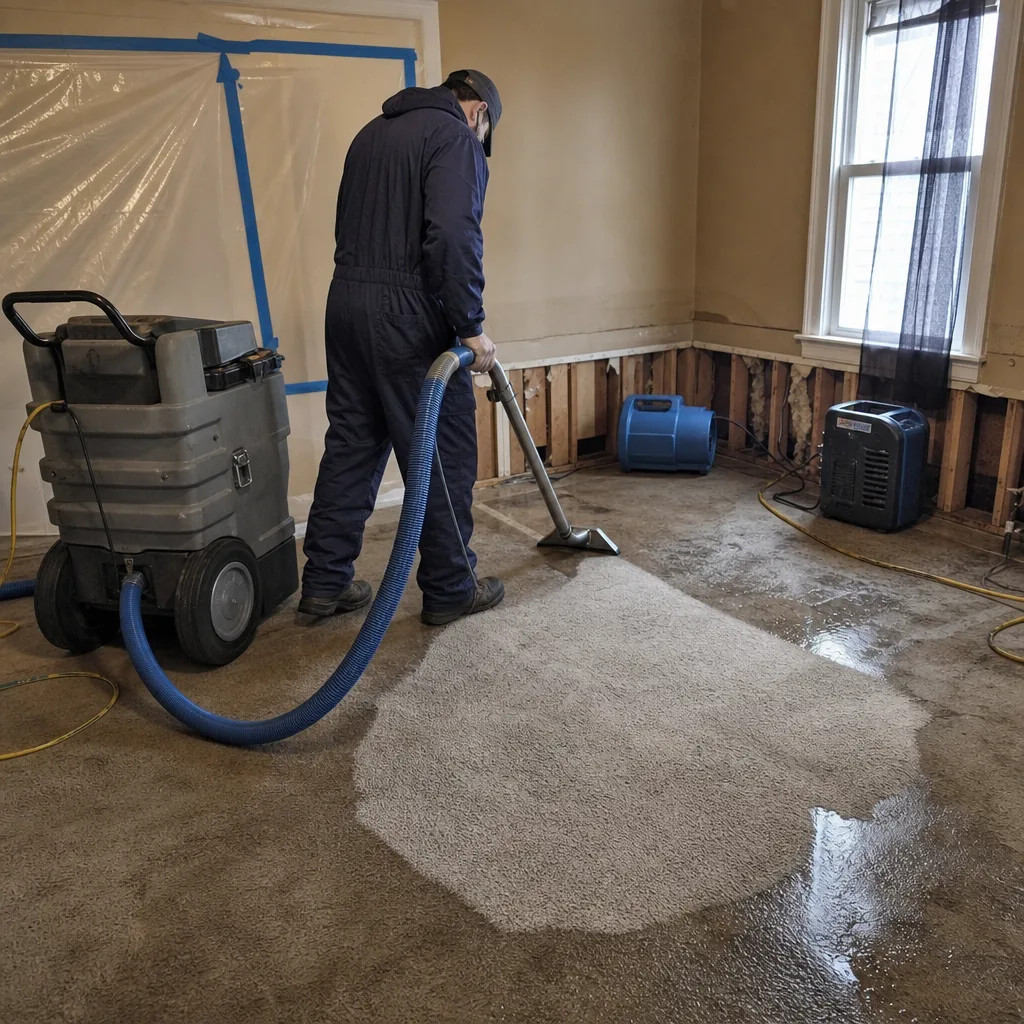
Flood Cleanup
Passaic River floodwater carries whatever the river picked up: sewage, fuel, soil, and debris. Cleaning up after a flood in Fair Lawn means more than mopping. It means removing contaminated drywall and insulation, pressure-washing salvageable surfaces, applying antimicrobial treatment, and running HEPA air scrubbers until the air clears. We coordinate directly with your flood insurance carrier on these claims.
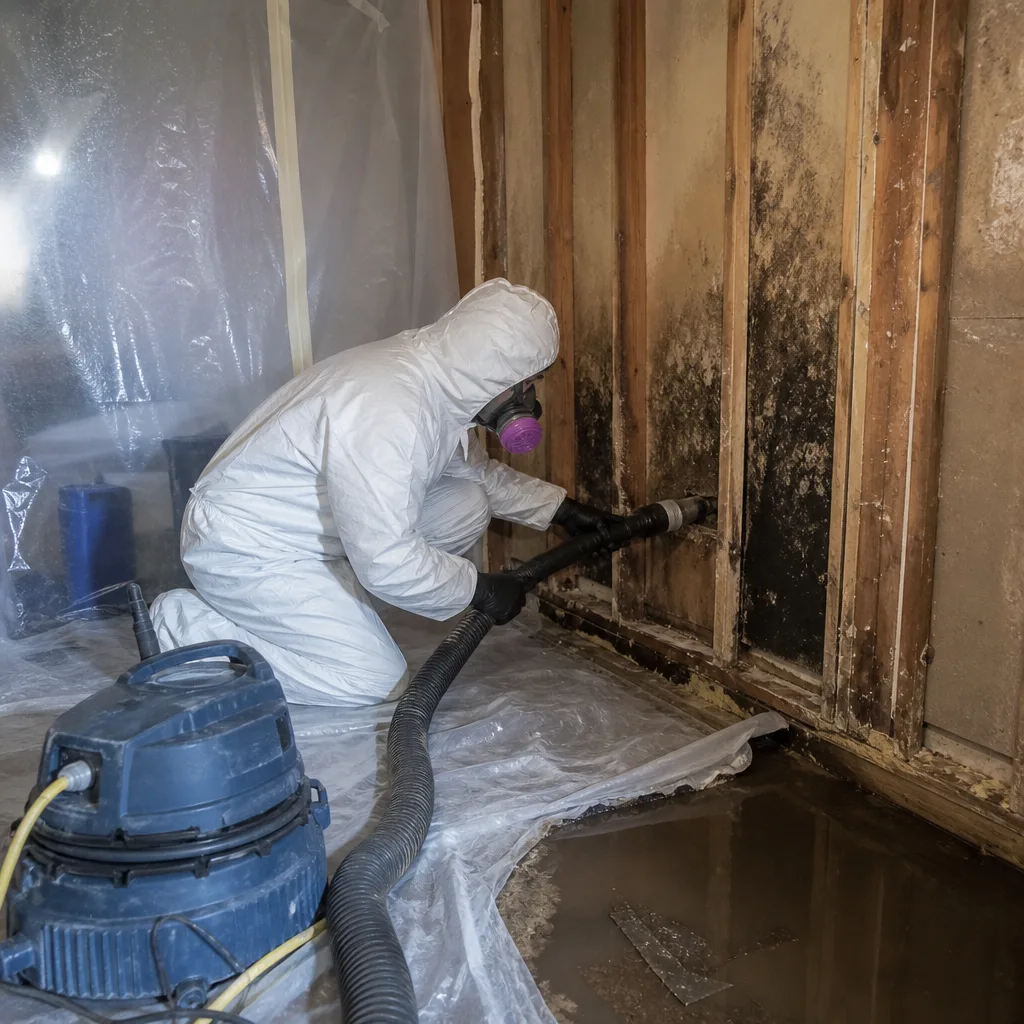
Burst Pipe Restoration
A frozen supply line in a Fair Lawn basement in January sends water through walls and under floors before you even notice. We trace the full migration path with thermal imaging, extract, dry the structure, and repair the pipe location. In older homes where the break is inside a wall cavity, we open only what’s necessary, dry it, and close it back up cleanly. The 90-Day Done Right Promise covers the work, including the repair.
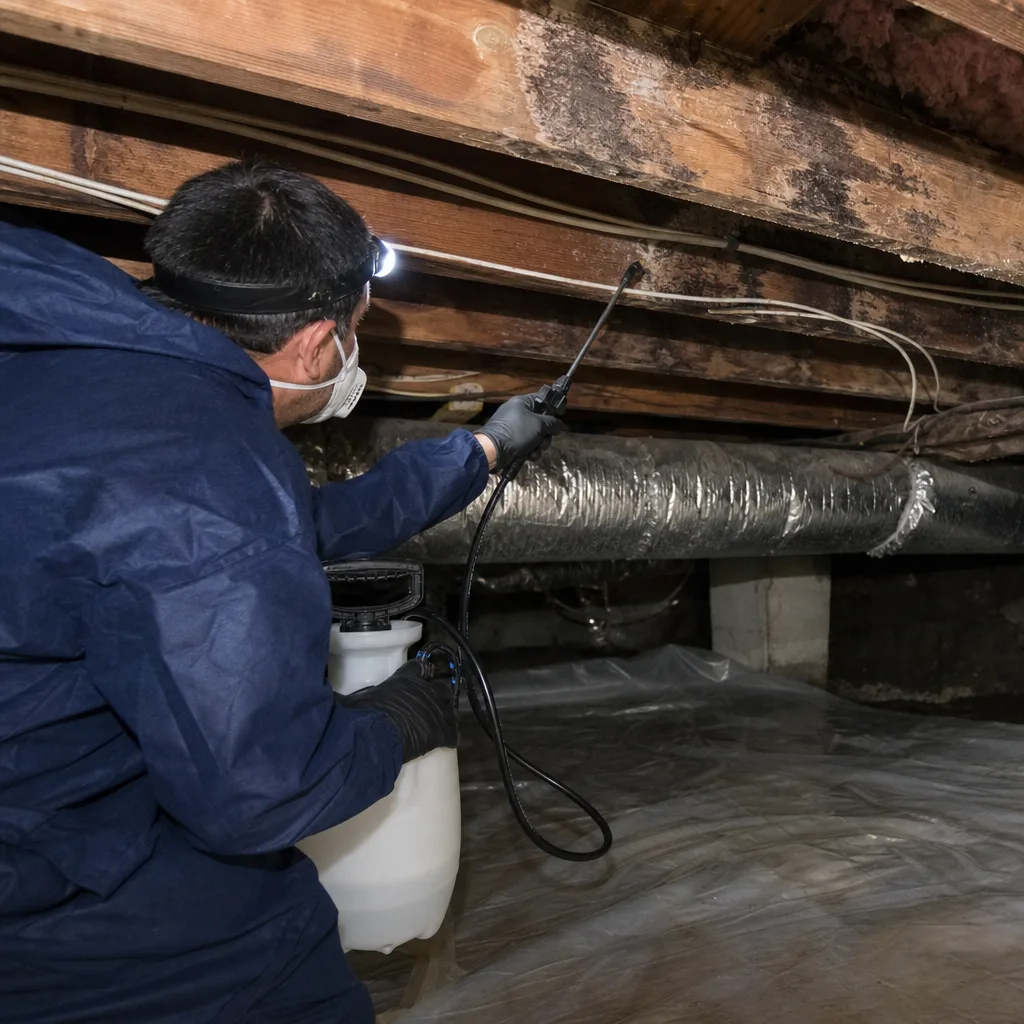
Basement Water Removal
Fair Lawn basements flood from two directions: above-ground river overflow and below-ground groundwater seepage. The difference matters for restoration. Seepage water is often Category 1 or 2 and may allow us to dry rather than demolish. River overflow is Category 3, and anything porous that touched it gets removed. We tell you which one you have before we recommend a scope. No guessing, no padding the job.
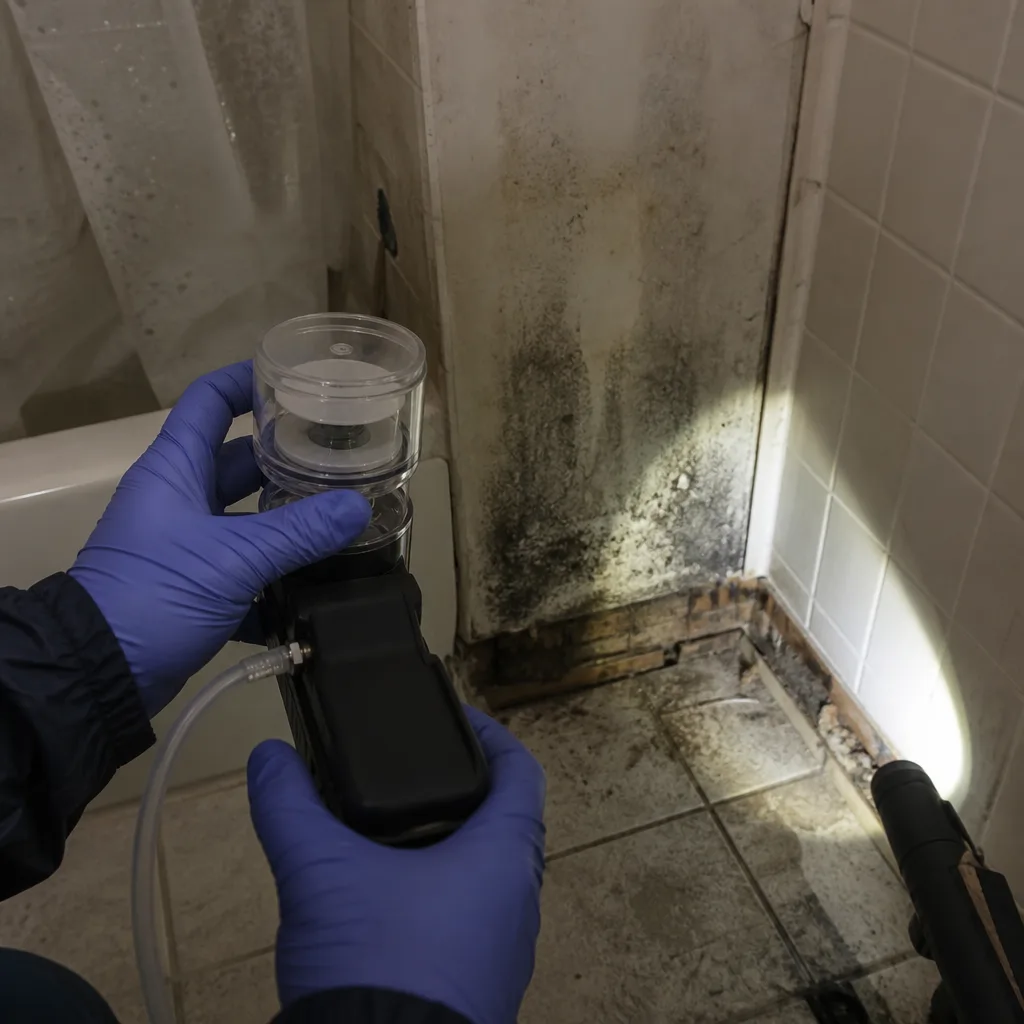
What happens when you call
- 1
A real person answersNo phone trees - you reach a local pro.
- 2
You get an upfront price rangeHonest numbers before anyone is dispatched.
- 3
A background-checked tech heads outLicensed & insured, dispatched right away.
- 4
You approve before work beginsNothing starts until you say go.
Water Damage Restoration Costs in Fair Lawn, NJ
Here’s what you can expect in Fair Lawn, based on the jobs we run here regularly:
- Emergency extraction only: $500-$1,400 for a standard basement, more if multiple rooms are involved.
- Full basement flood with drying and sanitization: $1,800-$4,200, depending on square footage and water category.
- Category 3 floodwater restoration (Passaic River overflow): $3,500-$6,500, including containment, contaminated material removal, antimicrobial treatment, and drying.
- Burst pipe restoration with structural drying: $2,200-$5,000, depending on how far the water migrated.
- Mold remediation add-on in repetitive-loss homes: $1,500-$3,500, when we find hidden colonies behind finished walls.
What moves the price is water category, square footage, and what we find when we probe. A clean water leak in a unfinished basement is the low end. Category 3 river water in a finished basement with pre-existing mold is the high end. We give you a written scope before work starts, and we bill your carrier directly on covered claims. Call (640) 333-9625 for a free visual inspection and firm number.
We Also Serve Cities Near Fair Lawn
Our crews cover the surrounding Bergen County communities: Elmwood Park, Saddle Brook, Paramus, and Maywood. The water damage patterns shift slightly in each town, but the response time commitment stays the same. Fair Lawn is our home base for this sector, and we keep trucks staged close enough to reach any of these towns quickly.
Fair Lawn Water Damage Restoration Questions, Answered
Why do Fair Lawn homes on River Road often need mold remediation as part of water damage restoration?
Because these are FEMA-designated Repetitive Loss properties, and previous flood events often left mold colonies behind finished basement walls. When new floodwater arrives, it activates old microbial growth that wasn’t properly remediated after the last storm. We probe behind walls with thermal imaging and moisture meters to find what’s hidden before we scope the job.
How do you handle Category 3 floodwater from the Passaic River in Fair Lawn?
Category 3 water means full containment, removal of all porous materials that touched it, antimicrobial treatment on salvageable surfaces, and HEPA air scrubbing throughout. We treat Passaic overflow as contaminated from the first minute. No shortcuts, no downgrading the water category to make the job cheaper.
What is moisture mapping and why is it critical for Fair Lawn’s older Cape Cods and colonials?
Moisture mapping is the process of taking hygrometer and thermal imaging readings across thirty or more locations in a structure to find where water actually migrated, not just where it’s visible. In Fair Lawn’s post-WWII homes, water travels through wall cavities and under original flooring for days before staining appears. The map tells us where to dry, and where not to bother.
How quickly should I call after basement flooding near the Passaic River in Fair Lawn?
Immediately. Category 3 river water sitting in a finished basement starts contaminating drywall and insulation in hours, and mold activates within 48. Call (640) 333-9625 the moment you see water. Our crews reach River Road and the surrounding low-lying zones quickly, and extraction starts the same visit.
Do Fair Lawn restoration jobs require special permits for structural drying in the Radburn historic district?
Radburn is a National Historic Landmark, and some exterior and structural work does require review. For interior water damage restoration, emergency extraction and drying typically proceed without additional permits, but any reconstruction that touches exterior or historically protected features may need approval. We coordinate with the appropriate offices and handle the paperwork that applies to your specific property.
How long does structural drying take in a Fair Lawn home?
Most Fair Lawn properties dry to standard in 3-5 days. Plaster-and-lath homes, which includes much of Radburn and many original post-war capes, run 5-7 days because moisture releases from older wall systems slowly. We take daily readings and adjust equipment placement accordingly. We don’t leave until the numbers prove it’s dry.
Can we stay in our home during water damage restoration?
Usually yes, especially when the damage is contained to a basement or single room. The exception is Category 3 floodwater, where containment barriers and HEPA air scrubbers are running. In those cases, we’ll let you know if staying is unsafe or uncomfortable, and we usually can complete the active restoration within a few days so you’re back to normal.
What should I do in the first 30 minutes after discovering water damage in my Fair Lawn home?
Call us at (640) 333-9625. Then, if it’s safe: shut off the water source if you can identify it, kill power to the affected area at the breaker, and move small valuables to higher ground. Don’t enter standing water if it’s from outside flooding; you don’t know what’s in it. Don’t use a shop vac on Category 3 water. Let us handle extraction.
Serving Fair Lawn, NJ - Our Local Coverage Area
We’re based in the Fair Lawn area and know this community well. Use the map below to see our service coverage - if you’re nearby, we can almost certainly help.
Fair Lawn’s Repetitive Flood History Changes the Job
Here’s what we know from working this town that a national franchise doesn’t: Fair Lawn sits directly along the Passaic River, and Hurricane Irene in 2011 and Hurricane Ida in 2021 left a significant number of riverside properties designated as FEMA Repetitive Loss structures. The same homes on and near River Road flood again and again. That’s not a weather anecdote; it’s a restoration pattern. We return to the same blocks after every major storm event, and we know what’s behind those basement walls because we’ve opened them before.
Last August, our Fire & Smoke Damage Restoration in Fair Lawn crew was called to a 1950s Cape Cod on River Road after a nor’easter pushed the Passaic over its banks. We set up containment, completed moisture mapping with thermal imaging, and found hidden mold colonies behind the finished basement walls from Hurricane Ida. After extracting Category 3 water, we performed structural drying with Dri-Eaz dehumidifiers and air movers, removed contaminated drywall, and applied antimicrobial treatment before restoring to pre-loss condition.
That’s the Fair Lawn reality: many of these homes carry layered flood history. If you hire a crew that skips the probe behind finished walls, they’ll dry the visible water and leave the old mold to reactivate. We don’t skip that step. It’s the difference between a job done once and a job you’ll be calling about again next year.
Choosing a restoration company in Fair Lawn means choosing a crew that understands Passaic River water, post-war construction, and the FEMA repetitive-loss pattern along River Road. Water Damage Restoration in this town is not a generic service. It’s a specific local expertise. We’re here, we answer the phone at 2 a.m., and we stand behind the work with the 90-Day Done Right Promise in writing.
Call (640) 333-9625 for a free visual inspection and a firm scope. The sooner we get there, the less this costs you.
Written by Curt Bowman, Owner at Floodline Restoration Co., serving Fair Lawn and surrounding Bergen County communities with certified restoration crews and a written guarantee on every job.