
Free visual inspection and a written scope of work before any mitigation begins - photos, moisture readings, and drying logs go in your claim file
The scope we write is the scope we bill. Anything new gets shown to you, in writing, before we touch it.
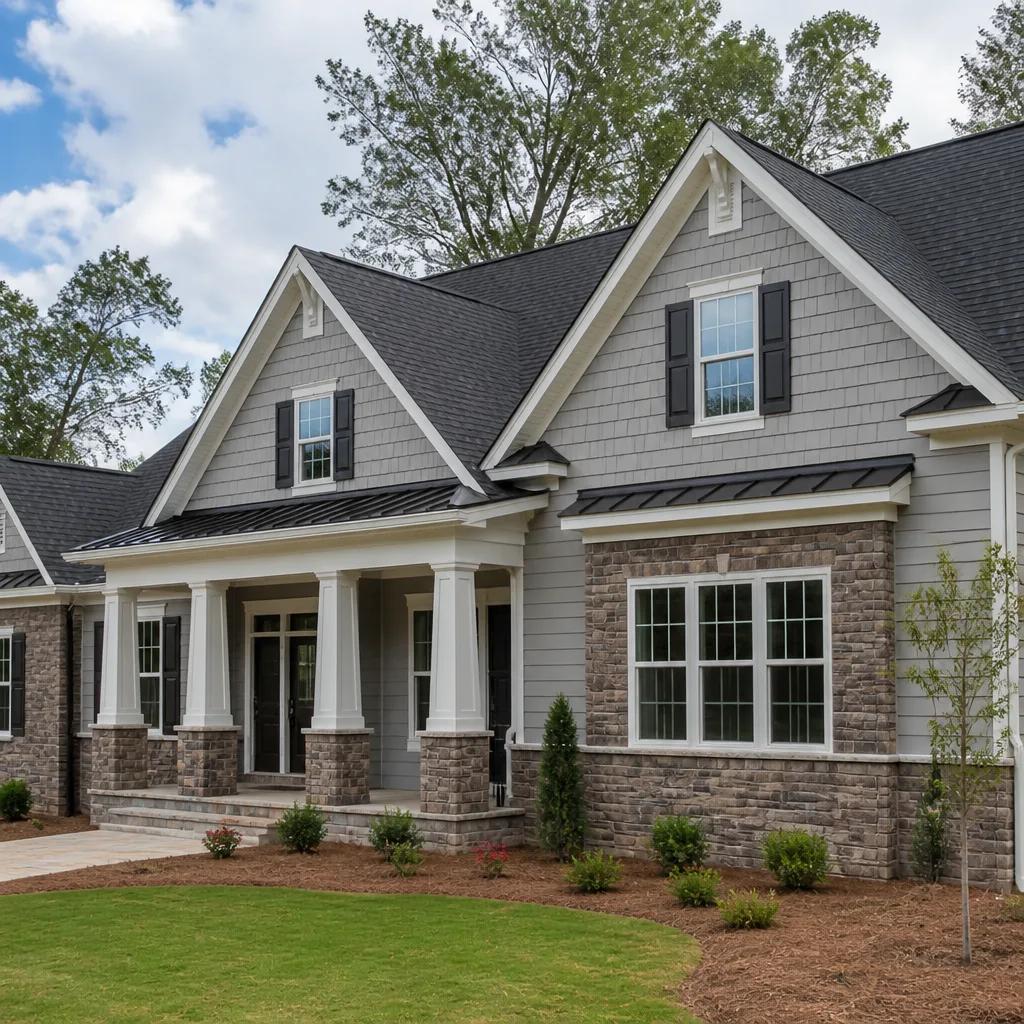
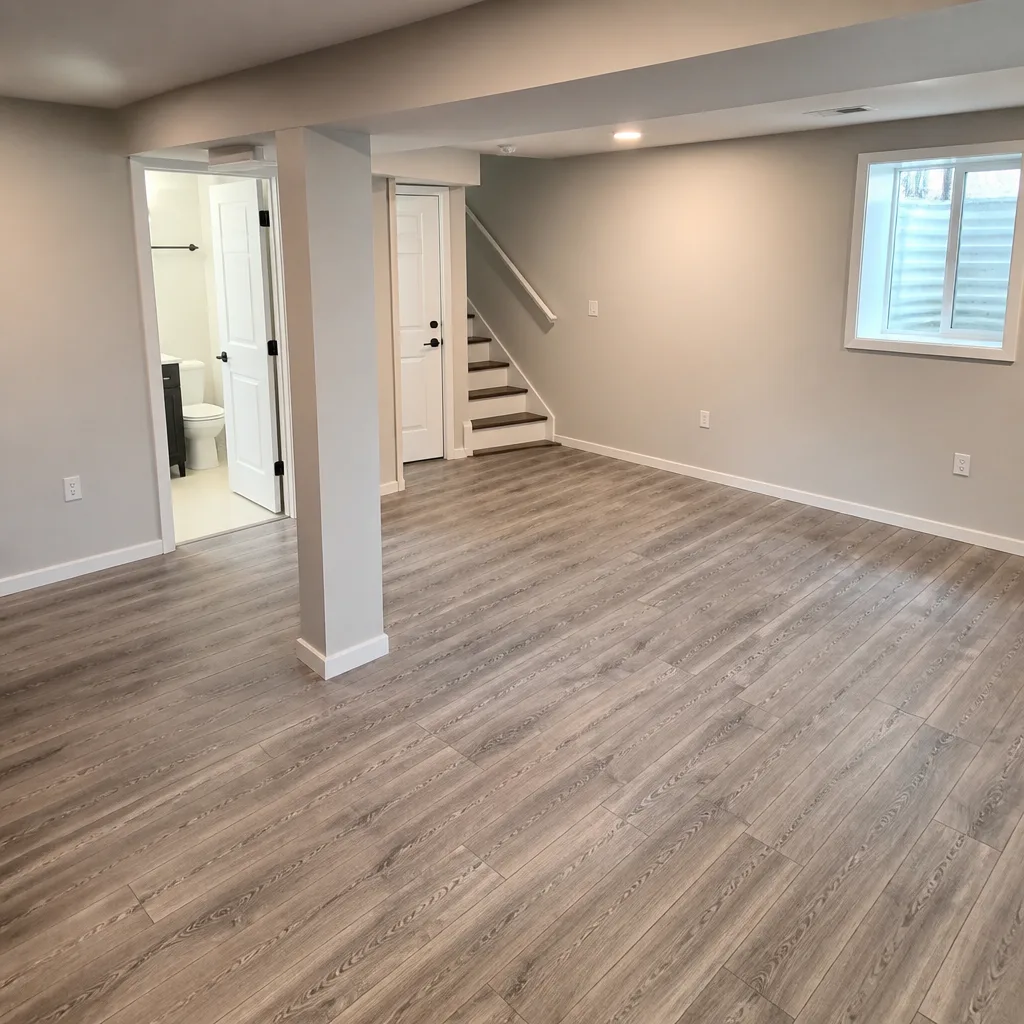
 Before
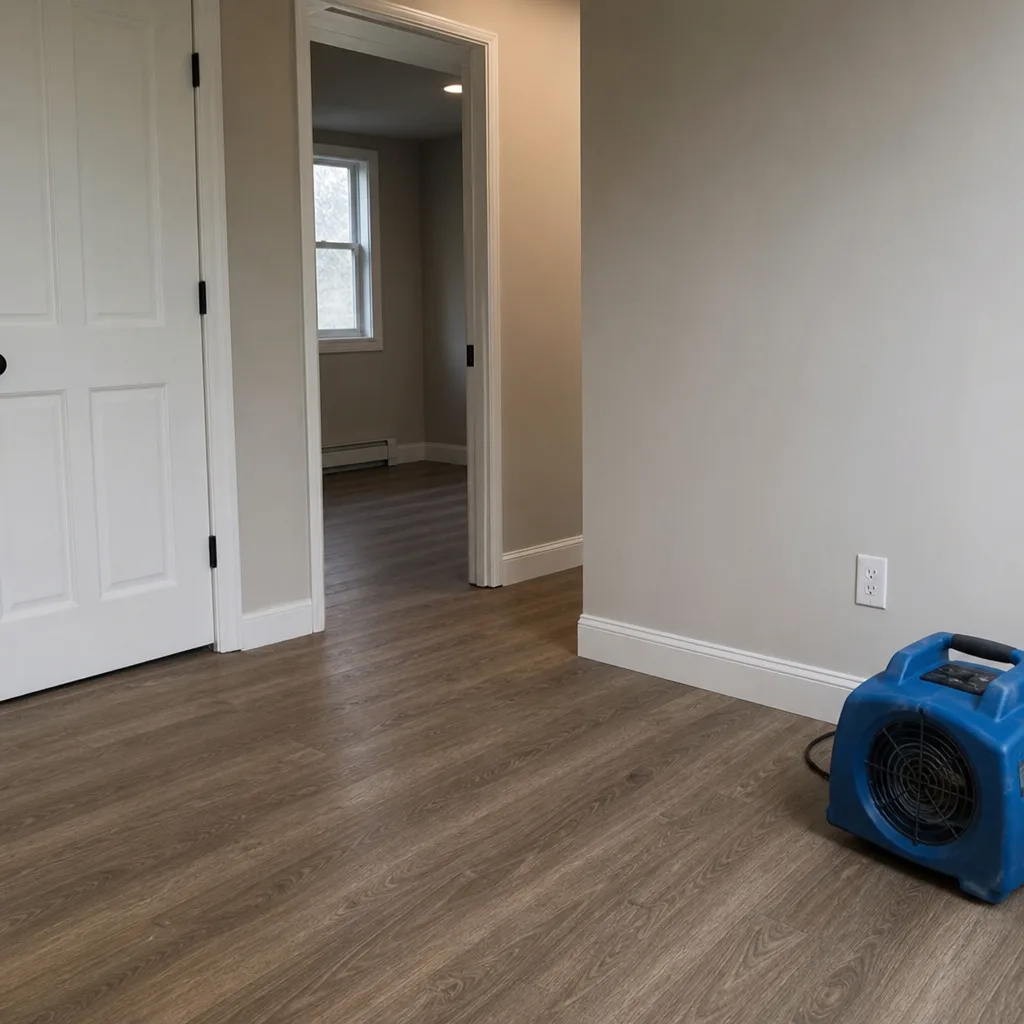 After
After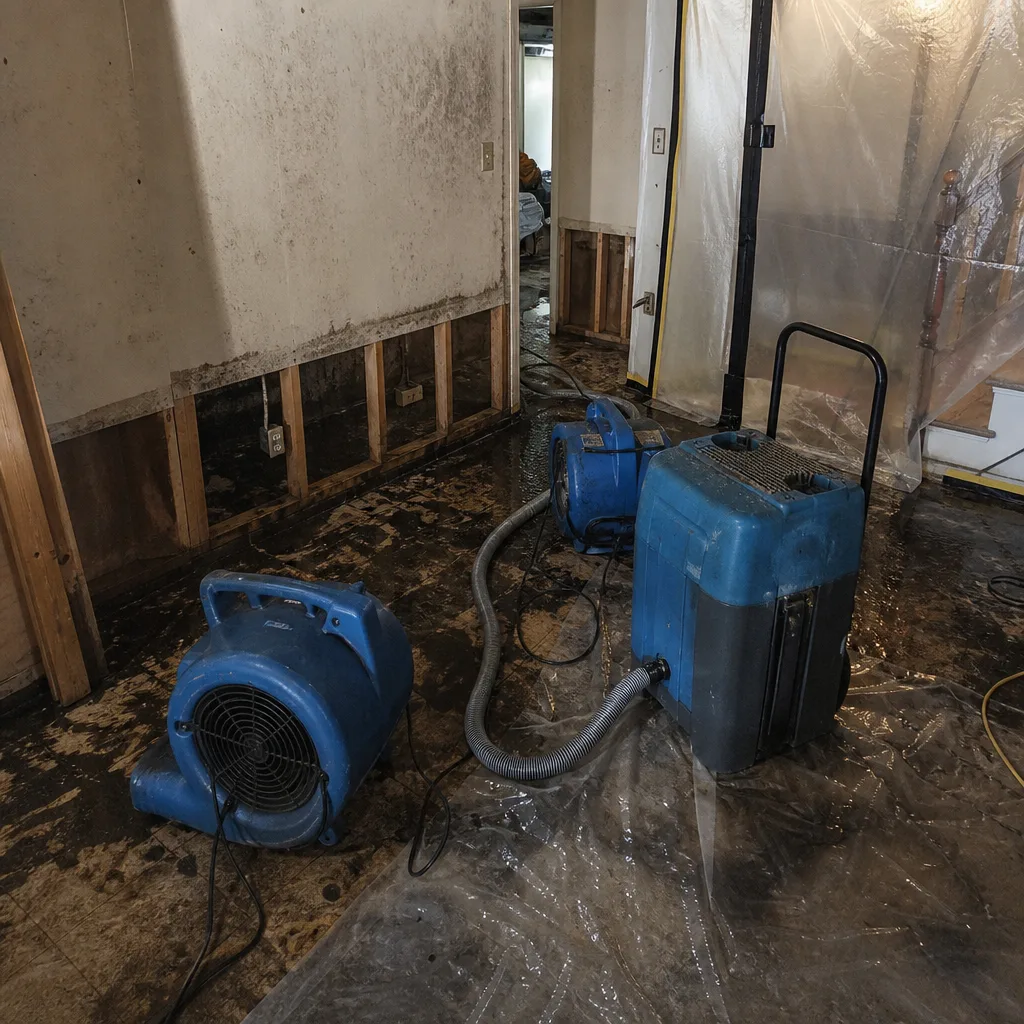 Before
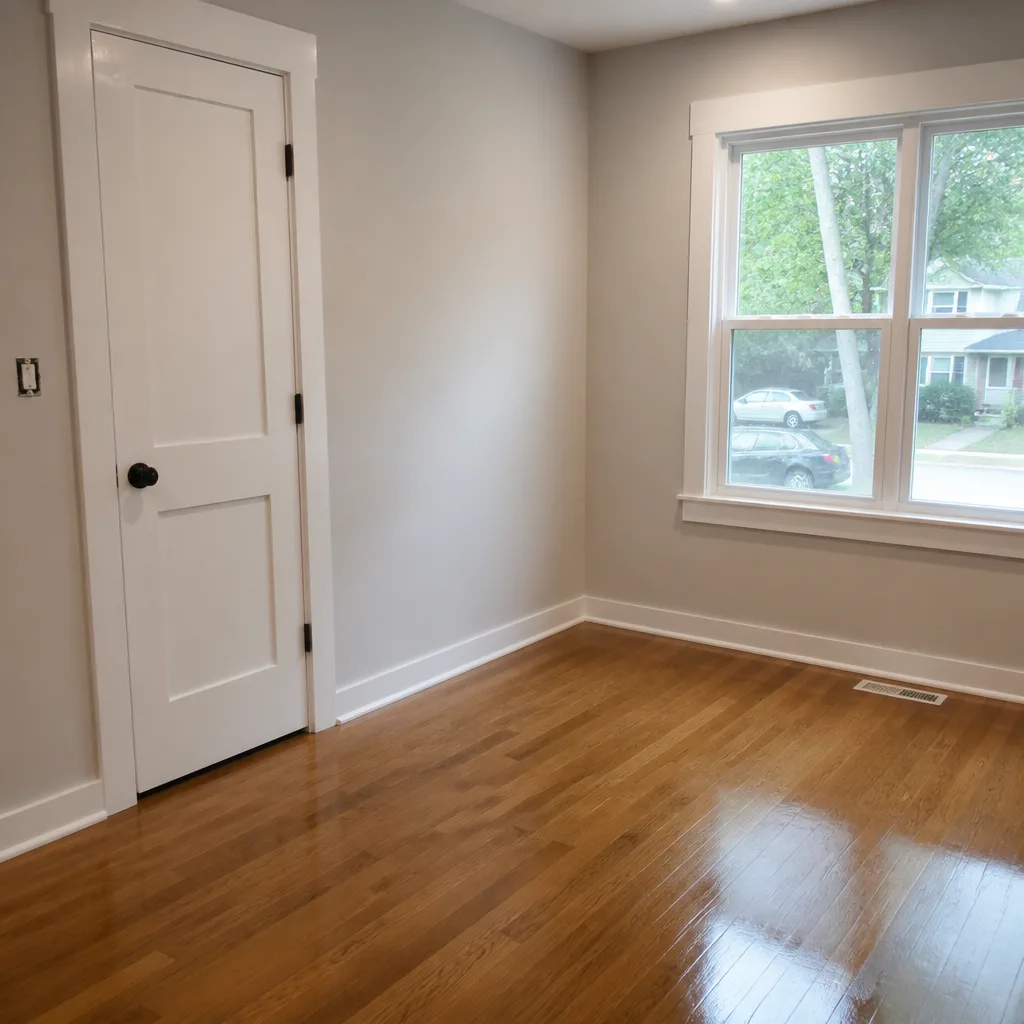 After
After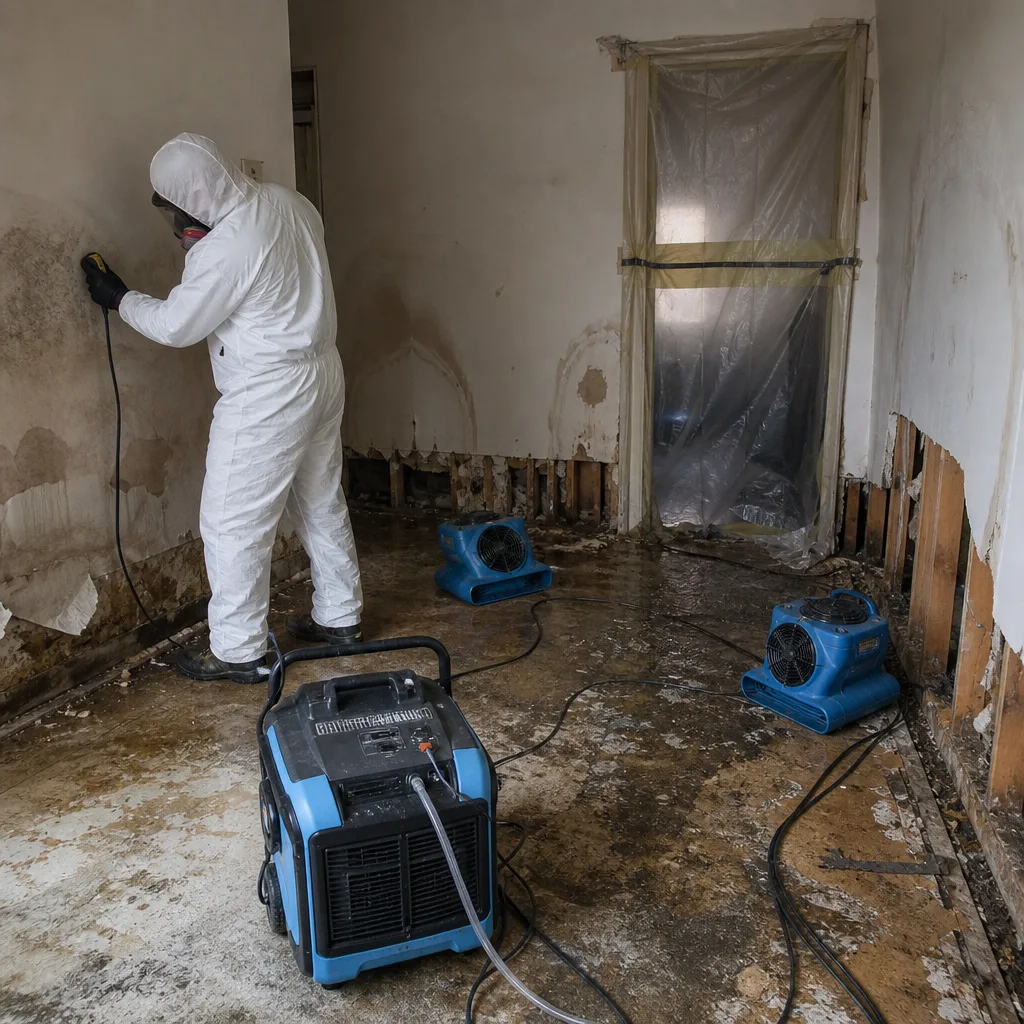 Before
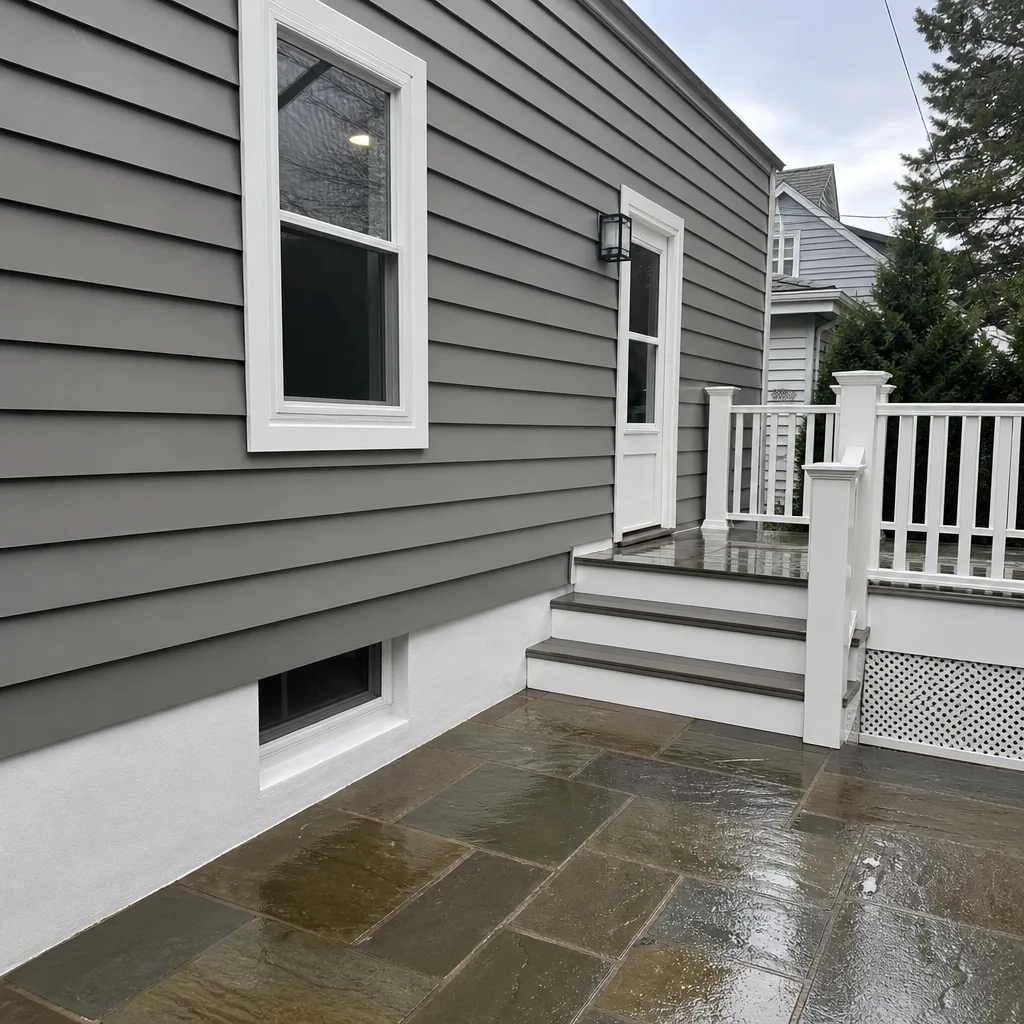 After
After24/7 Emergency Commercial Restoration in Paramus
A commercial water loss in Paramus typically costs $3,500-$12,000 to mitigate and dry properly, and the first 48 hours decide whether a cleanup stays under control or turns into a full tear-out. Floodline Restoration Co. answers the phone with a live dispatcher around the clock, and a certified crew reaches most Paramus commercial properties within 45 minutes. That speed matters because the Saddle River flood corridor and the Route 17/Route 4 retail spine don’t wait for business hours. Call (640) 333-9625 the moment you see standing water, smell smoke, or find mold spreading behind a stockroom wall. The first hour is when extraction, containment, and documentation begin, and it’s when the size of the claim gets set. Waiting until Monday is how a $4,000 mitigation becomes a $40,000 reconstruction. We’re here now.
Understanding Commercial Restoration Severity in Paramus Properties
Not all commercial losses are equal, and Paramus’s building stock makes the distinctions sharper. Water from a burst supply line inside a 1960s Route 17 retail space is usually Category 1, clean and straightforward if extraction starts fast. Water that backs up from an original cast-iron waste line, or floodwater that crossed the Saddle River banks near Midland Avenue, is Category 3, carrying bacteria and requiring containment, antimicrobial treatment, and disposal of affected porous materials. Fire losses sit on their own severity scale, from light soot residue on a Garden State Plaza storefront to smoke migration that forces inventory pack-out and pressurized structural cleaning. Mold inside a 1970s commercial suite behind original gypsum board often grows beyond surface stage before anyone sees it, because moisture gets trapped between the drywall and the masonry block common to that era-our Mold Remediation - Paramus team addresses these hidden colonies before they spread. era’s construction. The moment of discovery doesn’t tell you the category or the full scope. That’s what moisture mapping, thermal imaging, and air scrubbers are for, and why a visual-only walkthrough is never enough in a mid-century Paramus building. The age of the structure hides what’s behind the wall, and the wrong equipment on day one lets a Category 1 loss become a Category 3 problem by day four.
Why Paramus Property Owners Choose Floodline Restoration Co.
- 45-minute response to commercial addresses in Paramus. We dispatch crews from the metro office and stage equipment along the Route 17 corridor during storm watches.
- Live answer, 24/7, with no phone tree. A real dispatcher picks up at 2 a.m. and starts moving a crew while you’re still on the line.
- IICRC-certified restoration technicians. Our crews hold WRT, FSRT, and AMRT certifications through the IICRC, with RIA and IFA training behind every lead tech.
- Free visual inspection and moisture assessment. We map the affected square footage before we quote, so the scope you sign matches the loss you have.
- Direct insurance billing. We bill your carrier directly and walk the adjuster through the moisture log line by line. You don’t play messenger.
- One crew from extraction to rebuild. No mid-job handoff to a subcontractor, no inherited crew learning the job halfway through. The team that dries it rebuilds it.
Underneath every job sits the same company standard, our Commercial Restoration work and every other service we field. The work is done right or we make it right, a guarantee that’s given in writing under our 90-Day Done Right Promise, what we call the Keystone Standard. You might assume that’s how everyone operates. It isn’t.
Our Commercial Restoration Process
Inspection & Assessment
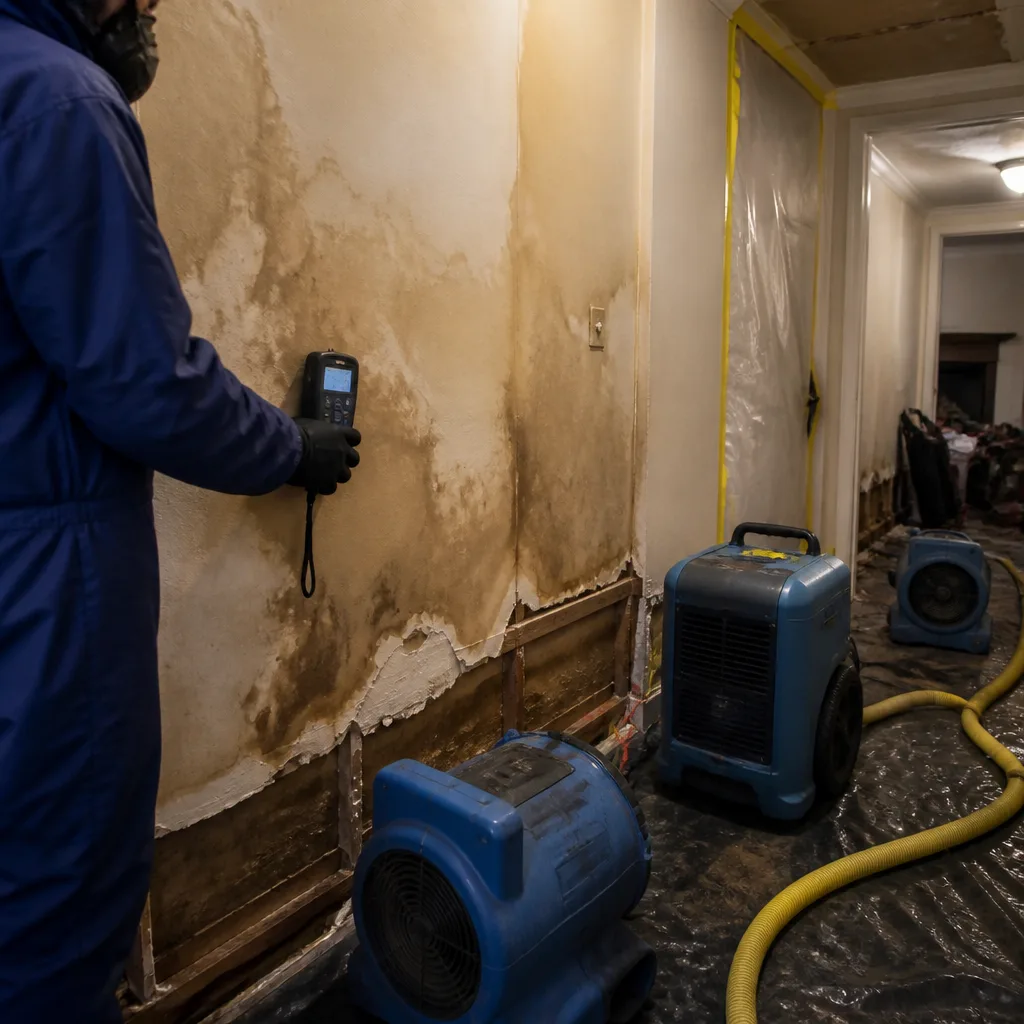
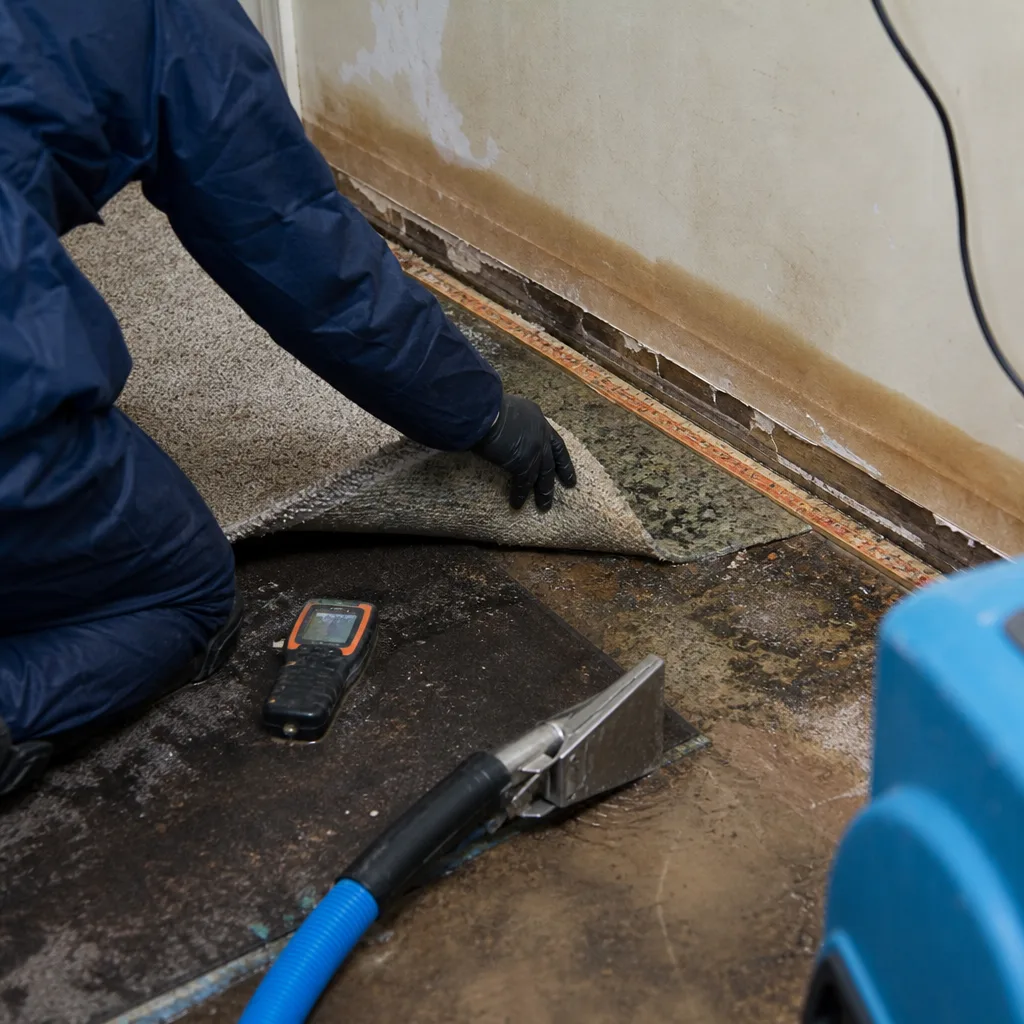
The first crew on site documents everything: photo evidence of the loss, moisture readings across affected and adjacent areas, a thermal imaging scan to find hidden water behind the 1970s drywall. The goal is a complete picture before a single piece of equipment goes in.
Extraction & Stabilization
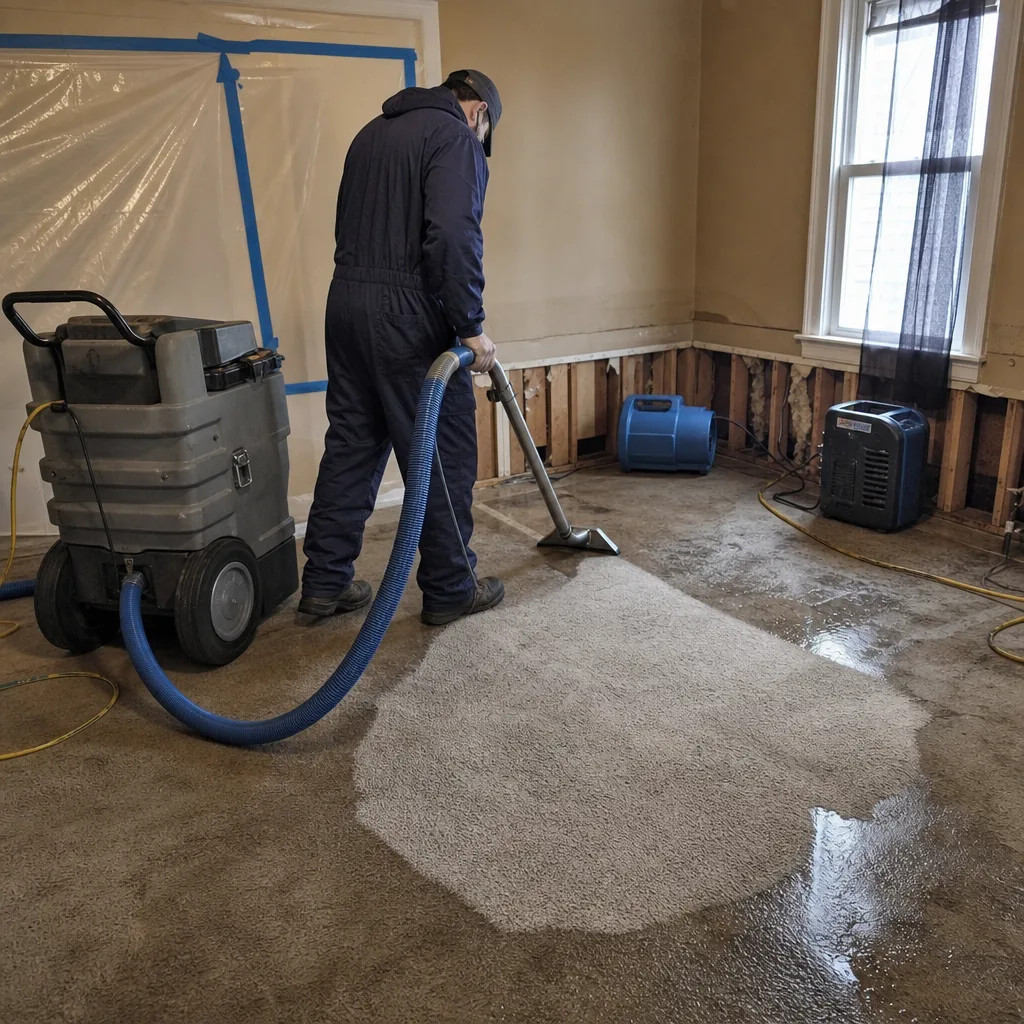
Truck-mounted extraction units pull standing water while we isolate the work zone with 20-mil containment barriers to keep dust and airborne particles out of the occupied retail or office space. On a Category 3 loss, this is also where we begin removal of contaminated materials.
Drying & Dehumidification
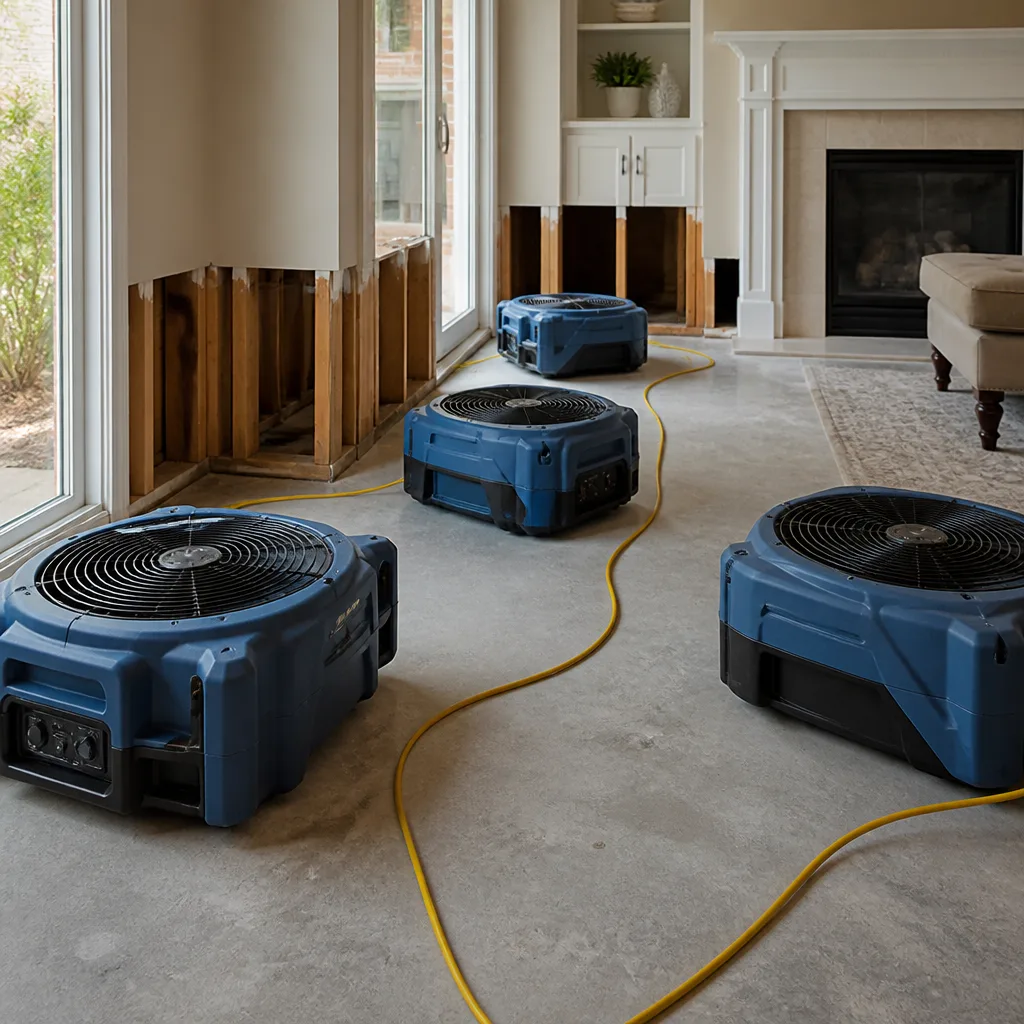
We set the drying environment with low-grain refrigerant dehumidifiers and axial air movers. In a large Route 17 commercial space, that can mean eight or more Phoenix 200 Max LGR units running in rotation, with daily moisture readings tracked in a written log until we reach the dry standard.
Cleaning & Sanitization
Impacted surfaces get antimicrobial treatment where the water category calls for it. For Paramus Fire & Smoke Damage Restoration, we run HEPA air scrubbers to capture soot and odor residue, then clean surfaces by residue type rather than one generic wash.
Specialty Treatment & Content Recovery
Inventory, documents, and fixtures that can be restored get packed out, cleaned, and stored in a climate-controlled staging area. We use Injectidry systems for hard-to-reach cavities and document every action for the insurance carrier.
Repairs & Restoration
We rebuild what the loss took out, from stockroom drywall and floorings to retail fixtures and office finishes. The same certified crew that did the extraction handles the reconstruction, which means the moisture decisions made on day one carry through to the final nail.
Need Emergency Commercial Restoration in Paramus Now?
Crews minutes away, answering live 24 hours a day. The sooner we start, the less it costs.
Working With Your Insurance Company
Commercial restoration claims in Paramus move differently than residential ones. The adjuster’s biggest question is always the same: was the loss mitigated promptly, and was every step documented in a way that survives review? We build that record from the first hour. Photos before we start, moisture readings during, drying logs every day until the target standard is hit, and a line-item scope that matches what the carrier’s estimating software expects to see. Curt Bowman, our founder, built the company around a simple idea: the homeowner or tenant should not spend their week chasing an adjuster while the building keeps taking on damage. We talk to the adjuster directly, walk them through the moisture map, and make sure the claim file has what it needs without you sacrificing a weekend to it. That’s what direct insurance billing means in practice.
What We Provide Your Insurer
- Thorough documentation of the loss
- Photos of all damage, room by room
- Moisture readings and drying logs
- A detailed, line-item scope of work
- Direct coordination with your carrier
Built for Paramus’s Loss Calendar
Paramus’s restoration needs track the seasons, and the patterns are steady enough to plan around. January and February bring deep-freeze events that burst uninsulated supply lines in older commercial buildings along Route 17, and the water sits behind walls until it presents as a ceiling stain or a floor buckle days later. Spring thaw pushes groundwater into the Saddle River lowlands, and basements in the split-levels and ranches near the river start seeping through the cove joint. Their partially finished basements, built in the 1950s and ’60s, were never designed to handle the saturation events the last twenty years have delivered. Summer thunderstorms drop flash volume that overwhelms the storm drains along Route 4, and commercial flat roofs that haven’t been inspected since spring show their leaks during the first week of sustained heat. Then comes nor’easter season, which is the one that keeps our phone ringing all night. Heavy wet snow and ice stress the aging roof membranes on mid-century commercial buildings, and wind-driven rain finds every old flashing and parapet crack. Each season produces a different loss profile, and the equipment gets configured for each one differently. A freeze burst needs fast extraction and contained drying. A nor’easter roof breach needs full interior protection before the rain even stops.
Commercial Restoration Across Paramus’s Neighborhoods
Paramus is split between two very different restoration environments, often on the same call sheet. The Route 17 retail strip from the Garden State Plaza north past the Fashion Center is dense commercial square footage, anchor stores and mid-size retail spaces where a single sprinkler discharge can put 20,000 square feet of inventory at risk. Response route matters to us on that corridor; we stage equipment during storm watches because a nor’easter can turn a 15-minute drive into 45, and a commercial loss can’t wait for traffic. West of Route 17, the residential streets off Midland Avenue and Forest Avenue are the older split-level and Cape Cod stock from the post-war buildout, homes near the Saddle River lowlands that take on water every time the river overtopples its banks. The dual-market reality of working in Paramus means the same storm that floods a basement off Farview Avenue also blows out the roof above a big-box off Route 4 within the same hour. Then there are the industrial and warehouse facilities tucked behind the retail frontage, particularly along the service roads off Route 17 and around the Paramus Park perimeter. These buildings hide original cast-iron waste lines and galvanized supply pipes, and when one fails, the water travels through the slab and the stockroom walls before anyone notices. Our crews read the neighborhood as much as the moisture meter, because a building’s decade and its plumbing tell you where the loss is going to show up.
Specialized Commercial Restoration Services We Offer in Paramus
Office & Retail Restoration
A retail space inside Garden State Plaza or an office suite in a Route 17 professional building can’t stay dark for two weeks while the claim gets sorted. We isolate the affected square footage with containment, dry and clean the space, and stage the work so the rest of the business keeps operating. The goal is getting the tenant back to selling, not just getting the building dry.
Large-Loss Response
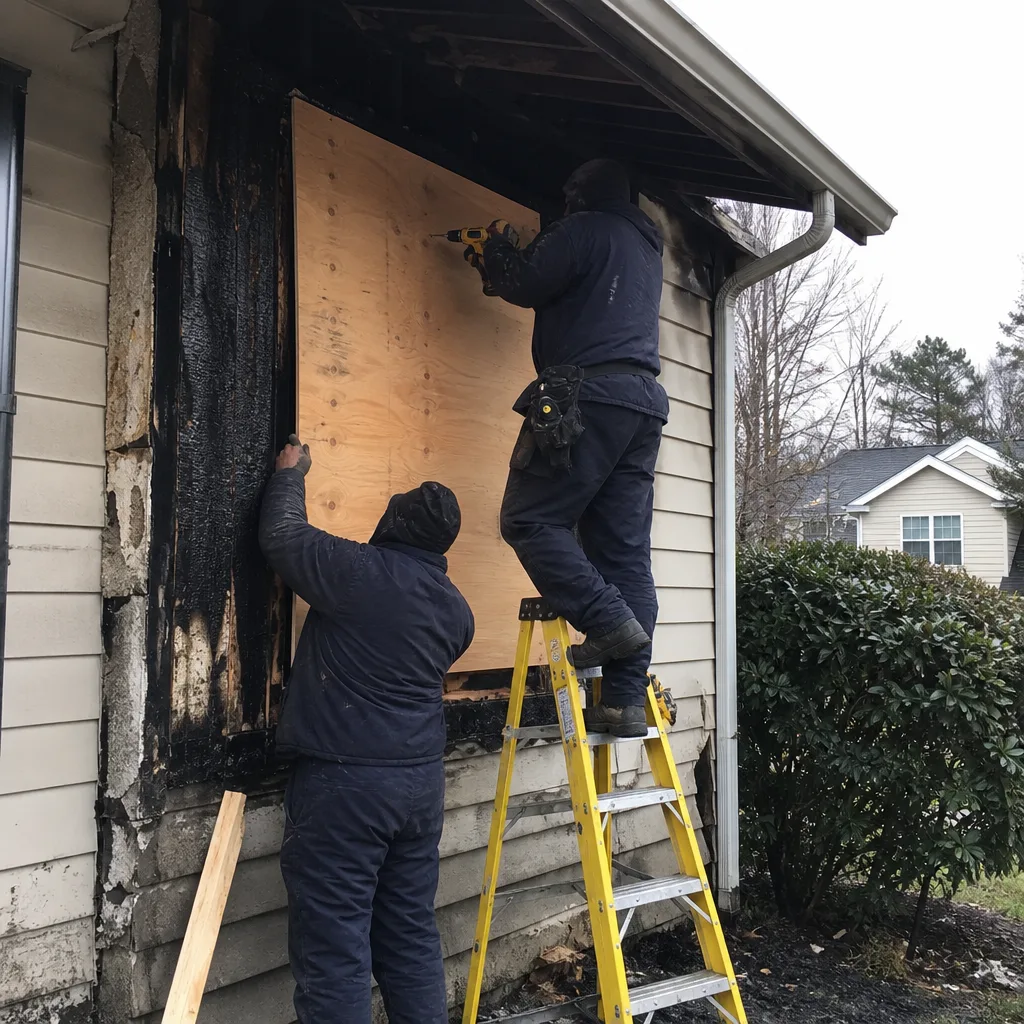
When the loss exceeds what a typical restoration crew can handle, on a big-box store or a warehouse facility, we bring in the full large-loss protocol: multiple extraction teams, trailer-mounted dehumidification, on-site project management, and daily coordination with the carrier’s catastrophe team. Paramus’s retail density means a single storm can overwhelm a local contractor’s equipment inventory. Ours is built for the bigger footprint.
Business Interruption Minimization
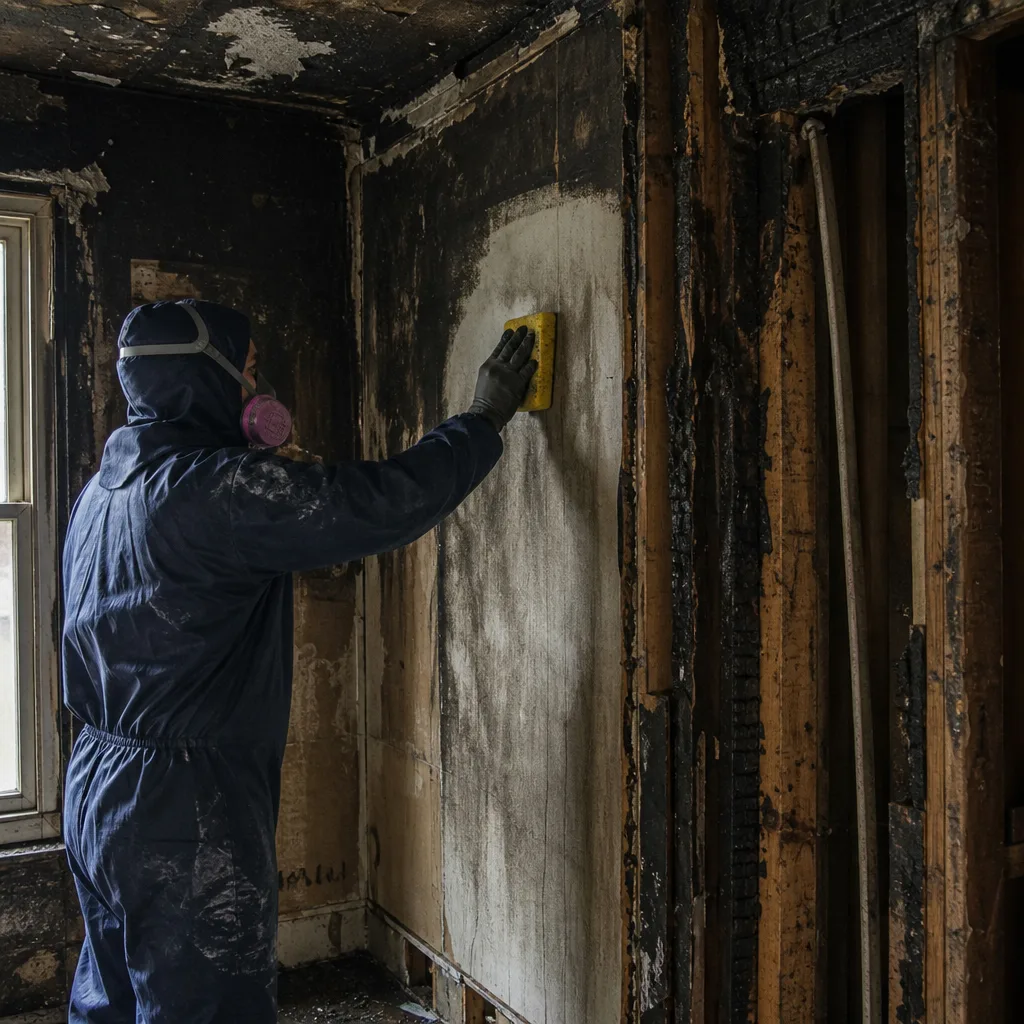
Every day a Paramus retail or office tenant is closed is revenue lost and sometimes never recovered. We sequence the work to reopen safe, unaffected areas first, document the interruption period for the business-interruption portion of the claim, and keep the pace aggressive without cutting corners on drying standards. The number we’re protecting is the business’s weekly gross, not just the cost of drywall.
Industrial Facility Cleanup
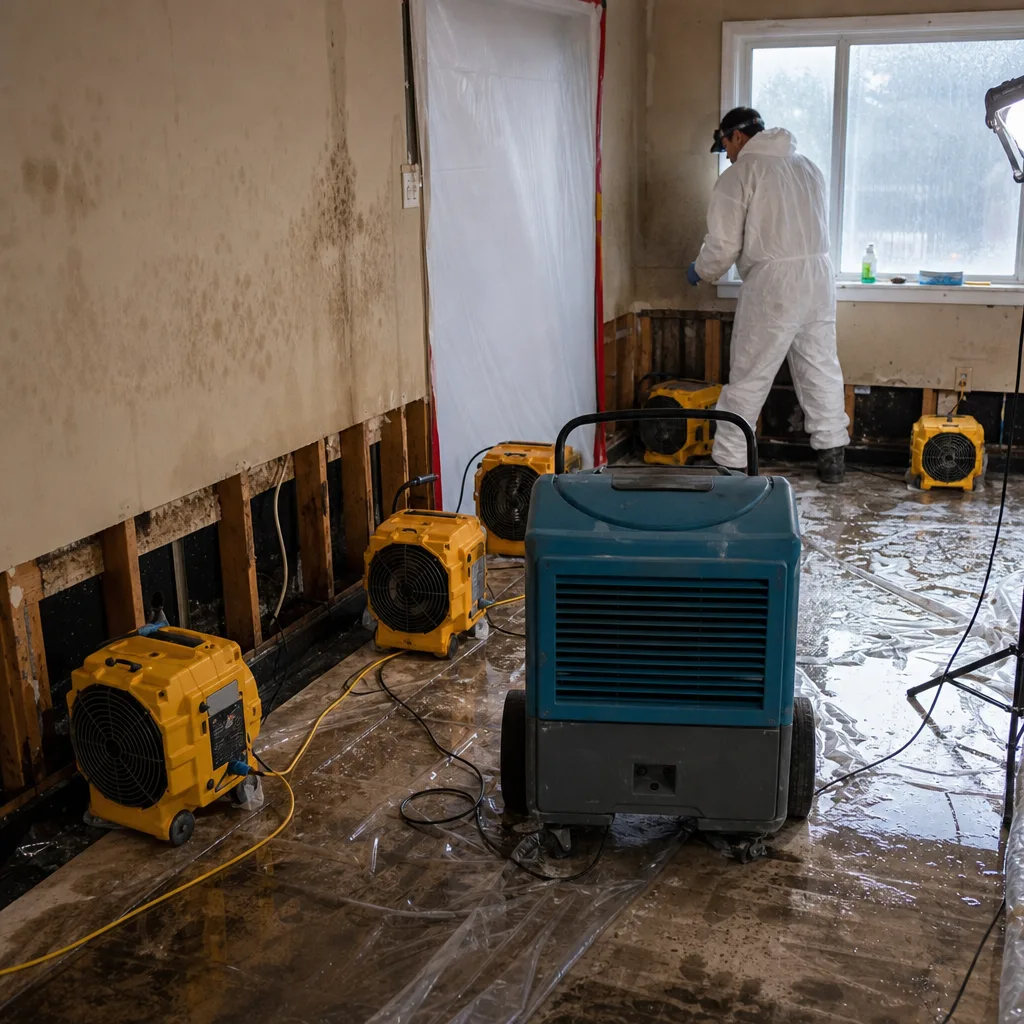
Industrial spaces along the service corridors off Route 17 have different problems than retail. Category 2 water behind 1970s drywall inside a warehouse stockroom often requires full wall teardown to reach the framing, and column bases, electrical rooms, and loading docks all demand their own protocol. We bring the same moisture-mapping and containment discipline to these spaces as we do to a mall storefront.
Multi-Unit & HOA Restoration
Paramus multi-unit properties, whether condo associations or rental buildings near the Paramus Park area, create a special restoration problem because one unit’s water loss is usually three other units’ problem by morning. We handle common-area losses, unit-by-unit moisture mapping, and association-level documentation so the HOA board has one clear file for the carrier rather than eleven separate complaints.
What happens when you call
- 1
A real person answersNo phone trees - you reach a local pro.
- 2
You get an upfront price rangeHonest numbers before anyone is dispatched.
- 3
A background-checked tech heads outLicensed & insured, dispatched right away.
- 4
You approve before work beginsNothing starts until you say go.
Commercial Restoration Costs in Paramus, NJ
Commercial restoration costs in Paramus track the severity and the square footage, but there are honest ranges. A small office suite water loss from a burst supply line runs $3,500-$7,500 for extraction, drying, and minor finish work. A mid-size retail space with Category 2 water and some stockroom tear-out lands in the $8,000-$18,000 range. A large-loss event, a big-box fire, a flooded warehouse, a sprinkler discharge across 15,000 square feet, starts at $25,000 and often runs to $75,000 or more depending on content recovery and reconstruction. What moves the price is water category, affected square footage, and whether the structural materials are saveable or must be replaced. Insurance covers most of these losses when mitigation begins promptly and the documentation holds. Out-of-pocket scenarios are usually the deductibles themselves, ranging from $1,000 to $10,000 depending on the policy. The free visual inspection we offer is the path to a firm scope. You’ll know the number before work starts, and the 90-Day Done Right Promise means you’ll hold us to it after the work is done.
We Also Serve Cities Near Paramus
Floodline Restoration Co. runs commercial restoration crews into the surrounding Bergen County communities as well: Paramus and its neighbors including Oradell, River Edge, New Milford, and Fair Lawn. The same 45-minute response commitment, live dispatch, and written guarantee apply across the metro service area.
Serving Paramus, NJ - Our Local Coverage Area
We’re based in the Paramus area and know this community well. Use the map below to see our service coverage - if you’re nearby, we can almost certainly help.
Paramus Commercial Restoration Questions, Answered
How do Bergen County’s Sunday Blue Laws affect commercial restoration in Paramus?
Bergen County’s Blue Laws mean most building supply houses and hardware stores along the Route 17 strip are closed on Sunday, so a Saturday night commercial fire or flood in Paramus forces crews to pre-stock materials or run to Passaic County for drywall, plywood, and framing lumber. Floodline keeps a rolling inventory of common restoration materials staged and ready, and we plan around the Sunday gap before the storm hits, not after.
Does Floodline Restoration handle both residential basement floods and large commercial losses in Paramus?
Yes. Paramus is the only borough in Bergen County where a single restoration contractor must routinely pivot between residential basement flood claims from Saddle River lowland split-levels and large-loss commercial claims inside the Route 17/Route 4 retail corridor, including Garden State Plaza and adjacent warehouse facilities, often within the same storm event. Our crews are equipped for both on the same day, and we’ve done it.
What is the biggest hidden risk when restoring a mid-century commercial building in Paramus?
The biggest hidden risk is the plumbing and wall assembly. Older commercial buildings along Route 17 with original cast-iron waste lines and galvanized supply pipes often hide Category 2 water behind 1970s drywall, so moisture mapping misses pockets that later require tearing out entire stockroom walls. If the tech doesn’t check for legacy materials and concealed cavities, the loss looks smaller than it is, and the drying plan fails weeks later.
Can Floodline minimize business interruption for a Paramus retail tenant after a sprinkler discharge?
Yes. We sequence the work so unaffected areas reopen first, contain the affected square footage behind 20-mil barriers, and run daily drying readings so the build-back can start the moment the moisture standard is met. The business-interruption claim is only as strong as the documentation, and we build that file from hour one.
How fast can Floodline start water extraction at a Paramus industrial facility after a winter pipe burst?
We commit to a 45-minute response to commercial addresses in Paramus, and a winter pipe burst is the kind of call we stage for before the freeze hits. Extraction starts during the first visit, not on a follow-up. The sooner water comes out, the less structural damage and the shorter the interruption. Call (640) 333-9625 and a live dispatcher starts the crew moving immediately.
Do we need full restoration or just a deep cleaning after a small fire in our Paramus storefront?
It depends on the smoke residue. Light soot on surfaces from a small contained fire can sometimes be cleaned with HEPA scrubbing and residue-specific washing. But smoke migrates through the HVAC system and into drywall cavities, and if the soot is oily or the fire burned synthetics, a surface clean won’t resolve the odor or the discoloration. A free visual inspection tells you which side of the line you’re on before you sign anything.
How long does commercial drying take in Paramus buildings?
Most commercial drying jobs in Paramus complete within three to five days for a contained loss under about 5,000 square feet, assuming extraction starts within hours, not days. Mid-century buildings with masonry block walls and original drywall can run longer, and large-loss retail spaces may take seven to ten days. We give you a target at the first moisture reading and update it daily from the log.
Can employees stay in the building during restoration work?
In most cases, yes. We isolate the work zone with containment barriers and run HEPA air scrubbers where dust or soot is present, and unaffected areas stay operational. For Category 3 water or heavy smoke, we’ll tell you honestly if occupancy should pause in the affected zone. The answer comes from the moisture map and air quality readings, not a guess.
Get a Firm Scope and a Straight Answer
Call now for a free visual inspection and a written estimate before any work begins. We stand behind the result.
Written by Curt Bowman, Owner at Floodline Restoration Co., serving Commercial Restoration in Paramus and the surrounding Bergen County metro area.