
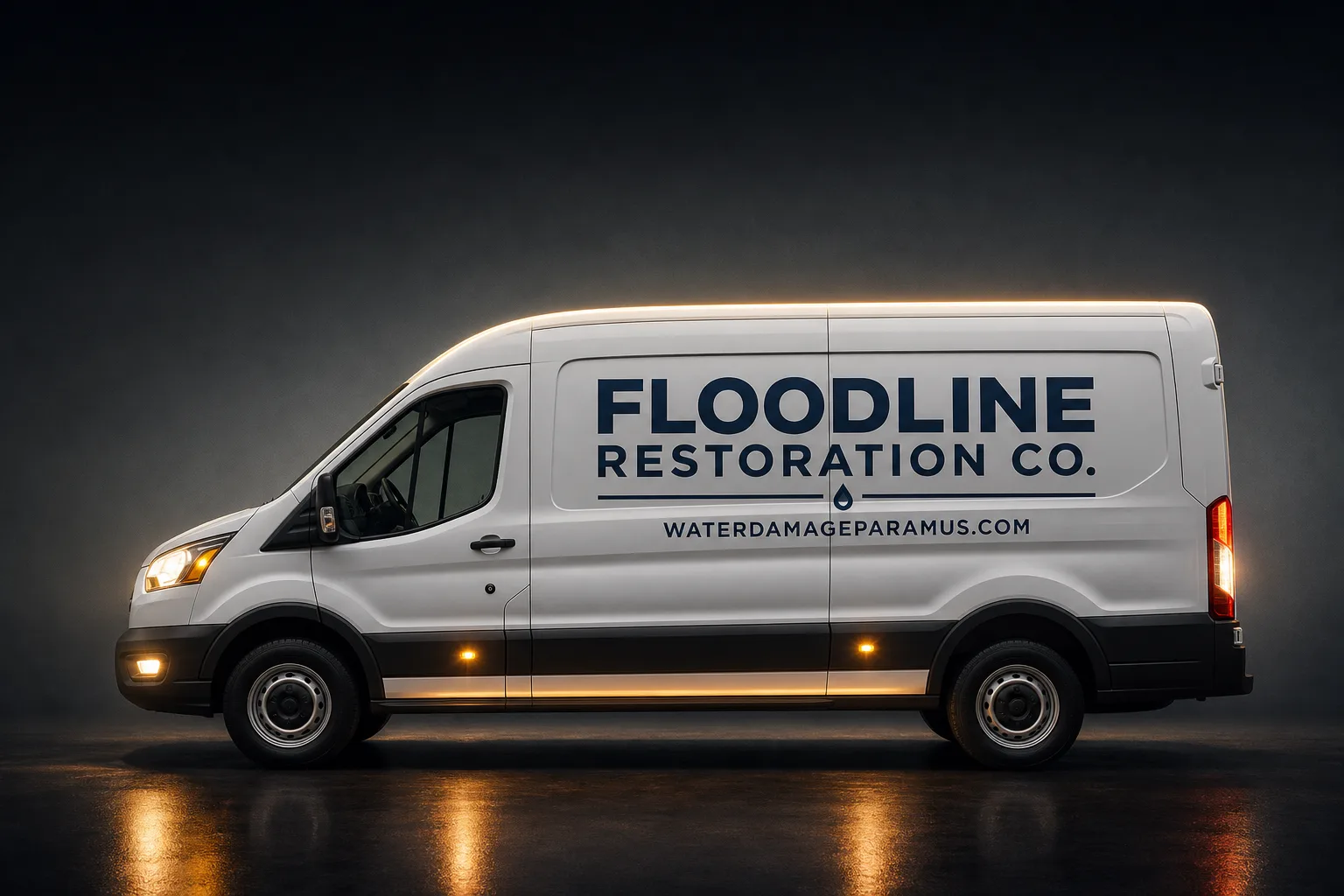
Free visual inspection and a written scope of work before any mitigation begins - photos, moisture readings, and drying logs go in your claim file
The scope we write is the scope we bill. Anything new gets shown to you, in writing, before we touch it.
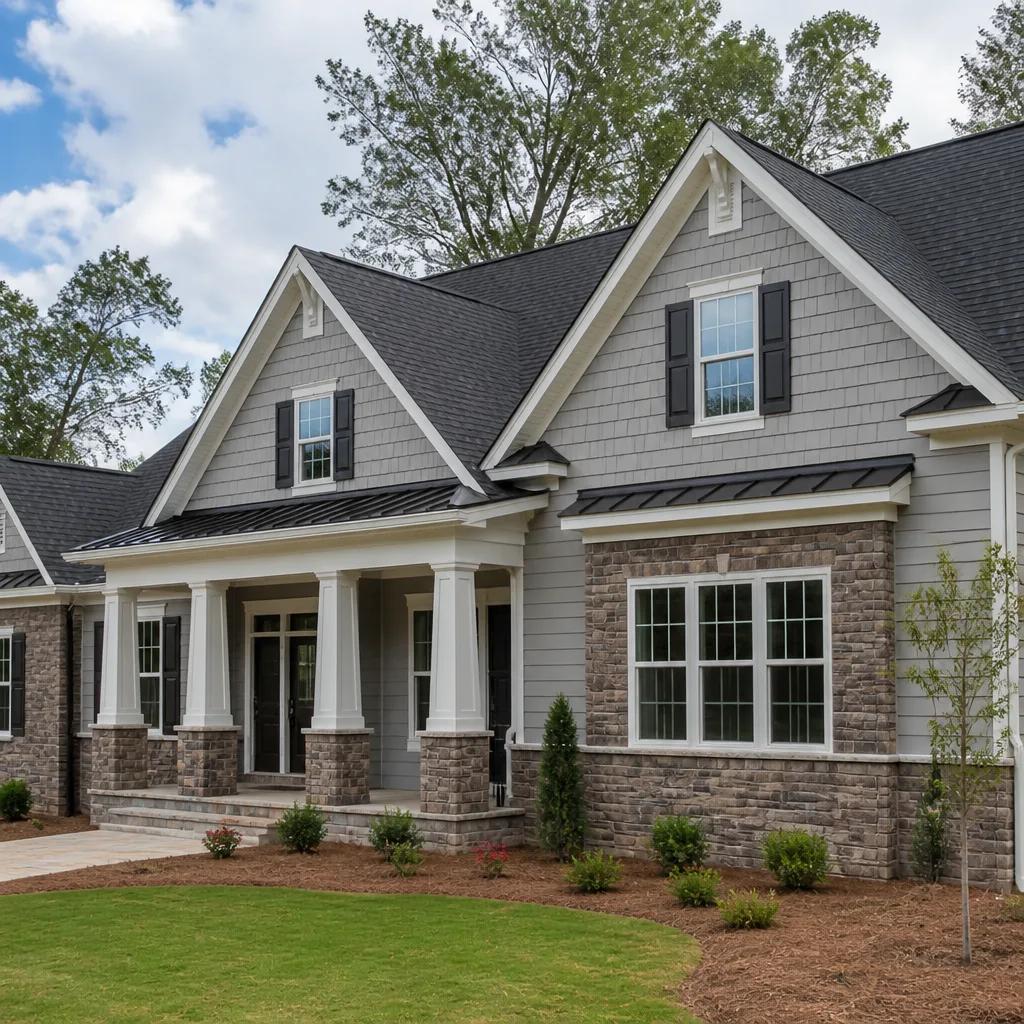
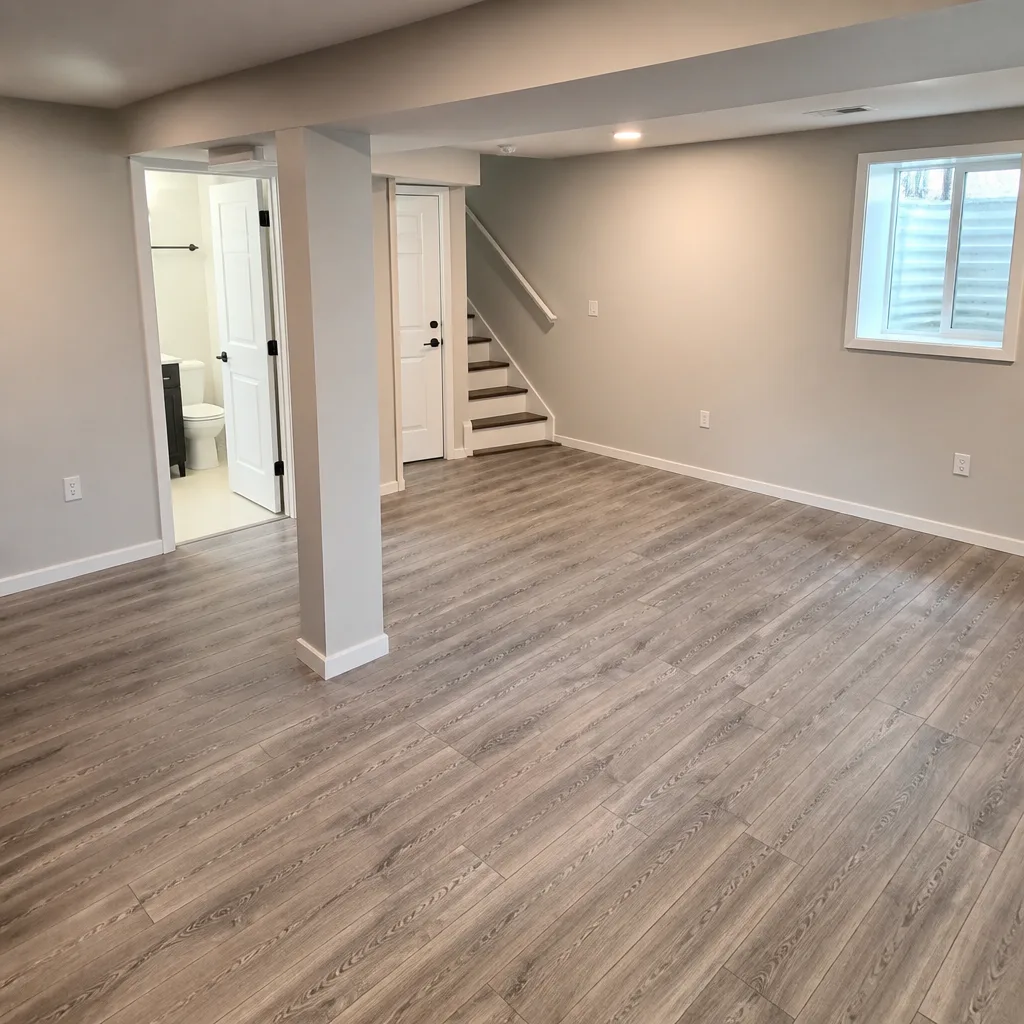
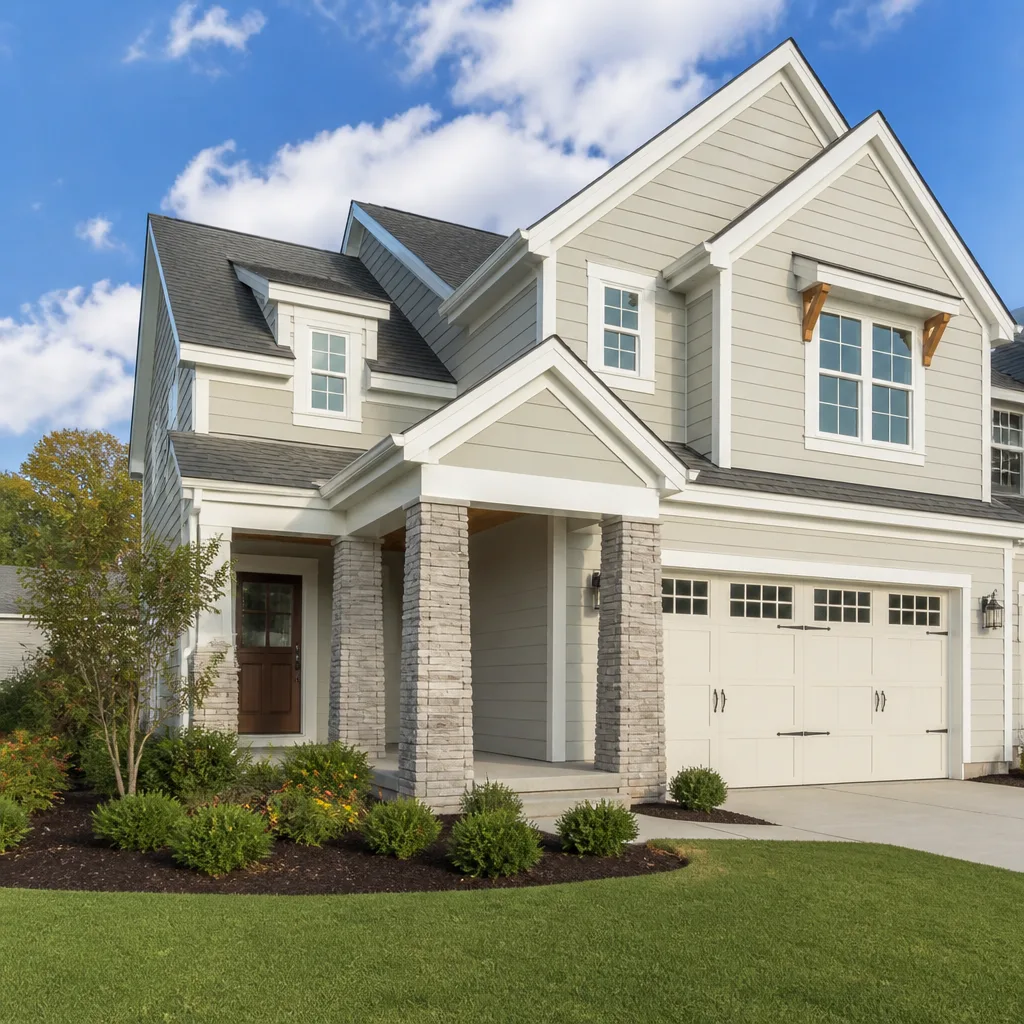
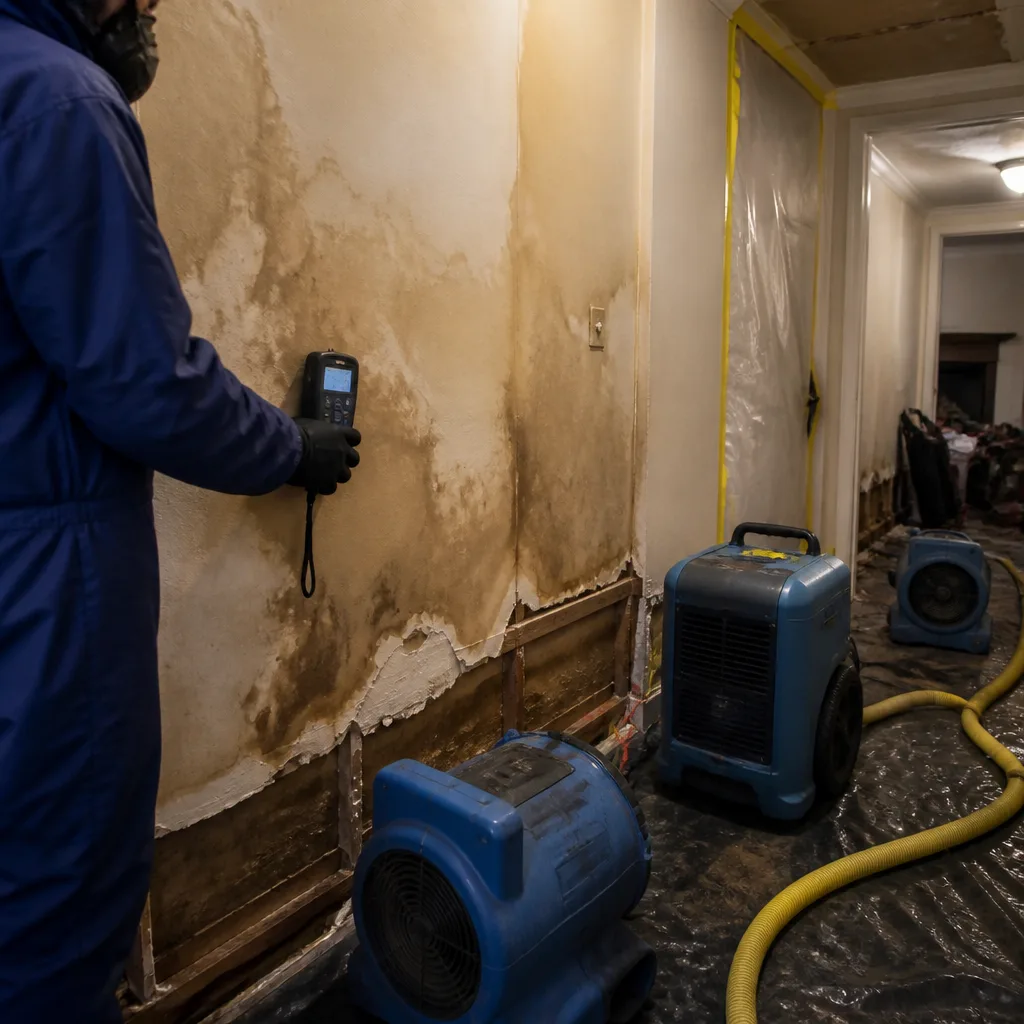 Before
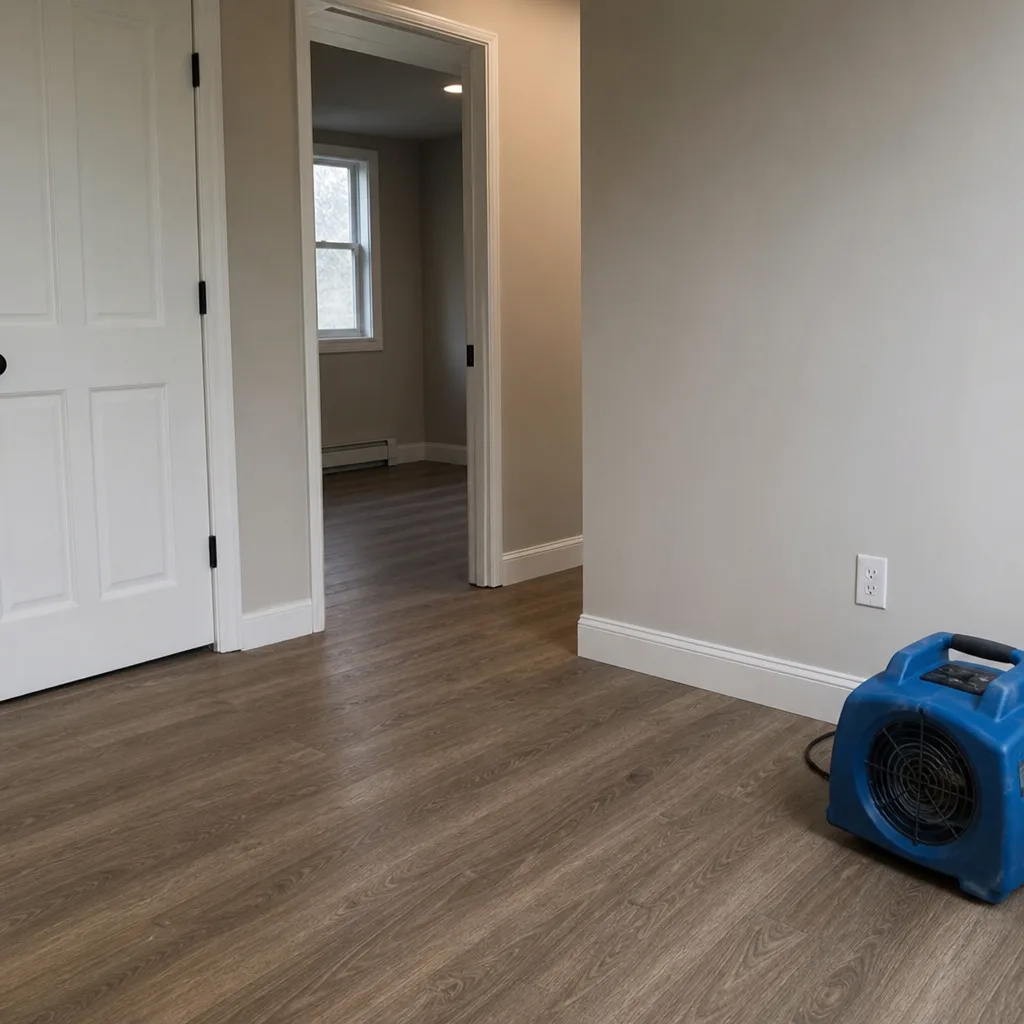 After
After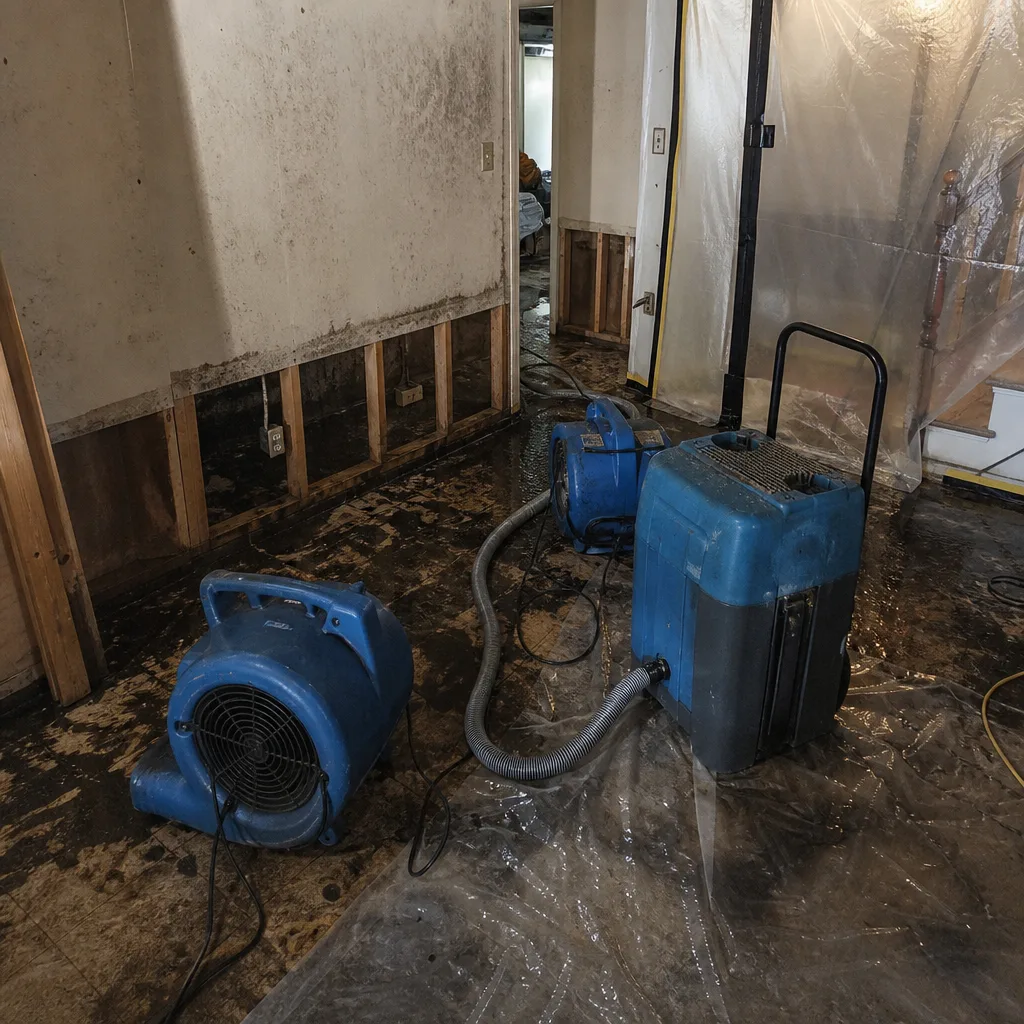 Before
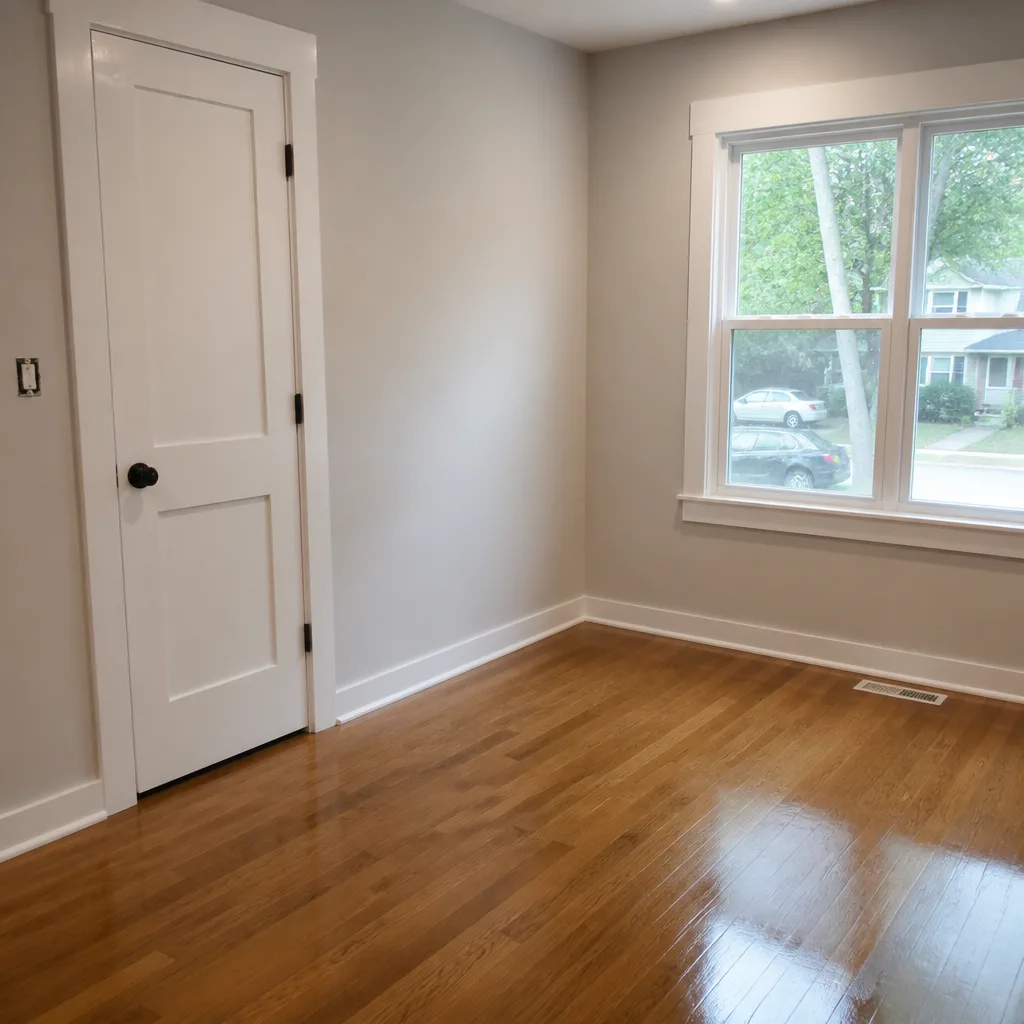 After
After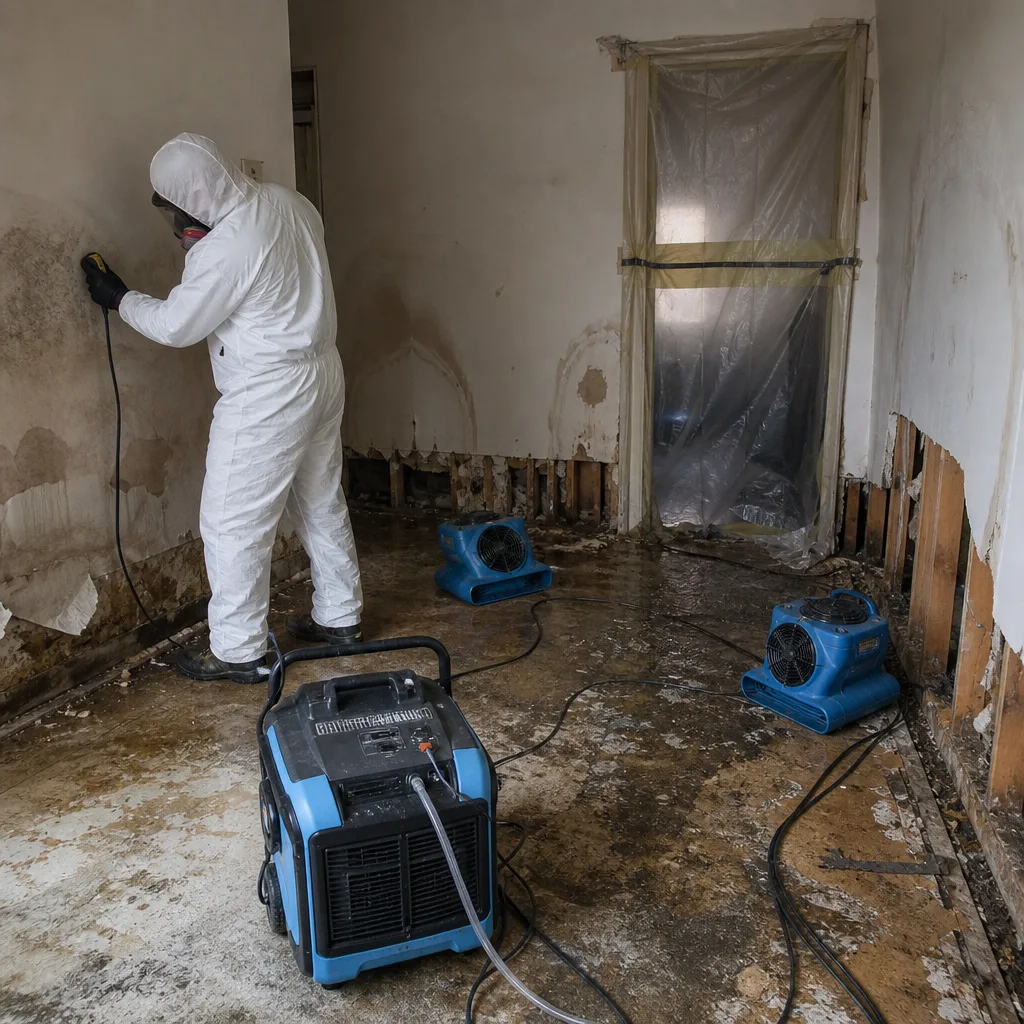 Before
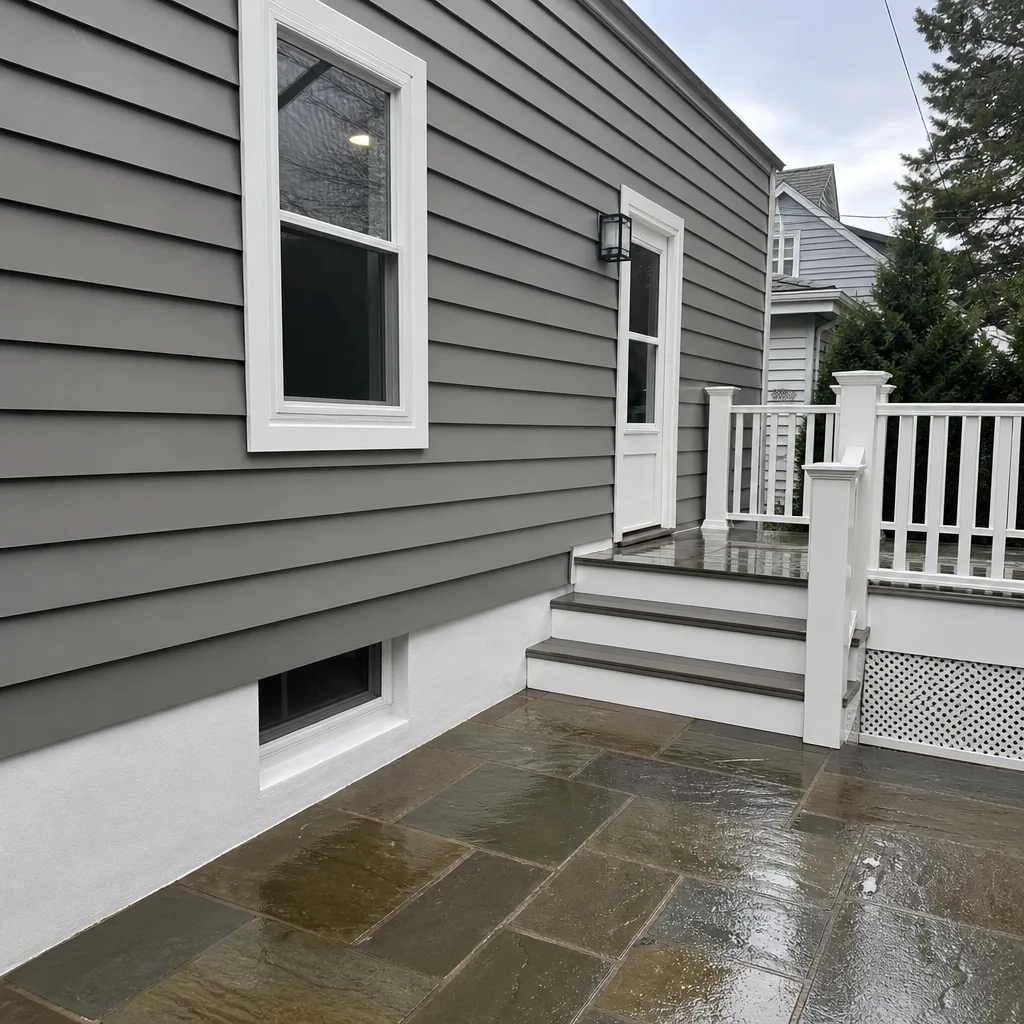 After
After24/7 Emergency Storm & Disaster Restoration in River Edge
Storm and disaster restoration in River Edge doesn’t wait for business hours, and neither do we. When a nor’easter tears a patio door off its track and the Hackensack River backs up into a finished basement on Bogert Road, the first hour determines whether you’re facing cleanup or a full mold remediation behind every wall. Floodline Restoration Co. answers live at (640) 333-9625, twenty-four hours a day, every day of the year. A real dispatcher picks up, not a recording. A certified crew gets dispatched into River Edge immediately, arriving with professional-grade Dri-Eaz and Phoenix equipment ready to extract water and stabilize the structure the same visit. The free visual inspection tells us exactly what we’re dealing with, and we walk you through it plainly before a single piece of equipment comes off the truck. The sooner extraction starts, the less damage spreads into framing, flooring, and the finished surfaces you’ve lived with for decades.
Understanding Storm & Disaster Restoration Severity in River Edge Properties
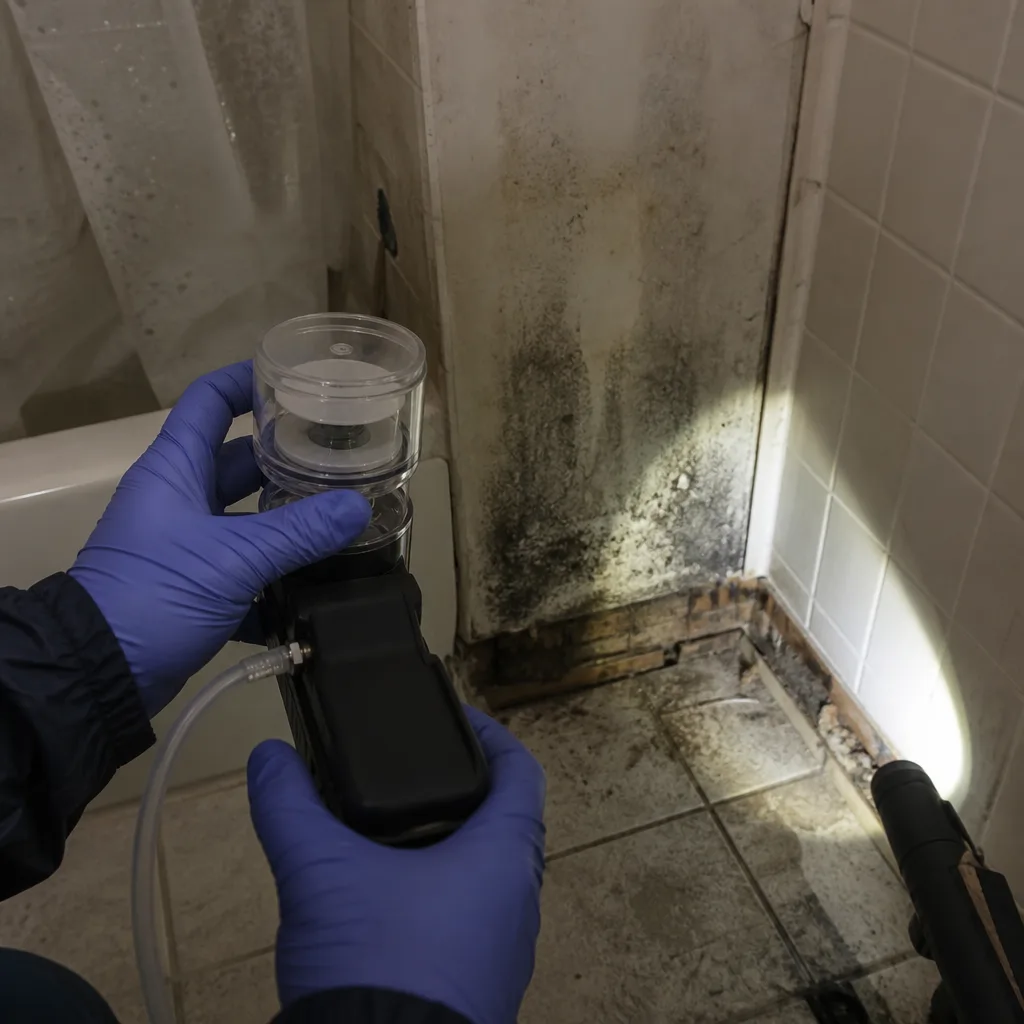
Storm damage in River Edge rarely announces itself as one isolated problem. It arrives as pressure differentials from high winds, water intrusion from driving rain, and backwater flooding from a river system that drains slowly through flat Bergen County lowlands. Technically, we classify intrusion water by contamination level: Category 1 is clean supply-line or rain water; Category 2 carries significant biological or chemical contaminants, the gray water you get when river water backs up through drains and saturates building materials; Category 3 is black water, sewage-laden, and requires full containment, removal, and sterilization. Most of what we see along the Hackensack River floodplain is Category 2, and after the water stands for 48 to 72 hours, it behaves like Category 3 regardless of its original source. We use moisture mapping and thermal imaging to locate water migration behind baseboards, inside wall cavities, and under flooring. In River Edge’s post-WWII inventory, those finished basements with paneled walls and vinyl flooring hide moisture for days before any visible stain appears. That’s why our scopes always include probing behind finished surfaces, not just drying what you can see.
Why River Edge Property Owners Choose Floodline Restoration Co.
- 45-minute response commitment: When water is moving through a River Edge basement, every minute matters. We commit to having a certified crew on-site within 45 minutes of your call.
- 24/7 live answer, always a person: No phone trees, no “leave a message after the tone.” A live dispatcher answers at 2 a.m. and gets moving immediately.
- IICRC-certified crews: Our technicians carry WRT, FSRT, and AMRT certifications, trained to IICRC, RIA, and IFA standards. They show up in uniform, background-checked, and they know the difference between surface moisture and structural saturation.
- Free visual inspection: Before we write any scope, we show you exactly what we’re seeing. You get a square deal: no surprises on the bill, and you approve the scope before work begins.
- Direct insurance billing: We bill your carrier directly and handle the documentation. You never play messenger between Floodline and an adjuster.
- One team from extraction to reconstruction: The same certified crew that reads the moisture map on day one handles daily readings, rebuilds what needs rebuilding, and hands you the 90-Day Done Right Promise in writing.
Our Storm & Disaster Restoration Process
Inspection & Assessment
We start with a full visual inspection and moisture mapping using thermal imaging and hygrometers. In River Edge, this means probing behind finished basement walls where previous flood events leave hidden saturation. You get a written scope with line-item pricing before anything is torn out.
Extraction & Stabilization
Standing water comes out first, using truck-mounted and portable extraction units. If wind damage compromised a door or window, we board up and tarp immediately to stop further intrusion. Stabilization includes shutting down electrical circuits in wet areas where needed.
Drying & Dehumidification
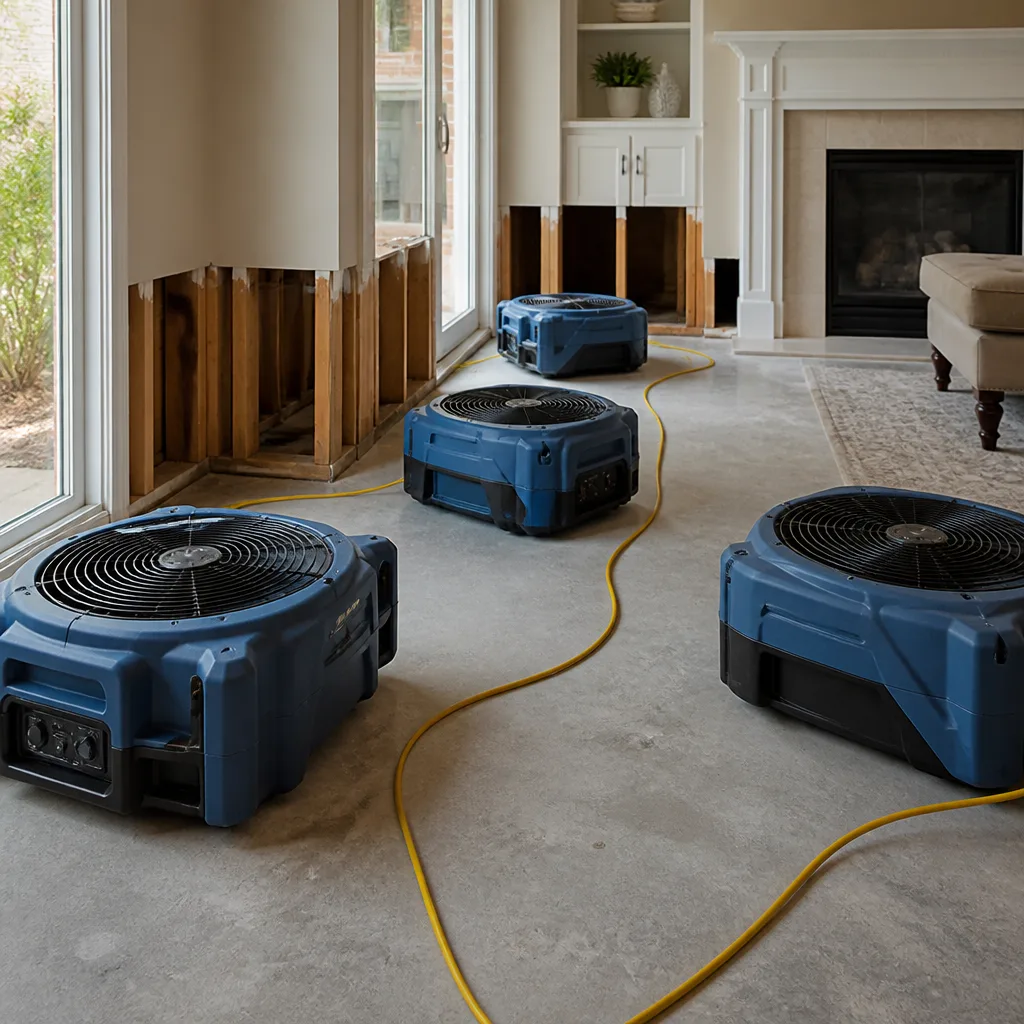
We place professional-grade air movers and dehumidifiers, including Dri-Eaz and Phoenix units, positioned for cross-flow across every wet surface. Daily readings are logged until we hit the dry standard. That log goes to you and your carrier.
Cleaning & Sanitization
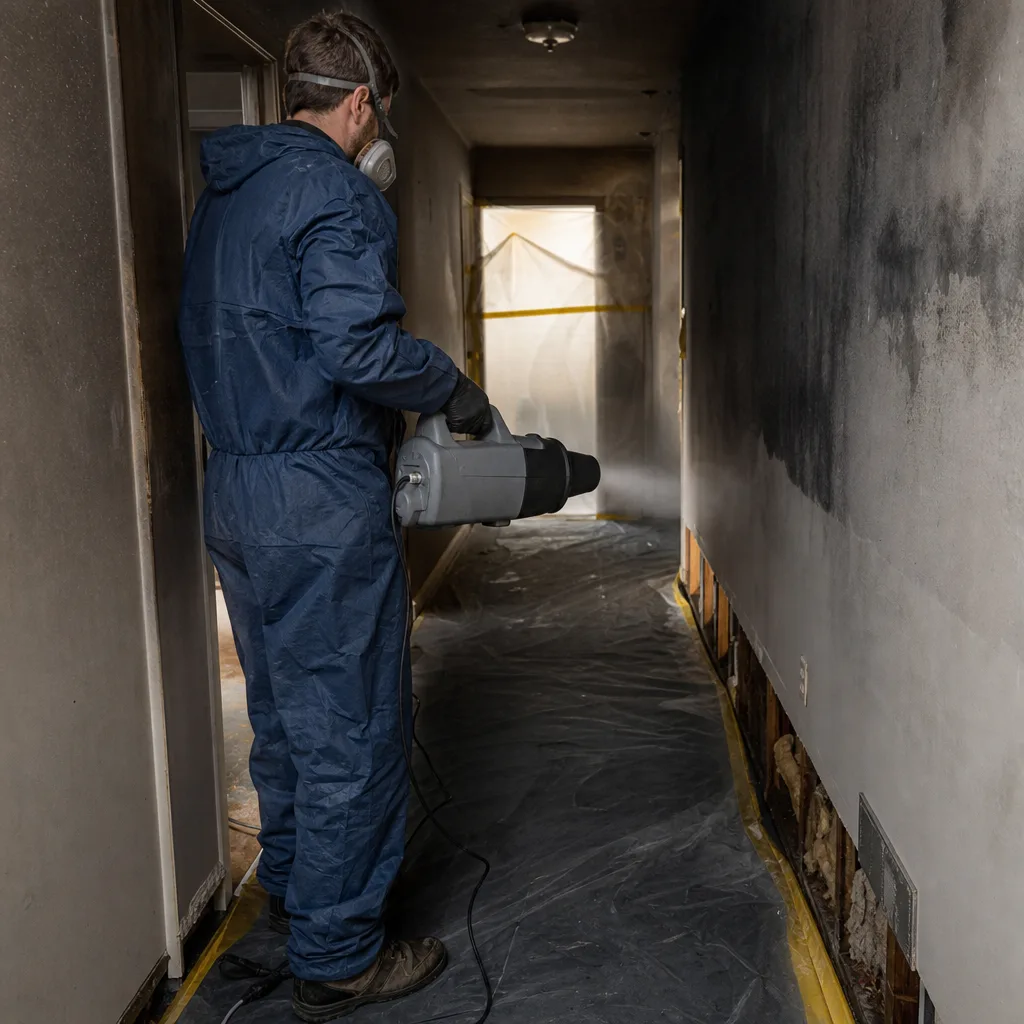
Contaminated surfaces get treated with antimicrobial agents appropriate to the water classification. HEPA scrubbers run where mold colonies are found, and containment is set to prevent cross-contamination to unaffected areas of the house.
Wind-Rated Reinforcement & Specialty Treatment
Where storm damage compromised doors, windows, or roof edges, we address the structural weather barrier, not just cosmetics. That includes impact-rated door replacement and hardware upgrades where River Edge’s wind exposure demands it.
Repairs & Restoration
We rebuild what needs rebuilding, from drywall and insulation to flooring and finish carpentry. The same crew that started the job finishes it. No mid-job handoff to a subcontractor you’ve never met. Done right, and backed in writing.
Need Emergency Storm & Disaster Restoration in River Edge Now?
Crews minutes away, answering live 24 hours a day. The sooner we start, the less it costs.
Working With Your Insurance Company
We document from the first hour. Photos of every affected room, moisture readings from day one, drying logs updated daily, and a line-item scope your adjuster can read without a translator. That documentation is the difference between a claim paid promptly and a claim argued for months. We coordinate directly with your carrier, speak to your adjuster, and provide everything your insurer needs to process the loss. Because we bill the carrier directly, you’re not fronting thousands in mitigation costs while waiting for a check. We’ve handled flood, wind, and storm claims in River Edge for a long time. We know what the carriers require, and we know what gets denied when documentation is thin. The 90-Day Done Right Promise we give every River Edge homeowner isn’t just about workmanship – it’s a commitment that if something wasn’t done right, we make it right. No arguing. In writing. That’s the Keystone Standard.
What We Provide Your Insurer
- Thorough documentation of the loss
- Photos of all damage, room by room
- Moisture readings and drying logs
- A detailed, line-item scope of work
- Direct coordination with your carrier
Built for River Edge’s Loss Calendar
River Edge has a storm calendar you can nearly set a watch to. Winter nor’easters drive wind and coastal moisture up the Hackensack valley, testing every weakened door track and aging roof edge. January deep freezes burst supply lines in unheated basements and crawlspaces, and the thaw that follows turns frozen ground into standing surface water that finds its way through foundation cracks. Spring brings heavy rain events that push the Hackensack over its banks, backing water into lower River Edge’s storm drains and finished basements. Summer thunderstorms arrive with flash flooding that overwhelms a drainage system designed seventy years ago for a different rainfall pattern. And late-summer tropical remnants, from Irene in 2011 to Sandy in 2012 and the storms after, deliver the worst of it: sustained wind and river flooding arriving together. When those storms hit, river homes on Bogert Road, Kinderkamack Road, and the side streets running toward the water take water first. The rest of the borough takes wind. Both need restoration, usually within the same week.
Storm & Disaster Restoration Across River Edge’s Neighborhoods
Response routes in River Edge shape how fast we can get to you. Homes along Bogert Road and the streets running east toward the Hackensack sit closest to the water, and they’re the first to flood when the river backs up. The finished basements in those 1940s and 1950s Capes and colonials take on river water that lingers, saturating drywall and flooring for days unless extraction starts immediately. Along Kinderkamack Road, the commercial stretch sees its share of storefront flooding and debris impact during wind events, but the residential blocks behind it deal more with wind-driven rain and pressure damage to doors and windows. Over near New Bridge Landing and the historic district, the housing stock runs older, with original window and door assemblies that were never designed for the wind loads we see now. River Edge’s newer sections, near the middle school and Memorial Park, sit slightly higher but still get wind-driven damage that skips right past the water and goes straight for roof edges, siding, and anything with a track or a hinge. A crew that knows the borough knows which streets flood first and which ones lose doors first in a blow. That local knowledge changes the order in which we stage equipment and the kind of scope we write.
Specialized Storm & Disaster Restoration Services We Offer in River Edge
Storm Damage Cleanup
After a nor’easter or a thunderstorm line comes through, homes along River Edge’s residential streets are left with downed limbs, damaged siding, and wind-driven water inside walls. We handle the full cleanup: debris removal, wet material extraction, structural drying, and the kind of probing behind finished surfaces that catches hidden saturation before it turns into mold. Our Storm & Disaster Restoration team works through the whole scope, start to finish.
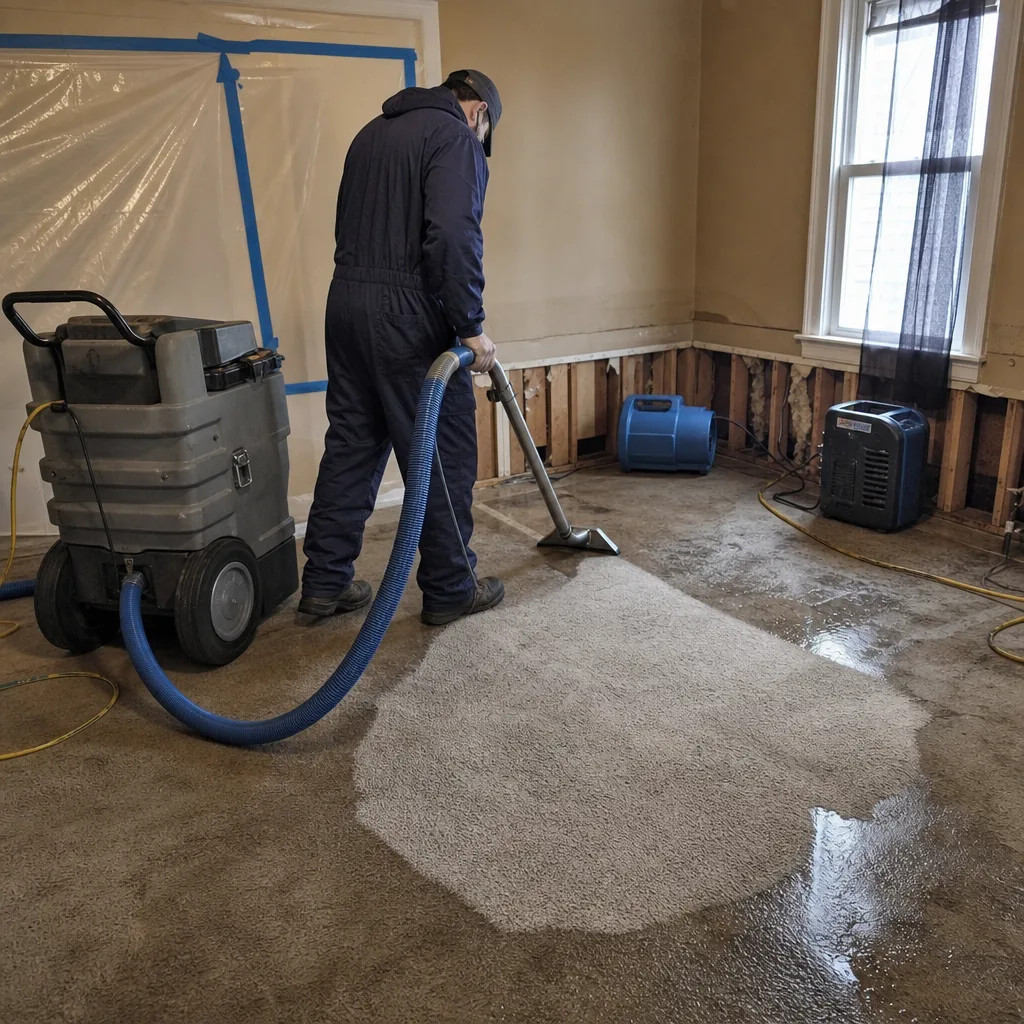
Flood Damage Restoration
River Edge sits directly on the Hackensack River floodplain. When the river rises, finished basements fill. We pull the water, dry the structure, and document everything for your carrier. More importantly for this borough, we check behind the drywall for layered damage from previous floods – the re-wetted Irene or Sandy remediation that looks dry from the outside but is growing mold inside the wall cavity. That’s the piece a standard, one-time restoration misses.
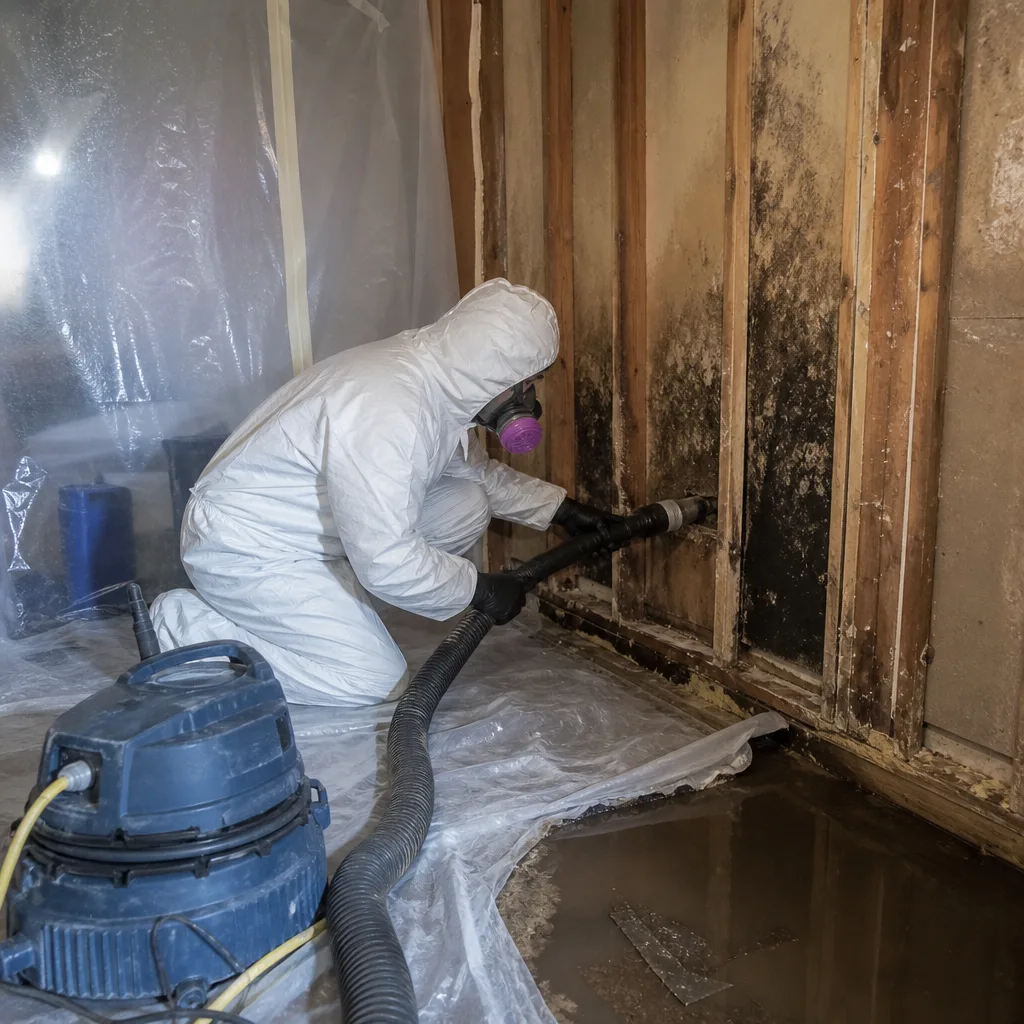
Emergency Board-Up
When wind blows out a patio door or a second-story window, that opening is an invitation to more damage and to anyone who shouldn’t be in the house. We respond immediately with plywood and fastening hardware sized for the opening, getting the house secured the same visit. Board-up is temporary; we schedule the permanent replacement as soon as conditions allow.
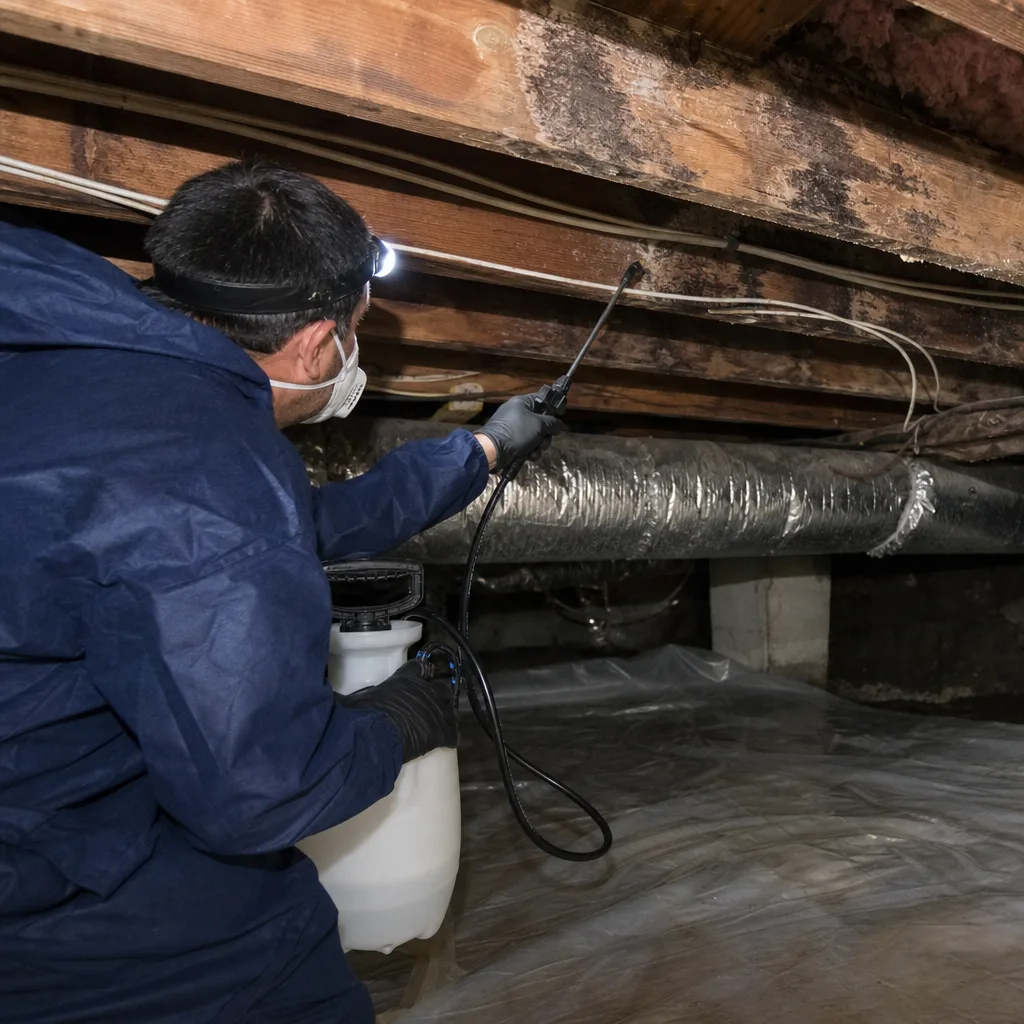
Roof Tarping
Wind damage to roof edges, missing shingles after a storm, or a branch through the decking needs covering fast. Water coming through a roof opening moves down through wall cavities and into your basement faster than most people realize. We tarp and seal, then follow with a proper repair or replacement scope.
Debris Removal
Nor’easters and tropical remnants leave River Edge yards and driveways littered with tree limbs, sections of fence, and pieces of other people’s houses. We clear the debris that’s blocking access or posing a hazard, document it for your claim, and keep the site safe for the rest of the restoration work.
What happens when you call
- 1
A real person answersNo phone trees - you reach a local pro.
- 2
You get an upfront price rangeHonest numbers before anyone is dispatched.
- 3
A background-checked tech heads outLicensed & insured, dispatched right away.
- 4
You approve before work beginsNothing starts until you say go.
Storm & Disaster Restoration Costs in River Edge, NJ
What storm restoration costs in River Edge depends on what found its way in and how long it sat. A typical roof tarping job runs $250-$600, emergency board-up $300-$800 depending on openings. Flood extraction with structural drying for a finished basement in River Edge typically runs $2,800-$6,500, and that number climbs when there’s layered moisture behind walls from previous events requiring removal and re-dry rather than surface drying alone. Wind damage repair to a patio door with impact-rated replacement runs $1,800-$4,200 installed. Mold remediation behind a finished basement wall, when probing reveals hidden colonies, adds $1,500-$4,000 depending on containment size and the extent of the colonies. The free visual inspection gives you a firm scope with line-item pricing before any work starts, so there’s never a surprise on the bill. And when the loss is covered, we bill your carrier directly. You’re not out of pocket while the claim grinds through. For an exact number on your River Edge property, call (640) 333-9625. Estimates are free.
We Also Serve Cities Near River Edge
The same certified crews, the same 45-minute response, and the same 90-Day Done Right Promise covers New Milford, Oradell, Paramus, and Maywood. If you’re a homeowner in any of those towns dealing with storm or flood damage, the phone number is the same: (640) 333-9625.
River Edge Storm & Disaster Restoration Questions, Answered
Do River Edge homes need wind-rated doors or just standard replacement after a storm?
Homes in River Edge sit in a wind exposure zone where a standard door replacement can fail during the next nor’easter. Wind-rated and impact-rated doors are designed to withstand the pressure differentials that blow doors off their tracks during sustained high winds. After a storm-related door failure, we recommend replacement with wind-rated hardware, and we often install impact-rated doors on river-facing homes where wind and water arrive together.
How long can water sit in a finished River Edge basement before mold starts?
Mold colonization can begin within 24 to 48 hours in a warm, finished basement, and it accelerates when humidity stays high. In River Edge, where Hackensack backwater can stand for 48 to 72 hours, that timeline is often already passed by the time water fully recedes. This is why prompt extraction and structural drying within the first day is the single biggest factor in avoiding a full mold remediation on top of a flood restoration.
Why do River Edge restoration scopes include probing behind walls that look dry?
Because this borough has a documented history of successive flood events, from Irene in 2011 to Sandy in 2012 and the floods since. A wall that was remediated after Sandy and re-wetted by the next flood often looks dry on the surface while mold grows inside the cavity. Probing behind finished surfaces is standard practice for any restoration contractor who has worked the flood zone here long enough to know what hides behind drywall. We probe and test before writing final scope.
Can a wind-damaged door be reinforced, or does it always need replacement?
It depends on the damage. A door with a blown-out panel or a bent track is usually a replacement. A door that’s structurally intact but has loose hinges, failing weatherstripping, or hardware that let it flex during high winds can often be reinforced with wind-rated hardware. We’ll tell you straight which situation you have, and we won’t sell a replacement when reinforcement will hold.
What does Category 2 water mean for River Edge flood restoration?
Category 2 water carries significant biological or chemical contaminants. In River Edge, that’s typically Hackensack River water that backs up through drains and saturates building materials. It requires more than extraction and drying: contaminated surfaces must be cleaned with antimicrobial agents, and porous materials like drywall and insulation often need removal rather than reclamation. Ignoring the category means cutting corners on a job that’s going to fail.
How fast can you actually get to a River Edge address?
We commit to 45 minutes. Our dispatchers coordinate crews from the moment you call, and we stage equipment in access to the borough so response times hold up even during major events when every other restoration company in the area is overwhelmed. Call (640) 333-9625 and a live dispatcher confirms the ETA on the phone.
Will my insurance cover storm or flood damage in River Edge?
Most homeowner policies cover wind damage and storm-driven water intrusion, but flood damage from Hackensack River overflow typically requires a separate flood policy, often through the NFIP given River Edge’s FEMA AE zone designation. We document everything from the first hour and coordinate directly with your adjuster, and we can help you understand what your policy covers before the scope is written.
What should I do in the first 30 minutes after wind or flood damage?
If there’s standing water, shut off the electrical power to the affected areas if you can do so safely. If wind has opened the house, keep away from windows and damaged door frames until they’re secured. Then call (640) 333-9625. A live person answers and a crew gets dispatched. The clock on mold and structural damage is already running, and the first hour sets the cost.
Serving River Edge, NJ - Our Local Coverage Area
We’re based in the River Edge area and know this community well. Use the map below to see our service coverage - if you’re nearby, we can almost certainly help.
The Straight Story on Storm Work in River Edge
River Edge sits directly on the Hackensack River floodplain, with large FEMA AE zones that inundate repeatedly, not once in a generation. That changes how restoration work should be done here. A standard approach to storm restoration treats a door failure as a door problem and a flood as a flood problem. But in this borough, a wind-damaged door on a river-facing home is also a flood opening: the same storm that blows out the patio door is often the one pushing the river over its banks minutes later. Wind-rated reinforcement and flood mitigation aren’t two separate jobs here. They’re the same job, and a contractor who treats them separately leaves a home vulnerable to the next event. That’s the pattern we see on Bogert Road, where our crew stabilized a 1950s Cape Cod after a nor’easter blew out a patio door and let Category 2 water pour into the finished basement. We installed an impact-rated replacement door, then ran moisture mapping behind the drywall and found a wet band from a previous Irene remediation that had been re-wetted but never fully dried. We pulled the panel, set containment, and documented structural drying with daily moisture readings until pre-loss condition. That’s what full-cycle restoration means in River Edge: not stopping at the visible damage, and not handing off the rebuild to someone else.
Floodline Restoration Co. has been doing storm and disaster restoration since 2010, founded by Curt Bowman around a dispatch board, not a sales desk. We answer the phone with a person, every hour of every day. We show up in uniform, background-checked, certified to IICRC, RIA, and IFA standards, and we bring professional-grade Dri-Eaz, Phoenix, XPOWER, B-Air, and Injectidry equipment that’s moisture-mapped from day one, with daily readings logged until the dry standard is met. The 90-Day Done Right Promise goes in writing with every job. The $50 Off Any Repair Over $250, the $89 Seasonal Tune-Up, and the Senior & Veteran 5% Discount are always available. And we’ll be there when we say. If you’re facing storm damage or flood water in River Edge, call (640) 333-9625 now. A live dispatcher picks up. A crew starts moving. The line the water left is where we start.
Written by Curt Bowman, Owner at Floodline Restoration Co., serving River Edge since the company’s founding in 2010.